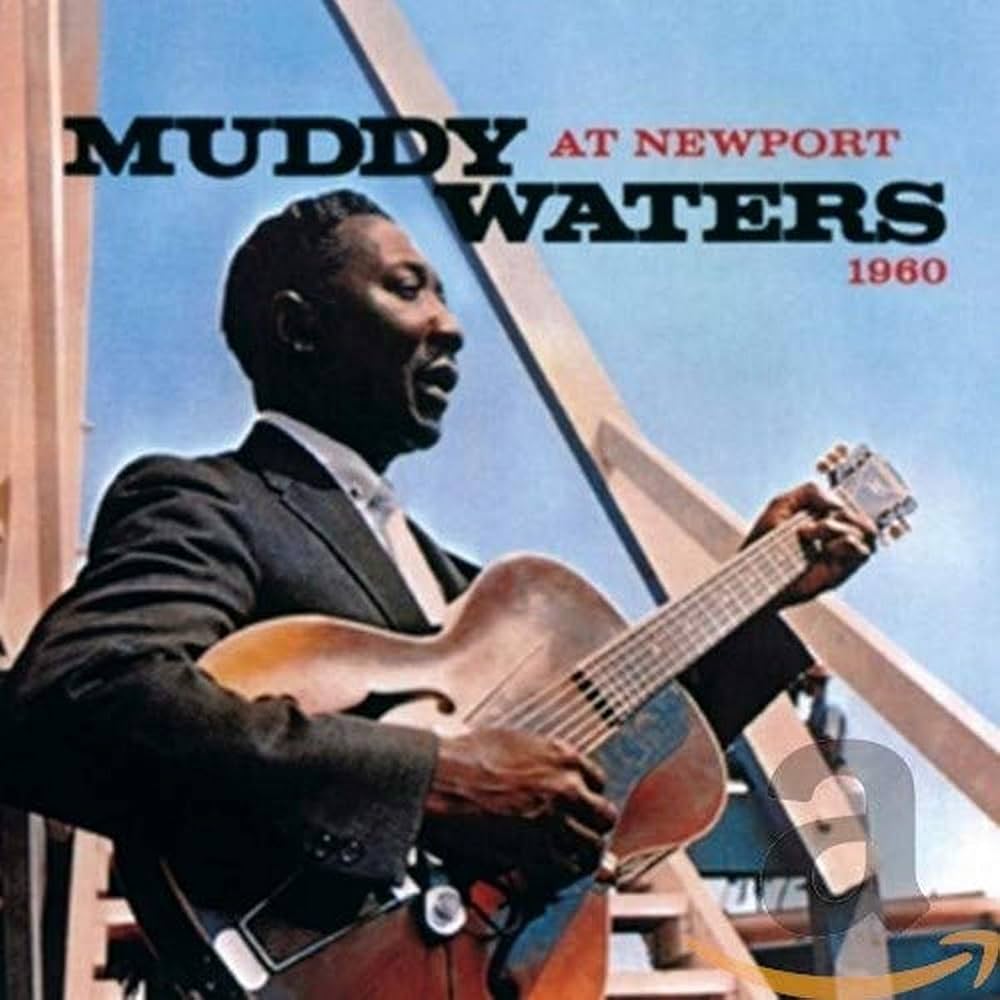
Electric blues had already transformed Chicago’s music scene by the time Muddy Waters stepped onto the stage at the Newport Jazz Festival in 1960, but much of the broader American audience had yet to fully appreciate its power. While rock and roll had borrowed heavily from the blues, many of its originators remained largely unknown outside dedicated blues circles. Muddy Waters at Newport 1960 helped change that. Capturing one of the most important live performances of Waters’ career, the album introduced countless new listeners to the electrifying sound that had shaped modern popular music.
Unlike the polished studio recordings that defined much of his catalog, this performance thrives on raw energy. Waters and his band play with confidence, authority, and an infectious sense of joy, proving that the blues could command a major festival stage every bit as effectively as jazz. The enthusiastic crowd responds in kind, creating an atmosphere that elevates the entire performance.
The album also arrived at a pivotal moment in blues history. Within a few years, young British musicians would discover Waters’ recordings and carry his influence around the world, sparking the British blues boom and forever changing rock music.
As both a thrilling live album and a landmark cultural document, Muddy Waters at Newport 1960 remains one of the essential recordings in the history of the blues.
Album Overview
From the opening moments, the album captures an artist completely at ease in front of an audience. Waters doesn’t simply perform songs—he commands the stage with the confidence of someone who had spent decades perfecting his craft in clubs across the South Side of Chicago.
The setlist balances signature hits with crowd-pleasing blues standards, allowing the band to showcase every aspect of its sound. Slow-burning blues numbers sit comfortably alongside upbeat shuffles, giving the performance excellent pacing from beginning to end.
What makes the album especially compelling is its authenticity. There are no elaborate stage effects or unnecessary embellishments. Instead, listeners hear a great blues band playing with remarkable chemistry and conviction.
The audience becomes an important part of the experience. Their applause and enthusiastic reactions reinforce the excitement in the room without ever distracting from the music.
Although originally released with some studio overdubs added afterward—a common practice at the time—the album still conveys the immediacy and excitement of the live event remarkably well.
Songwriting
Muddy Waters at Newport 1960 draws from the rich catalog that helped define postwar electric blues.
“Hoochie Coochie Man,” written by Willie Dixon, remains one of the greatest blues songs ever composed. Waters delivers it with commanding confidence, transforming its swagger into one of the album’s defining moments.
“Got My Mojo Working” provides the performance’s emotional and energetic peak. The extended rendition builds steadily until both band and audience seem completely swept up in its irresistible groove.
Songs like “Baby, Please Don’t Go” and “Tiger in Your Tank” further demonstrate the remarkable strength of Waters’ repertoire.
The lyrics remain rooted in classic blues themes—love, hardship, resilience, humor, and self-confidence—but Waters’ commanding delivery gives every familiar line renewed life.
These songs helped establish the vocabulary of electric blues, and hearing them performed live only reinforces their enduring power.
Performance
Muddy Waters is magnificent throughout the album.
His voice possesses the authority that only years of lived experience can produce. Every lyric feels authentic, every phrase delivered with complete conviction. Rather than relying on vocal acrobatics, Waters communicates through timing, tone, and emotional honesty.
His slide guitar playing is equally impressive. Sharp, expressive, and unmistakably personal, it remains one of the defining sounds of Chicago blues.
The supporting band deserves enormous praise as well. Pianist Otis Spann provides elegant accompaniment filled with blues feeling, while the rhythm section maintains an irresistible groove from beginning to end.
James Cotton’s harmonica contributions inject additional excitement into the performances, often engaging in spirited musical conversations with Waters’ vocals and guitar.
Perhaps the album’s greatest strength is its sense of collective joy. Every musician sounds fully invested, creating performances that feel spontaneous rather than routine.
Production
Considering the recording technology available in 1960, Muddy Waters at Newport 1960 sounds remarkably vibrant.
The live recording captures the energy of the festival while preserving excellent instrumental balance. Waters’ vocals remain consistently clear, and the interaction between guitar, harmonica, piano, and rhythm section comes through naturally.
It is worth noting that Chess Records added some studio applause and minor overdubs before the album’s original release, practices that were relatively common for live albums during the era.
Even so, those production choices never overshadow the performances themselves.
Modern remastered editions have improved clarity while preserving the warmth and immediacy that define the original recording.
The result remains one of the most satisfying live blues albums of its generation.
Standout Tracks
The album contains several performances that rank among the finest live blues recordings ever released.
“Got My Mojo Working” is the unquestioned centerpiece. Bursting with energy, audience participation, and unforgettable musicianship, it became one of Waters’ signature live performances.
“Hoochie Coochie Man” showcases his commanding stage presence and remarkable vocal authority.
“Baby, Please Don’t Go” demonstrates the band’s exceptional chemistry, while “Tiger in Your Tank” injects playful swagger into the set.
The closing moments leave little doubt that listeners have witnessed one of the great live performances in blues history.
Weak Points
Although Muddy Waters at Newport 1960 is an outstanding live album, it is not entirely beyond criticism.
The post-production overdubs, while relatively subtle, slightly diminish the documentary authenticity that modern listeners often expect from live recordings.
The relatively short running time also leaves audiences wishing for more, particularly given the extraordinary quality of the performances.
Additionally, listeners unfamiliar with traditional blues structures may find certain songs stylistically similar compared with the broader variety found on later live albums.
These are minor concerns that do little to lessen the album’s impact.
Legacy
Muddy Waters at Newport 1960 played a vital role in bringing Chicago blues to a broader audience.
Its success demonstrated that electric blues belonged on major festival stages alongside jazz and helped spark renewed interest in the genre during the 1960s.
The album’s influence reached across the Atlantic, inspiring British musicians including The Rolling Stones, Eric Clapton, Led Zeppelin, and Fleetwood Mac, all of whom drew heavily from Waters’ recordings.
More importantly, it captured Muddy Waters at the height of his powers, preserving the excitement of a performer whose influence on rock, blues, and popular music is nearly impossible to overstate.
Today, it remains one of the essential live blues albums ever recorded and one of the finest introductions to the enduring power of Chicago electric blues.
Final Score
9.0/10
Muddy Waters at Newport 1960 captures one of the greatest blues musicians in history delivering an exhilarating live performance at a pivotal moment in his career. Muddy Waters’ commanding vocals, expressive slide guitar, and outstanding band combine to create a recording filled with energy, authenticity, and timeless musical power. While the original release’s post-production enhancements and relatively brief running time keep it just shy of absolute perfection, it remains one of the most important live blues albums ever made and an essential listen for anyone interested in the roots of modern rock and blues.
This post has already been read 2 times!