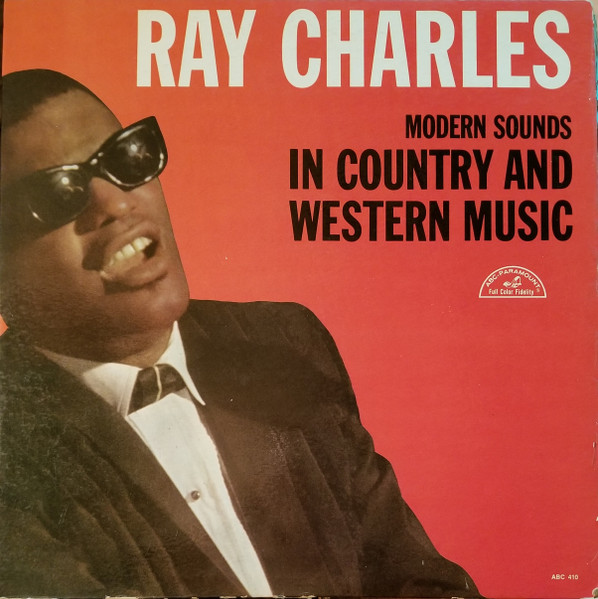
Few albums have challenged musical boundaries as boldly—or as successfully—as Modern Sounds in Country and Western Music. Released in 1962, Ray Charles took a genre that many rhythm and blues artists largely ignored and transformed it into one of the most groundbreaking records in American music. At a time when racial divisions still shaped both the music industry and society as a whole, Charles demonstrated that great songs could transcend categories, traditions, and expectations.
The concept sounded almost improbable. A rhythm and blues icon recording an entire album of country standards with lush orchestral arrangements was hardly an obvious recipe for commercial success. Even Charles’ record label questioned the idea. Fortunately, he refused to compromise. The result became not only the biggest-selling album of his career but also one of the most influential crossover recordings ever made.
Rather than treating country music as a novelty, Charles approached every song with complete respect. He didn’t imitate country singers, nor did he abandon his own musical identity. Instead, he interpreted these songs through the emotional honesty, gospel phrasing, and soulful delivery that had already made him one of America’s greatest vocalists.
The album remains a landmark achievement that permanently changed the relationship between country, soul, and popular music.
Album Overview
From its opening moments, Modern Sounds in Country and Western Music establishes that this is far more than a simple collection of cover songs.
The arrangements are remarkably sophisticated, combining sweeping orchestras, elegant vocal choruses, jazz-influenced rhythm sections, and subtle country instrumentation. While the production is undeniably polished, it never overwhelms Charles’ voice or the emotional heart of the material.
The sequencing balances dramatic ballads with more upbeat selections, creating an album that feels remarkably cohesive despite drawing from numerous songwriters and styles.
What makes the record particularly compelling is Charles’ complete commitment to every performance. There is never a sense that he is experimenting with country music from the outside. Instead, he inhabits every song as though it had been written specifically for him.
The result is a listening experience that feels both familiar and revolutionary, introducing country songs to audiences who might never have considered listening to them while simultaneously expanding the possibilities of soul music.
Songwriting
The strength of Modern Sounds in Country and Western Music begins with its exceptional song selection.
Charles chose compositions by some of country music’s finest writers, recognizing that outstanding songwriting transcends genre.
“I Can’t Stop Loving You” becomes the album’s defining performance. Originally written by Don Gibson, the song is transformed into a deeply emotional masterpiece through Charles’ extraordinary interpretation.
“You Don’t Know Me,” written by Eddy Arnold and Cindy Walker, becomes another showcase for Charles’ remarkable ability to uncover emotional depth within familiar lyrics.
Elsewhere, “Bye Bye Love,” popularized by the The Everly Brothers, receives an exuberant reinvention filled with infectious energy.
Even songs deeply rooted in country traditions feel completely natural within Charles’ musical vocabulary. His gift was recognizing that emotional truth mattered far more than genre conventions.
Performance
Ray Charles delivers one of the greatest vocal performances of his career.
Every song demonstrates his remarkable ability to balance technical excellence with emotional authenticity. His phrasing remains unmistakably rooted in gospel and rhythm and blues, yet he never oversings or attempts to force the material into an unfamiliar style.
Instead, Charles reveals new emotional dimensions hidden within these country standards.
His piano playing, while less prominent than on some earlier recordings, continues to provide subtle support throughout the album.
The orchestras and vocal choruses deserve equal praise. Their polished performances create lush sonic landscapes that complement Charles beautifully without diminishing the intimacy of his vocals.
Perhaps the album’s greatest achievement is its sincerity. Charles never approaches country music with irony or condescension. Every performance reflects genuine admiration for the songs themselves.
That honesty is ultimately what makes the album so convincing.
Production
The production is among the finest of the early 1960s.
Arrangers Ralph Burns and Marty Paich create orchestral settings that are elegant without becoming sentimental. Strings, horns, and backing vocals enrich the music while leaving ample space for Charles’ unforgettable voice.
The recording quality remains outstanding, with impressive warmth, clarity, and dynamic range.
Producer Sid Feller deserves enormous credit for supporting Charles’ unconventional vision at a time when many industry executives questioned its commercial potential.
The album sounds expansive yet intimate, polished yet emotionally direct.
Modern remasters have only reinforced its reputation as one of the best-produced popular albums of its era.
Standout Tracks
The album contains numerous classics.
“I Can’t Stop Loving You” is the obvious centerpiece and one of the greatest vocal performances in popular music history. Charles transforms an already excellent country song into something entirely universal.
“You Don’t Know Me” remains one of his most heartbreaking recordings, showcasing remarkable emotional restraint.
“Bye Bye Love” injects joyful energy into the album while proving that country and rhythm and blues could coexist naturally.
“Hey, Good Lookin'” offers a playful reinterpretation of the Hank Williams classic, while “Born to Lose” reveals Charles at his most emotionally vulnerable.
There is remarkable consistency throughout the album, with virtually every track reinforcing its central artistic vision.
Weak Points
It is difficult to identify meaningful flaws in Modern Sounds in Country and Western Music, though a few observations are worth noting.
Some traditional country listeners initially viewed the orchestral arrangements as overly elaborate compared with the simpler productions common in Nashville at the time.
Likewise, fans expecting a straightforward rhythm and blues record may have been surprised by the album’s polished pop influences.
A few orchestral flourishes occasionally reflect the production style of the early 1960s, though they rarely feel dated.
Ultimately, these are matters of taste rather than genuine weaknesses.
Legacy
Modern Sounds in Country and Western Music permanently changed American popular music.
It demonstrated that country songs could succeed far beyond their traditional audience while helping break down artificial barriers between musical genres.
The album influenced generations of performers, including Willie Nelson, Linda Ronstadt, Al Green, Norah Jones, and countless others who embraced genre-crossing interpretations.
It also became one of the defining crossover successes of the twentieth century, proving that audiences cared more about emotional authenticity than marketing categories.
Today, the album is recognized not only as one of Ray Charles’ greatest achievements but also as one of the most important recordings in the history of American music.
Its influence remains impossible to overstate.
Final Score
10/10
Modern Sounds in Country and Western Music is a landmark achievement that forever changed the landscape of American popular music. Ray Charles’ extraordinary vocals, inspired song selection, elegant orchestral arrangements, and fearless artistic vision combine to create an album that transcends every label placed upon it. Few recordings have so completely redefined both an artist’s career and an entire genre. It remains one of the greatest albums ever made and an enduring testament to the universal power of great songs interpreted by a truly extraordinary musician.
This post has already been read 67 times!