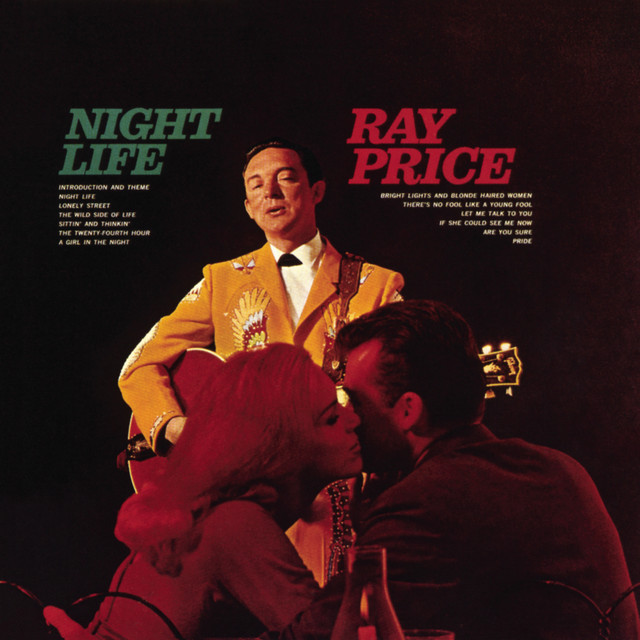
Ray Price had already established himself as one of country music’s finest vocalists by the time Night Life arrived in 1963, but this album marked a turning point in both his career and the evolution of the genre. While many country artists remained rooted in honky-tonk traditions, Price embraced a richer, more sophisticated sound that blended country, jazz, pop, and orchestral arrangements without sacrificing the emotional honesty at the heart of his music.
The album takes its title from one of country music’s greatest songs, written by a then-struggling Willie Nelson. Price’s recording helped introduce Nelson’s songwriting brilliance to a much wider audience, and it perfectly encapsulates the album’s late-night atmosphere of loneliness, heartbreak, and quiet reflection.
Rather than chasing commercial trends, Night Life confidently explores mature themes with elegant arrangements and restrained performances. Price sings with remarkable control, allowing every lyric to carry its emotional weight without unnecessary dramatics.
Although it doesn’t always receive the same attention as some of country music’s more commercially successful albums, Night Life remains one of the defining recordings of the Nashville Sound era and one of Ray Price’s greatest artistic achievements.
Album Overview
Night Life unfolds like a long evening after the crowds have gone home. The songs are connected by a mood of quiet melancholy, exploring heartbreak, regret, loneliness, and resilience with remarkable consistency.
Unlike the raw honky-tonk recordings that first made Price a star, the arrangements here are smoother and more refined. Strings, piano, subtle steel guitar, and tasteful backing vocals create a sophisticated atmosphere while preserving the unmistakable country soul of the material.
The pacing is exceptional. Slow ballads dominate the record, but occasional brighter moments prevent the album from becoming emotionally overwhelming. Every track feels carefully placed, creating a natural flow that rewards listening from beginning to end.
One of the album’s greatest strengths is its confidence. The performances never feel rushed or overly dramatic. Instead, Price allows the songs to unfold naturally, trusting both the material and his remarkable voice.
The result is one of the most cohesive country albums of the early 1960s.
Songwriting
The songwriting throughout Night Life is outstanding, drawing from some of Nashville’s finest writers while showcasing material that perfectly suits Price’s expressive style.
The title track, “Night Life,” is an undeniable masterpiece. Willie Nelson’s lyrics paint a vivid portrait of loneliness and emotional isolation, while Price delivers one of the definitive interpretations of the song.
“Pride” explores heartbreak with understated elegance, while “The Wild Side of Life” revisits one of country music’s most enduring themes with fresh emotional depth.
Songs like “Sittin’ and Thinkin'” and “Ain’t No Easy Run” reinforce the album’s reflective mood, demonstrating that country music could be emotionally sophisticated without becoming overly sentimental.
Although the material comes from several writers, the album maintains remarkable thematic unity. Every song feels like another chapter in the same late-night conversation.
Performance
Ray Price gives one of the strongest vocal performances of his career.
His voice possesses extraordinary warmth and effortless control. Unlike singers who rely on exaggerated emotion, Price communicates through subtle phrasing, impeccable timing, and complete sincerity.
His delivery is wonderfully conversational. Every lyric sounds lived rather than performed, allowing listeners to connect immediately with the emotional core of each song.
The accompanying musicians are equally impressive. The legendary Nashville session players provide elegant support throughout the album, balancing country instrumentation with jazz-influenced sophistication.
The steel guitar adds gentle emotional shading without becoming intrusive, while the rhythm section maintains a relaxed, confident groove.
Perhaps the most remarkable aspect of the performances is their restraint. Price never oversings, and the band never overplays. That discipline gives the album much of its lasting emotional power.
Production
The production represents the Nashville Sound at its finest.
Producer Don Law creates arrangements that are polished without becoming overly commercial. The strings add richness rather than sentimentality, while traditional country instruments ensure the album never loses its identity.
Price’s voice remains consistently front and center, captured with warmth and remarkable clarity.
The recording quality has aged beautifully. Modern remasters reveal subtle instrumental details while preserving the intimate atmosphere that defines the album.
Although some listeners may prefer the rawer sound of Price’s earlier honky-tonk recordings, the sophistication of Night Life perfectly complements its mature subject matter.
The production remains tasteful from beginning to end.
Standout Tracks
The album contains several performances that rank among the finest of Ray Price’s remarkable career.
“Night Life” is the unquestioned centerpiece. Price’s interpretation of Willie Nelson’s classic is haunting, elegant, and emotionally devastating.
“Pride” showcases the warmth and control that made Price one of country music’s greatest vocalists.
“The Wild Side of Life” receives a beautifully understated performance that honors the original while adding new emotional nuance.
“Sittin’ and Thinkin'” captures the album’s reflective spirit, while “Ain’t No Easy Run” demonstrates Price’s remarkable ability to communicate heartbreak without resorting to melodrama.
There are very few weak performances anywhere on the record.
Weak Points
Night Life is an exceptional album, though it is not entirely without limitations.
Listeners who prefer the harder-edged honky-tonk sound of Price’s 1950s recordings may find the smoother Nashville production somewhat restrained.
Because the album maintains such a consistent emotional atmosphere, a handful of tracks can blend together during casual listening.
Additionally, some arrangements occasionally reflect the polished orchestral style that dominated early 1960s Nashville, making them feel slightly more dated than the timeless songwriting itself.
These are relatively modest criticisms of an otherwise outstanding record.
Legacy
Night Life helped redefine what country music could sound like during the early 1960s.
The album demonstrated that sophisticated arrangements and traditional country storytelling could coexist beautifully, influencing generations of artists who sought to expand the genre’s musical vocabulary.
It also played an important role in establishing Willie Nelson as one of Nashville’s premier songwriters. Price’s recording of “Night Life” remains one of the definitive versions of the song and helped launch its journey toward becoming a country standard.
Its influence can be heard in artists such as George Jones, Merle Haggard, Keith Whitley, and Alan Jackson, all of whom admired Price’s effortless blend of technical excellence and emotional honesty.
Today, Night Life stands as one of the defining albums of classic country music and one of the finest examples of Ray Price’s extraordinary artistry.
Final Score
9.0/10
Night Life is one of Ray Price’s finest achievements, combining exceptional songwriting, elegant Nashville production, and some of the most emotionally convincing vocals of his career. While its polished arrangements and consistently reflective mood keep it just shy of the very highest tier of country classics, the album’s sophistication, warmth, and timeless performances make it an essential listen. It remains a landmark recording that beautifully bridges traditional honky-tonk and the smoother Nashville Sound while showcasing one of country music’s greatest voices at his peak.
This post has already been read 2 times!