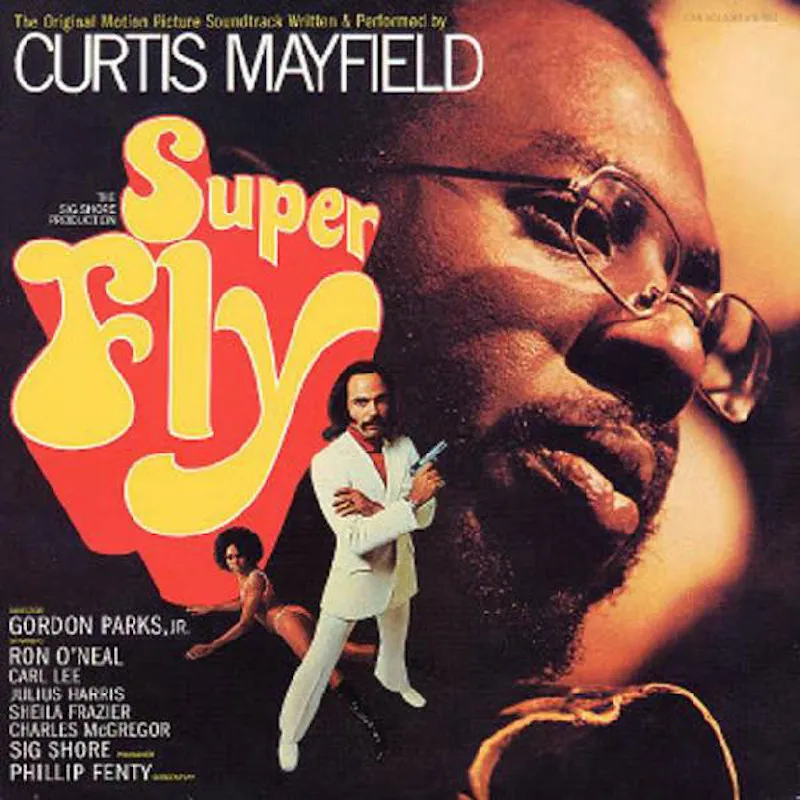
Movie soundtracks often exist to support the story on screen, but every once in a while an album becomes larger than the film it was created for. Superfly is one of those rare records. Released in 1972 alongside the blaxploitation classic of the same name, Curtis Mayfield didn’t simply provide background music—he crafted a sharp social commentary that frequently challenged the very lifestyle the movie portrayed.
While the film follows a cocaine dealer trying to escape the drug trade, Mayfield’s songs examine addiction, poverty, greed, racism, and survival with remarkable empathy and intelligence. Instead of celebrating the criminal world, he exposed the desperation that pushed people toward it. The result is an album that works equally well as a soundtrack, a soul masterpiece, and a political statement.
More than fifty years after its release, Superfly remains one of the defining albums of the 1970s and a landmark achievement in soul, funk, and socially conscious music.
Album Overview
Curtis Mayfield had already established himself as one of soul music’s greatest songwriters with The Impressions before embarking on a successful solo career. By the time Superfly arrived, he was writing with a confidence and sophistication few of his contemporaries could match.
Rather than making straightforward funk songs for action scenes, Mayfield used the soundtrack to paint a broader picture of urban America. Every song serves as another chapter in the lives of people trapped by circumstance. Corruption, economic inequality, drug addiction, violence, and hope all appear throughout the album without ever feeling preachy.
Musically, the record is equally ambitious. Strings float above razor-sharp rhythm guitar. Horn sections explode without overwhelming the arrangements. Bass lines groove effortlessly while percussion gives every track a hypnotic pulse.
It’s a soundtrack that functions perfectly without the movie because the songs tell their own complete story.
Songwriting
Curtis Mayfield’s songwriting is the album’s greatest strength.
His lyrics are direct enough to be memorable but layered enough to reward repeated listens. He rarely speaks in absolutes. Instead, he observes the complicated realities of people trying to survive difficult circumstances.
The opening title track immediately establishes this perspective. “Superfly” sounds triumphant on first listen, but beneath the infectious groove lies an examination of ambition, danger, and illusion. It’s impossible to separate the swagger from the consequences.
“Pusherman” remains one of the most compelling songs ever written about the drug trade. Rather than glamorizing the dealer, Mayfield presents him as both entrepreneur and destroyer, reflecting a complicated social ecosystem where everyone is trying to survive.
“Freddie’s Dead” is arguably the emotional centerpiece of the album. Built around one of soul music’s most unforgettable choruses, it tells the tragic story of a young man whose life ends because of addiction and circumstance. The song is catchy enough to dominate radio while carrying a devastating message.
Tracks like “Little Child Runnin’ Wild” explore how violence and poverty perpetuate themselves across generations. Mayfield doesn’t assign blame as much as he reveals systemic failures.
Throughout the record, he demonstrates an extraordinary ability to write songs that function simultaneously as entertainment, storytelling, and social criticism.
Performance
Curtis Mayfield wasn’t known for possessing the biggest or most powerful voice in soul music.
Instead, he possessed one of its most distinctive.
His high falsetto floats effortlessly over every arrangement, creating a fascinating contrast between gentle vocals and serious subject matter. Rather than shouting political messages, Mayfield almost whispers them, making listeners lean in closer.
His guitar work is equally important.
Mayfield’s rhythmic playing gives the album much of its identity. Every chord feels economical yet expressive, weaving seamlessly through the bass and percussion.
The backing musicians deserve enormous credit as well.
The rhythm section creates grooves that never become repetitive despite their simplicity. Horn players inject bursts of excitement exactly when needed, while the string arrangements provide elegance without becoming overly sentimental.
Everyone serves the songs rather than trying to showcase individual virtuosity.
Production
The production remains astonishingly modern.
Mayfield produced the album himself, and every decision feels intentional.
The instrumentation is rich but never cluttered. Individual instruments occupy their own space within the mix, creating remarkable clarity despite the complexity of the arrangements.
The bass sounds warm and full.
The drums are crisp without overpowering the songs.
The orchestral elements add sophistication while preserving the gritty street atmosphere essential to the album.
Many soul albums from the early 1970s sound dated due to production choices, but Superfly largely avoids that problem. The recording still feels vibrant today because it emphasizes musical balance over studio gimmicks.
The groove always comes first.
Standout Tracks
“Superfly”
One of the greatest opening tracks ever recorded.
The instantly recognizable wah-wah guitar, driving rhythm, and layered orchestration create a sense of confidence while the lyrics quietly undermine the glamorous image associated with the title character.
“Freddie’s Dead”
An undeniable classic.
Its upbeat melody disguises an incredibly sad story, making its emotional impact even stronger. The contrast between joyful music and heartbreaking subject matter is one of Mayfield’s greatest artistic achievements.
“Pusherman”
Dark, hypnotic, and endlessly influential.
Its groove has inspired generations of hip-hop producers, while its nuanced storytelling remains remarkably relevant.
“Little Child Runnin’ Wild”
One of the album’s most emotionally affecting performances. Rather than judging troubled youth, Mayfield asks listeners to consider how they arrived there.
“Give Me Your Love (Love Song)”
The album briefly steps away from its heavier themes with a gorgeous romantic soul performance that demonstrates Mayfield’s versatility as both singer and songwriter.
Weak Points
Finding genuine flaws on Superfly isn’t easy.
Some listeners expecting nonstop funk may find portions of the album more restrained than anticipated. Several tracks prioritize atmosphere and storytelling over memorable hooks, making them less immediate than the major singles.
Because the soundtrack serves the emotional flow of a film, its pacing occasionally slows during the middle section. Those moments work beautifully within the album’s narrative but may feel less engaging for casual listeners seeking radio-ready hits.
These are minor criticisms of an exceptionally cohesive record rather than significant weaknesses.
Legacy
Few albums have influenced as many different genres as Superfly.
Its sophisticated fusion of soul, funk, jazz, orchestration, and political commentary became a blueprint for countless musicians. Hip-hop producers have sampled the album extensively for decades, drawn to its rich grooves and cinematic textures.
Artists across R&B, funk, rap, and neo-soul continue to borrow from Mayfield’s musical vocabulary.
Beyond its sonic influence, the album also helped redefine what a soundtrack could accomplish. Instead of simply accompanying a film, it challenged its themes, expanded its emotional depth, and ultimately became more celebrated than the movie itself.
Many critics consider Superfly among the greatest soul albums ever recorded, and its reputation has only grown over time.
The songs remain culturally relevant because the issues Mayfield addressed—poverty, inequality, addiction, and systemic injustice—are still painfully familiar.
Few records manage to sound simultaneously rooted in their era and timeless.
Superfly is one of them.
Final Score
9.5/10
Superfly is an extraordinary achievement that blends irresistible grooves with profound social commentary. Curtis Mayfield proved that popular music could entertain while confronting uncomfortable truths, producing one of the finest soul albums ever recorded. Its influence stretches across generations of musicians, and its songs remain as compelling today as they were in 1972. Reserved only for truly exceptional works, a 9.5 reflects an album that stands among the greatest in its genre while falling just shy of the exceedingly rare perfection worthy of a 10.
This post has already been read 2 times!