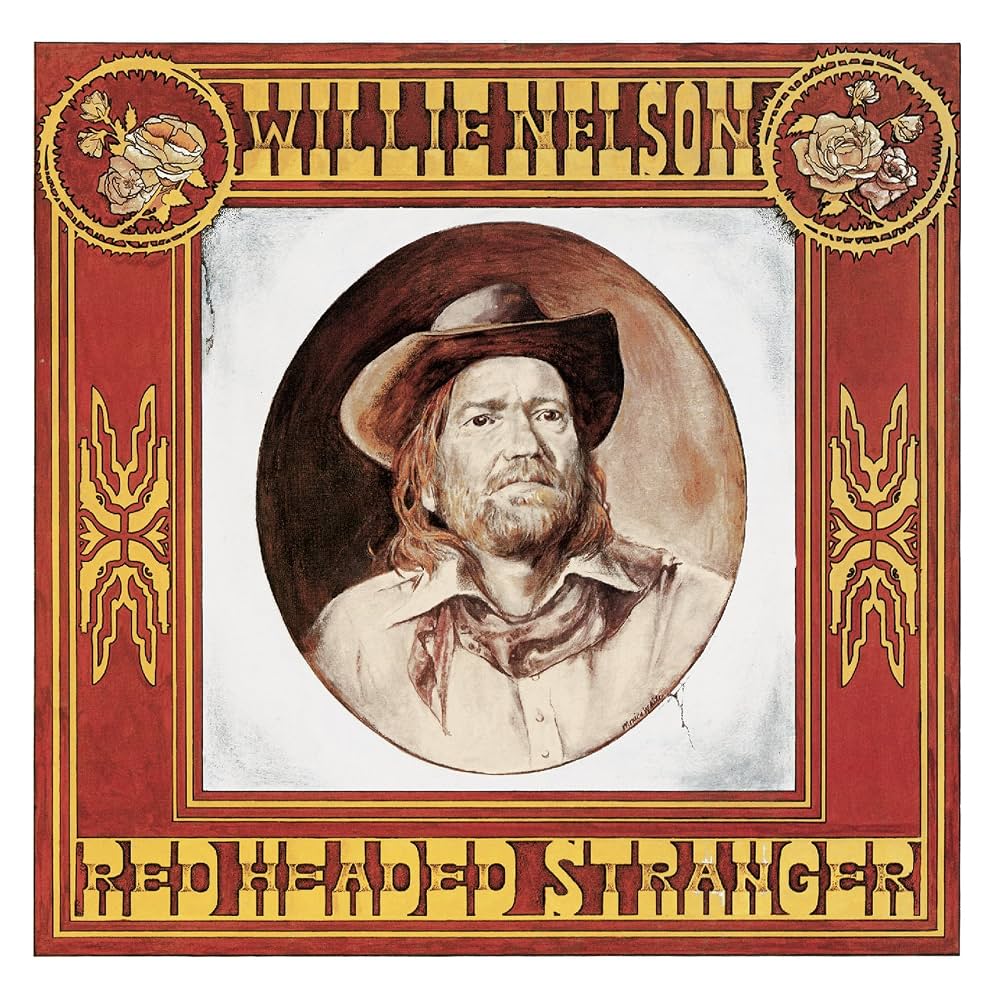
Sometimes the boldest artistic statement comes not from doing more, but from doing less. At a time when country music was dominated by the polished “Nashville Sound,” Willie Nelson chose the opposite approach. Red Headed Stranger, released in 1975, stripped away the glossy production in favor of sparse arrangements, intimate storytelling, and emotional honesty.
Columbia Records initially worried the recordings sounded unfinished. The label expected lush instrumentation and radio-friendly production, but Nelson insisted that the minimalist sound was exactly what the story required. He won the argument, and the gamble paid off spectacularly. The album became both a commercial success and one of the defining works of the outlaw country movement.
More than fifty years later, Red Headed Stranger remains a landmark in American music—a concept album that proved subtlety could be every bit as powerful as spectacle.
Album Overview
Red Headed Stranger tells the story of a preacher driven to violence after the death of his wife and his struggle to find redemption. While the narrative unfolds across multiple songs, it never feels overly complicated or theatrical. Instead, Willie Nelson trusts listeners to connect the pieces themselves, allowing the emotional journey to emerge naturally.
Musically, the album is remarkably restrained. Acoustic guitar, piano, understated rhythm accompaniment, and occasional harmonica provide nearly all the instrumentation. The sparse arrangements leave enormous space around Nelson’s voice, making every lyric feel intensely personal.
This simplicity gives the record an almost timeless quality. Rather than sounding tied to the production trends of the mid-1970s, Red Headed Stranger feels like an old American folk tale passed down through generations.
The result is one of country music’s most immersive listening experiences.
Songwriting
Although the album includes several traditional songs and covers, Willie Nelson’s sequencing and interpretation transform them into a seamless narrative.
Every song serves the larger story.
The title track introduces the mysterious central character with understated elegance, setting the stage for everything that follows. Nelson resists overexplaining events, allowing listeners to imagine much of the emotional landscape themselves.
“Blue Eyes Crying in the Rain,” written by Fred Rose, became the album’s biggest hit and remains one of Nelson’s signature performances. Its heartbreaking simplicity captures grief and longing with astonishing economy.
“Time of the Preacher” functions as both prologue and recurring motif throughout the record, giving the story cohesion while reinforcing themes of faith, loss, and destiny.
Tracks like “Can I Sleep in Your Arms” and “Hands on the Wheel” provide moments of reflection that deepen the emotional resonance without interrupting the album’s flow.
Rather than relying on dramatic twists, the songwriting succeeds through patience, subtlety, and emotional truth.
Performance
Willie Nelson has always been one of country music’s most distinctive vocalists.
His phrasing often sounds conversational, stretching or compressing lines according to emotion rather than strict rhythm. On Red Headed Stranger, that relaxed delivery becomes one of the album’s greatest strengths.
Every word feels genuine.
Nelson never overacts the story or forces emotion into his performances. His quiet confidence allows listeners to become emotionally invested without manipulation.
His guitar playing deserves equal praise.
Using his famous acoustic guitar “Trigger,” Nelson delivers tasteful solos and melodic fills that perfectly complement the minimalist arrangements. His jazz-influenced phrasing adds sophistication without distracting from the songs.
The supporting musicians demonstrate remarkable discipline.
Nobody plays more than necessary. Every note serves the story, creating an atmosphere that feels intimate enough to resemble a private performance in a small room rather than a major studio production.
Production
The production is one of the album’s defining achievements.
Instead of layering strings, choirs, and polished orchestration, Nelson embraces silence as an instrument. Empty space becomes just as important as the notes themselves.
The acoustic instruments sound warm and natural. Piano enters only when needed, while subtle percussion provides gentle momentum without dominating the arrangements.
This minimalist approach was controversial upon release but has aged beautifully.
Many heavily produced country albums from the era now sound dated, while Red Headed Stranger remains strikingly contemporary because it focuses entirely on performance and storytelling.
Its simplicity is its greatest strength.
Standout Tracks
“Blue Eyes Crying in the Rain”
One of the greatest country recordings ever made. Nelson’s understated vocal transforms a relatively simple song into a heartbreaking meditation on love and loss.
“Time of the Preacher”
Serving as both introduction and recurring theme, this song anchors the album’s narrative while showcasing Nelson’s remarkable gift for storytelling.
“Red Headed Stranger”
The title track establishes the mysterious central character with quiet authority, drawing listeners immediately into the unfolding tale.
“Hands on the Wheel”
Beautifully reflective and deeply philosophical, this song offers one of the album’s emotional high points.
“Can I Sleep in Your Arms”
A tender interpretation that demonstrates Nelson’s ability to find extraordinary emotional depth in seemingly straightforward material.
Weak Points
Red Headed Stranger demands patience.
Listeners accustomed to modern country production or more energetic arrangements may initially find its deliberate pacing too sparse. The album asks for complete attention, rewarding focused listening more than casual background play.
Additionally, because much of the record relies on atmosphere and narrative continuity, individual songs sometimes have less immediate impact outside the context of the full album.
These observations reflect the album’s artistic choices rather than genuine flaws. The minimalism that may challenge some listeners is precisely what makes the record so distinctive.
Legacy
Few albums have had a greater impact on country music.
Red Headed Stranger became the defining statement of the outlaw country movement, proving artists could reject Nashville’s commercial formulas while still achieving enormous success.
Its influence can be heard in generations of singer-songwriters who embraced honesty, simplicity, and creative independence over polished commercial production.
The album also helped establish Willie Nelson as one of American music’s most respected storytellers, elevating him beyond country stardom into the broader cultural landscape.
Today, Red Headed Stranger is regularly cited among the greatest country albums ever recorded. Its minimalist production, emotional depth, and narrative ambition continue to inspire musicians across country, folk, Americana, and even indie music.
It remains a powerful reminder that great art doesn’t require excess—only conviction.
Final Score
9.5/10
Red Headed Stranger is a masterpiece of storytelling, restraint, and emotional honesty. Willie Nelson transformed a simple concept into one of the most influential albums in country music history, proving that silence can be as expressive as sound. Its timeless production, unforgettable performances, and quietly devastating narrative place it among the greatest country albums ever recorded and one of the defining artistic achievements of the 1970s.
This post has already been read 2 times!