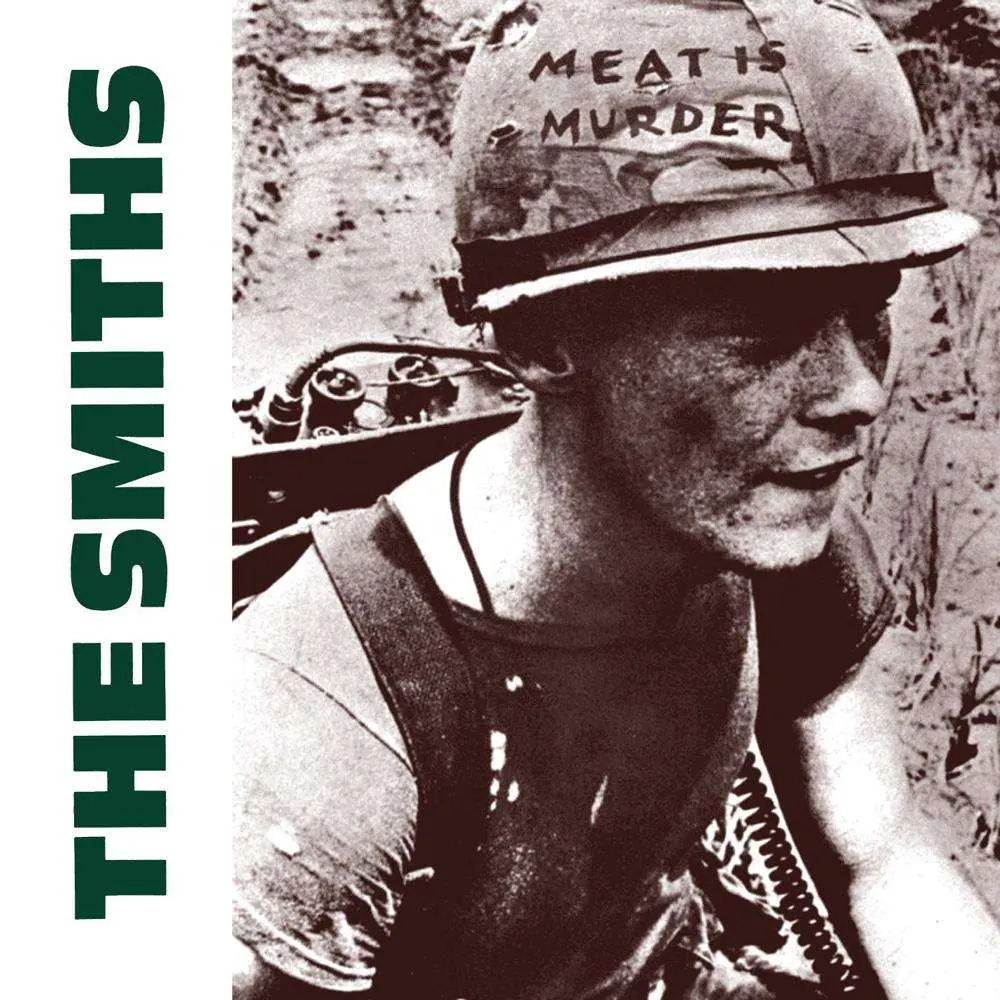
If The Smiths’ self-titled debut announced the arrival of one of Britain’s most distinctive bands, Meat Is Murder confirmed they were far more than another promising indie act. Released in 1985, the album expanded the band’s musical palette while sharpening Morrissey’s lyrical voice, resulting in a record that was bolder, more confrontational, and more emotionally ambitious than its predecessor.
Rather than simply repeating the jangly guitar formula that had already earned them a devoted following, The Smiths embraced heavier arrangements, political commentary, social criticism, and darker emotional territory. The result was their first UK No. 1 album and one of the defining releases of alternative rock during the 1980s.
While The Queen Is Dead is often cited as the band’s crowning achievement, Meat Is Murder remains every bit as essential. It captures The Smiths at the moment they transformed from an exceptional band into one of the most influential groups of their generation.
Album Overview
Meat Is Murder is noticeably more expansive than the band’s debut.
Johnny Marr broadens his guitar work beyond shimmering jangle-pop, incorporating rockabilly, folk, funk, blues, and even heavier rock influences without ever losing his distinctive melodic touch. At the same time, Morrissey’s lyrics become increasingly fearless, addressing politics, corporal punishment, class divisions, violence, loneliness, and animal rights alongside his familiar themes of alienation and failed romance.
The rhythm section of Andy Rourke and Mike Joyce deserves enormous credit for grounding these ambitious songs. Rourke’s melodic bass playing often functions as a second lead instrument, while Joyce’s understated drumming gives the music both drive and elegance.
Despite its darker themes, the album remains remarkably melodic. The Smiths never sacrifice memorable hooks in pursuit of seriousness.
Songwriting
Morrissey and Johnny Marr had already established themselves as one of the finest songwriting partnerships in British music, but Meat Is Murder demonstrates significant artistic growth.
“The Headmaster Ritual” opens the album with an unflinching critique of abusive school systems. Morrissey’s vivid storytelling combines perfectly with Marr’s intricate guitar work to create one of the strongest opening tracks in alternative rock.
“Rusholme Ruffians” cleverly blends rockabilly rhythms with observations about working-class life, while “Nowhere Fast” balances social frustration with biting humor.
The emotionally devastating “Well I Wonder” slows the pace with one of Morrissey’s most vulnerable vocal performances, showcasing the band’s ability to create intimacy without sentimentality.
“Barbarism Begins at Home” stretches beyond seven minutes, driven by Andy Rourke’s extraordinary bass line and one of Marr’s funkiest guitar performances. It demonstrates a willingness to experiment without losing the band’s identity.
The title track closes the album with Morrissey’s impassioned argument against animal cruelty. Regardless of whether listeners agree with its message, its conviction is impossible to ignore.
The songwriting consistently combines literary intelligence, emotional honesty, and unforgettable melodies.
Performance
Morrissey delivers one of the strongest vocal performances of his career.
His unmistakable baritone moves effortlessly between sarcasm, vulnerability, outrage, and melancholy, giving every lyric a distinct personality. Few singers possess his ability to make even ordinary phrases sound emotionally significant.
Johnny Marr is simply magnificent.
His guitar playing remains one of the album’s greatest strengths, layering melodic figures, rhythmic textures, and inventive chord voicings that continue to influence generations of alternative guitarists.
Andy Rourke deserves particular recognition.
His bass playing throughout the album is exceptional, especially on “Barbarism Begins at Home,” where his groove effectively carries the entire composition.
Mike Joyce’s drumming is subtle but consistently effective, providing exactly what each song requires without unnecessary embellishment.
Together, the four musicians achieve remarkable chemistry.
Production
Produced by the band alongside Stephen Street, Meat Is Murder sounds fuller and more confident than the debut.
The guitars possess greater depth and variety while maintaining remarkable clarity. Rourke’s bass sits prominently in the mix, allowing listeners to appreciate its melodic complexity.
The production avoids excessive studio effects, emphasizing natural performances instead.
Even the album’s heavier moments remain spacious and balanced.
Although unmistakably a product of the mid-1980s, the recording has aged remarkably well because it prioritizes musicianship over fashionable production techniques.
Its organic sound continues to feel fresh decades later.
Standout Tracks
“The Headmaster Ritual”
A stunning opener featuring some of Johnny Marr’s finest guitar work and one of Morrissey’s most powerful lyrical statements.
“How Soon Is Now?” (included on most international editions)
Built around one of the most iconic guitar sounds in rock history, this hypnotic masterpiece has become The Smiths’ signature song and one of the defining recordings of alternative music.
“Barbarism Begins at Home”
An ambitious, groove-driven epic showcasing Andy Rourke’s extraordinary bass playing and the band’s willingness to push beyond conventional song structures.
“Well I Wonder”
Quietly heartbreaking and beautifully restrained, this emotional highlight demonstrates the band’s remarkable sensitivity.
“Rusholme Ruffians”
An energetic blend of rockabilly rhythms and witty social observation that captures The Smiths’ unique musical personality.
Weak Points
Meat Is Murder occasionally prioritizes message over subtlety.
The title track, while deeply sincere, can feel somewhat heavy-handed compared to the more nuanced songwriting found elsewhere on the album. Its direct approach contrasts with the layered emotional complexity that characterizes much of the band’s best work.
Additionally, the darker tone throughout the record makes it a less immediately inviting listen than later albums like The Queen Is Dead.
These are relatively minor observations about an album whose ambition far outweighs its occasional excesses.
Legacy
Meat Is Murder marked a major turning point for both The Smiths and alternative rock.
It proved that independent guitar bands could achieve commercial success without abandoning artistic integrity, reaching No. 1 on the UK Albums Chart while helping define the sound of British indie music.
Johnny Marr’s shimmering guitar style became enormously influential, inspiring generations of alternative musicians from Oasis and Radiohead to countless indie bands that followed.
Morrissey’s literary lyrics, emotional vulnerability, and willingness to confront controversial subjects also helped reshape expectations of what alternative songwriting could accomplish.
Although The Queen Is Dead often receives greater acclaim, Meat Is Murder remains an essential piece of The Smiths’ legacy—a fearless, emotionally rich album that continues to reward repeated listening.
Final Score
9.5/10
Meat Is Murder is a bold artistic leap that finds The Smiths expanding their musical and lyrical ambitions without sacrificing the melodic brilliance that made them unique. Outstanding performances, Johnny Marr’s endlessly inventive guitar work, Morrissey’s unforgettable songwriting, and a willingness to challenge both listeners and conventions combine to create one of the defining alternative rock albums of the 1980s. It stands comfortably among the finest records of the decade and remains one of the band’s greatest achievements.
This post has already been read 3 times!