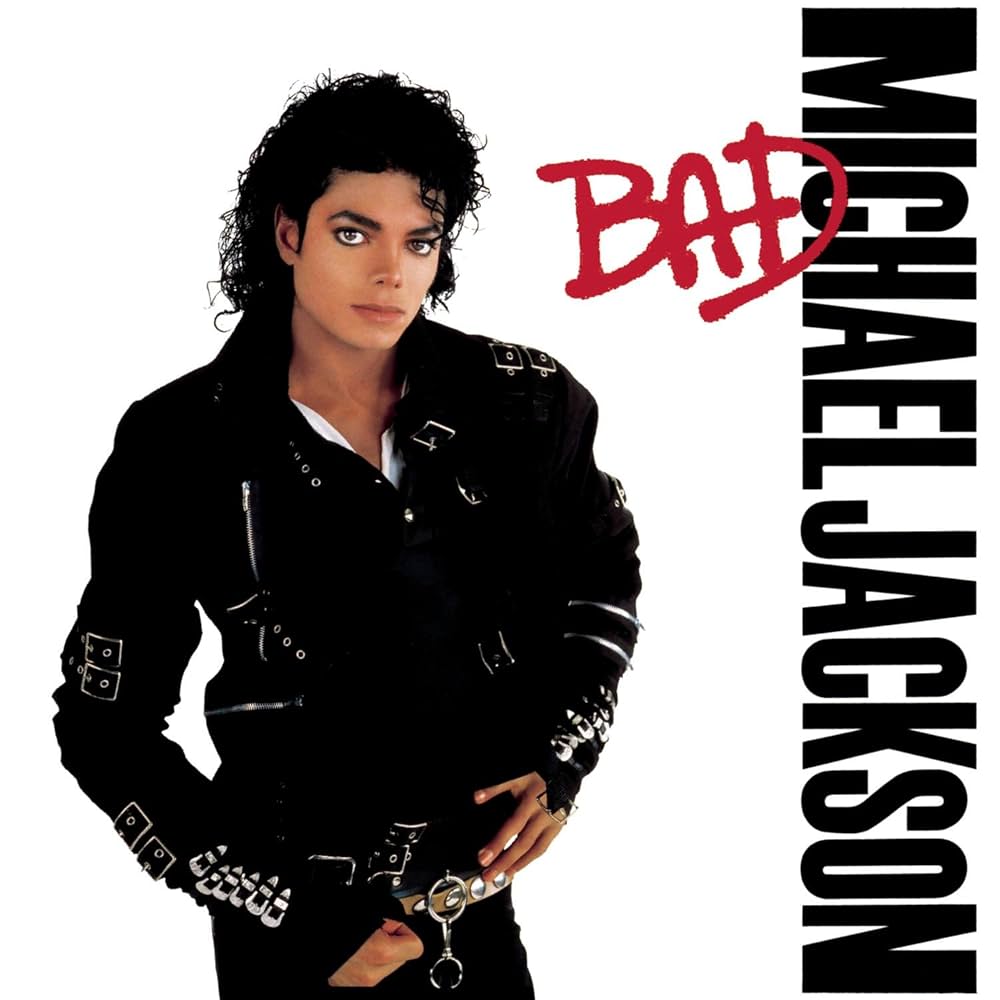
Following the biggest-selling album in history is an impossible task.
After Thriller rewrote the record books and transformed Michael Jackson into the world’s biggest entertainer, expectations for his next album reached unprecedented heights. Nearly every artist in history would have buckled under that pressure. Instead, Jackson responded with Bad, a record that refused to imitate its predecessor while confidently establishing its own identity.
Released in 1987, Bad leaned further into sleek pop, harder-edged funk, rock, and contemporary R&B. It also showcased a more assertive Michael Jackson, both as a performer and songwriter. For the first time, he wrote nine of the album’s eleven tracks himself, demonstrating that he was far more than just an extraordinary vocalist and dancer.
Although comparisons with Thriller have always been unavoidable, Bad deserves to be judged on its own merits. It remains one of the strongest pop albums ever recorded and one of the defining releases of the late 1980s.
Album Overview
Bad is a study in confidence.
Where Off the Wall radiated youthful optimism and Thriller balanced experimentation with mass appeal, Bad presents Jackson at the height of his artistic and commercial power. Every song feels meticulously crafted, with polished arrangements, impeccable musicianship, and production that pushes the limits of what late-1980s pop could achieve.
Working once again with Quincy Jones, Jackson assembled an extraordinary group of musicians and collaborators. The album blends dance music, funk, rock, gospel, soul, and adult contemporary without ever sounding disjointed.
Despite its polished production, Bad retains an emotional core. Themes of identity, resilience, romance, loneliness, social responsibility, and personal determination run throughout the record.
It is the sound of an artist fully aware of his extraordinary abilities.
Songwriting
One of the album’s greatest achievements is Michael Jackson’s growth as a songwriter.
Writing nine of the eleven tracks himself, he demonstrates remarkable versatility.
The title track opens with swagger and confidence, becoming one of the defining pop songs of the decade. Beneath its confrontational attitude lies an exploration of self-worth and personal strength.
“The Way You Make Me Feel” balances irresistible dance rhythms with playful romantic charm, while “Dirty Diana” ventures into darker territory through one of Jackson’s hardest-rocking performances.
“Man in the Mirror,” written by Glen Ballard and Siedah Garrett, serves as the album’s emotional centerpiece. Its uplifting message of personal responsibility and social change has become one of Jackson’s most enduring songs.
“Smooth Criminal” combines cinematic storytelling with one of the most recognizable grooves in pop history, while “Leave Me Alone” cleverly addresses media obsession and celebrity culture with biting wit.
Even lesser-known tracks such as “Liberian Girl,” “Another Part of Me,” and “I Just Can’t Stop Loving You” demonstrate exceptional melodic craftsmanship.
Performance
Michael Jackson delivers one of the finest vocal performances of his career.
His range, precision, and rhythmic control are astonishing throughout the album. Whether whispering intimate verses, unleashing explosive choruses, or layering intricate vocal harmonies, every performance feels effortless.
His vocal personality has also evolved.
Compared to Off the Wall, Jackson sounds more assertive and confident, perfectly matching the album’s themes of independence and determination.
The musicianship throughout is outstanding.
Steve Stevens’ blistering guitar solo on “Dirty Diana” adds genuine hard-rock credibility, while exceptional rhythm sections, horn arrangements, synthesizers, and layered backing vocals create a rich sonic landscape.
Every performance serves the songs rather than competing for attention.
Production
Quincy Jones and Michael Jackson once again prove why they formed one of the greatest artist-producer partnerships in music history.
The production is polished almost to perfection.
Every drum hit, synthesizer texture, guitar line, vocal harmony, and orchestral flourish occupies precisely the right place within the mix.
Unlike Thriller, which often emphasized genre experimentation, Bad presents a more unified sonic identity built around crisp rhythms, layered electronic textures, and enormous pop hooks.
Some production choices unmistakably reflect the late 1980s, particularly the prominent synthesizers and drum sounds.
Fortunately, they remain tasteful enough that the album has aged considerably better than many of its contemporaries.
Standout Tracks
“Man in the Mirror”
One of the greatest inspirational songs ever recorded. Jackson’s extraordinary vocal performance builds from quiet reflection to overwhelming emotional power.
“Smooth Criminal”
Driven by an unforgettable bass line and relentless rhythm, this cinematic masterpiece remains one of Jackson’s signature recordings.
“Bad”
Confident, energetic, and instantly recognizable, the title track perfectly captures the album’s bold personality.
“The Way You Make Me Feel”
A joyful celebration of romance featuring one of Jackson’s most infectious vocal performances.
“Dirty Diana”
Dark, dramatic, and surprisingly heavy, this rock-influenced standout showcases Jackson’s remarkable versatility.
“Leave Me Alone”
A brilliant closing track that cleverly confronts tabloid culture while delivering one of the album’s catchiest choruses.
Weak Points
Bad is exceptionally consistent, though a handful of tracks don’t quite reach the extraordinary heights of its biggest singles.
“I Just Can’t Stop Loving You” is a pleasant duet but lacks the distinctive personality found elsewhere on the album. Similarly, “Speed Demon,” while energetic and inventive, is slightly less memorable than many surrounding tracks.
Additionally, comparisons with Thriller have sometimes overshadowed the album’s individual accomplishments.
On its own terms, however, these are relatively minor observations.
Legacy
Bad accomplished what many believed impossible.
It became the first album ever to produce five No. 1 singles on the Billboard Hot 100, sold more than 35 million copies worldwide, and reinforced Michael Jackson’s status as the world’s biggest pop star.
Its influence extends across pop, R&B, dance music, and contemporary production. Artists from Usher and Justin Timberlake to Beyoncé, Bruno Mars, The Weeknd, and countless others have borrowed elements of its vocal style, production techniques, choreography, and visual presentation.
The accompanying world tour further cemented Jackson’s reputation as one of history’s greatest live performers.
More than three decades later, Bad remains an extraordinary achievement—an album that would have defined almost any artist’s career, even if it happened to follow the biggest-selling record ever made.
Final Score
9.5/10
Bad is an exceptional pop masterpiece that successfully stepped out of Thriller‘s enormous shadow while establishing its own distinct identity. Michael Jackson’s extraordinary songwriting, breathtaking vocal performances, and Quincy Jones’ immaculate production combine to create one of the defining albums of the 1980s. While the impossible comparisons to Thriller have occasionally obscured its brilliance, Bad stands comfortably among the greatest pop albums ever recorded.
This post has already been read 3 times!