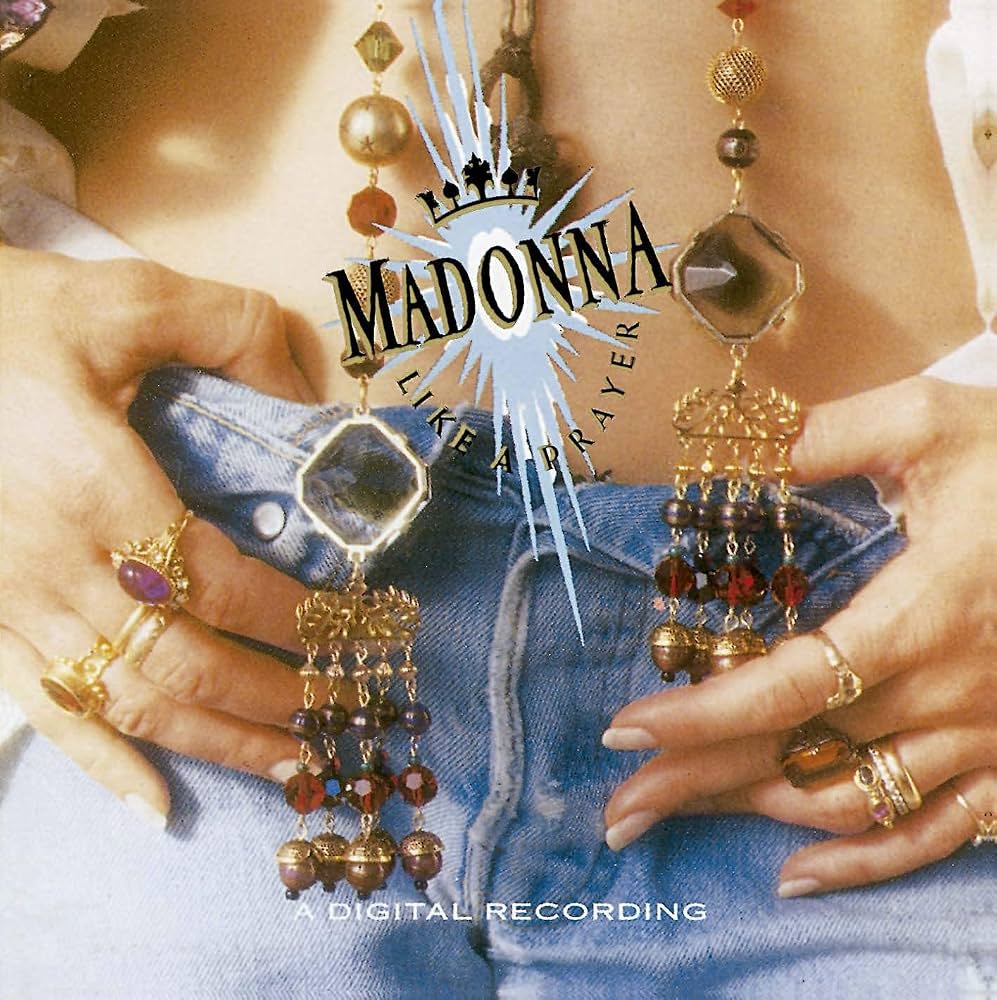
By 1989, Madonna had already conquered pop music. She had become one of the biggest stars in the world through a string of blockbuster albums filled with dance hits, provocative imagery, and unforgettable music videos. Yet Like a Prayer revealed an artist who wanted something more than commercial dominance. She wanted to be taken seriously as a songwriter and album artist.
The result was the most personal, ambitious, and emotionally mature record of her career.
Blending pop, rock, funk, soul, gospel, and dance music, Like a Prayer explored family, faith, sexuality, loss, love, and identity with a level of vulnerability that surprised critics and longtime fans alike. The album retained Madonna’s gift for irresistible hooks while introducing a depth that elevated her music far beyond the dance floor.
More than three decades later, Like a Prayer remains not only Madonna’s finest achievement but one of the defining pop albums of the late 1980s.
Album Overview
Unlike many of Madonna’s earlier releases, Like a Prayer feels deeply autobiographical.
Following the breakdown of her marriage to Sean Penn, the death of her mother years earlier, and increasing public scrutiny, Madonna channeled personal experiences into songs that felt more intimate than anything she had previously recorded.
Working with producers Patrick Leonard and Stephen Bray, she expanded her musical vocabulary considerably. Gospel choirs, live instruments, rock guitars, orchestral arrangements, and sophisticated vocal harmonies coexist naturally throughout the album.
Despite exploring numerous styles, the record never loses its identity.
Themes of redemption, emotional healing, female independence, family relationships, spirituality, and self-discovery connect every song into a remarkably cohesive listening experience.
This is the album where Madonna evolved from pop superstar into complete artist.
Songwriting
Madonna’s songwriting reached a new level on Like a Prayer.
The title track remains one of the greatest pop songs ever recorded. Combining gospel influences with rock instrumentation and deeply personal lyrics, it balances spirituality and sensuality in a way that was both controversial and groundbreaking.
“Express Yourself” serves as an empowering anthem encouraging women to demand respect and emotional honesty in relationships. Its bold message remains remarkably relevant decades later.
“Cherish” offers one of the album’s brightest moments, demonstrating Madonna’s ability to craft joyful pop without sacrificing sophistication.
“Oh Father” is perhaps her most emotionally devastating composition, confronting childhood trauma and complicated family relationships with remarkable honesty.
“Keep It Together” celebrates family bonds through infectious funk rhythms, while “Till Death Do Us Part” addresses the emotional pain of a failing marriage with unusual candor.
Even the Prince collaboration “Love Song” contributes another fascinating musical texture, reinforcing the album’s adventurous spirit.
The songwriting consistently balances accessibility with emotional depth.
Performance
Madonna delivers the strongest vocal performance of her career to that point.
Rather than relying solely on attitude and charisma, she sings with greater confidence, warmth, and emotional nuance throughout the album. Her voice sounds richer and more expressive, particularly on reflective songs like “Oh Father” and “Promise to Try.”
She also demonstrates remarkable versatility.
Whether fronting a gospel choir on the title track, delivering dance-pop on “Express Yourself,” or quietly reflecting during the album’s ballads, Madonna adapts her vocal approach to every musical setting.
The supporting musicians are equally exceptional.
Patrick Leonard’s keyboards, the gospel choir, live rhythm section, horn arrangements, and tasteful guitar work create a lush musical landscape that constantly supports rather than overshadows Madonna’s performances.
Everything feels collaborative.
Production
The production remains one of the album’s greatest strengths.
Patrick Leonard and Stephen Bray avoid the excessive electronic sheen that dated many late-1980s pop records, instead emphasizing organic instrumentation alongside tasteful synthesizers.
The gospel choir on “Like a Prayer” creates enormous emotional impact without overwhelming the song.
Throughout the album, live drums, bass, guitars, keyboards, strings, and backing vocals are layered with remarkable clarity.
The production constantly shifts between intimate moments and grand, cinematic arrangements while maintaining excellent sonic balance.
Even decades later, Like a Prayer sounds surprisingly contemporary.
Its focus on musicianship has allowed it to age exceptionally well.
Standout Tracks
“Like a Prayer”
One of the defining pop singles of the 1980s. Its remarkable blend of gospel, rock, and personal storytelling remains one of Madonna’s greatest achievements.
“Express Yourself”
An empowering anthem filled with enormous hooks, confident performances, and timeless messages about self-worth.
“Oh Father”
Perhaps Madonna’s most emotionally vulnerable song, featuring an unforgettable vocal performance and deeply personal lyrics.
“Cherish”
Bright, joyful, and irresistibly melodic, this pop gem provides a perfect emotional balance to the album’s heavier themes.
“Keep It Together”
Driven by infectious funk rhythms, this celebration of family remains one of Madonna’s most underrated recordings.
“Promise to Try”
A heartbreaking meditation on grief that quietly showcases Madonna’s growth as both songwriter and vocalist.
Weak Points
Like a Prayer is remarkably consistent, though not every experiment succeeds equally.
The Prince duet “Love Song,” while historically fascinating, feels slightly less essential than the album’s strongest material. Its understated groove never quite reaches the emotional heights surrounding it.
Additionally, a few slower songs require patient listening before revealing their full emotional impact, making the album slightly less immediate than Madonna’s earlier pop-focused releases.
These are minor observations within an otherwise extraordinary body of work.
Legacy
Like a Prayer permanently changed perceptions of Madonna as an artist.
Critics who had previously dismissed her as merely a pop phenomenon were forced to acknowledge her growth as a songwriter and creative force. The album became both a commercial triumph and one of the most acclaimed releases of her career.
Its influence extends across pop, R&B, dance music, and modern singer-songwriters. Artists such as Beyoncé, Lady Gaga, Pink, Christina Aguilera, Kelly Clarkson, and countless others have drawn inspiration from its fearless combination of commercial appeal and deeply personal storytelling.
The title track’s groundbreaking music video also sparked one of pop culture’s most famous controversies, demonstrating Madonna’s willingness to challenge social, religious, and cultural expectations through her art.
More than thirty-five years later, Like a Prayer remains the album against which every Madonna release is measured.
It stands as both her artistic peak and one of the greatest pop records ever made.
Final Score
10/10
Like a Prayer is a masterpiece that successfully balances massive pop hooks with extraordinary emotional depth and artistic ambition. Madonna’s finest songwriting, strongest vocal performances, and sophisticated production combine to create an album that transcends its era while remaining endlessly compelling. Bold, vulnerable, provocative, and beautifully crafted, it is not only the greatest album of Madonna’s career but one of the defining achievements in pop music history.
This post has already been read 3 times!