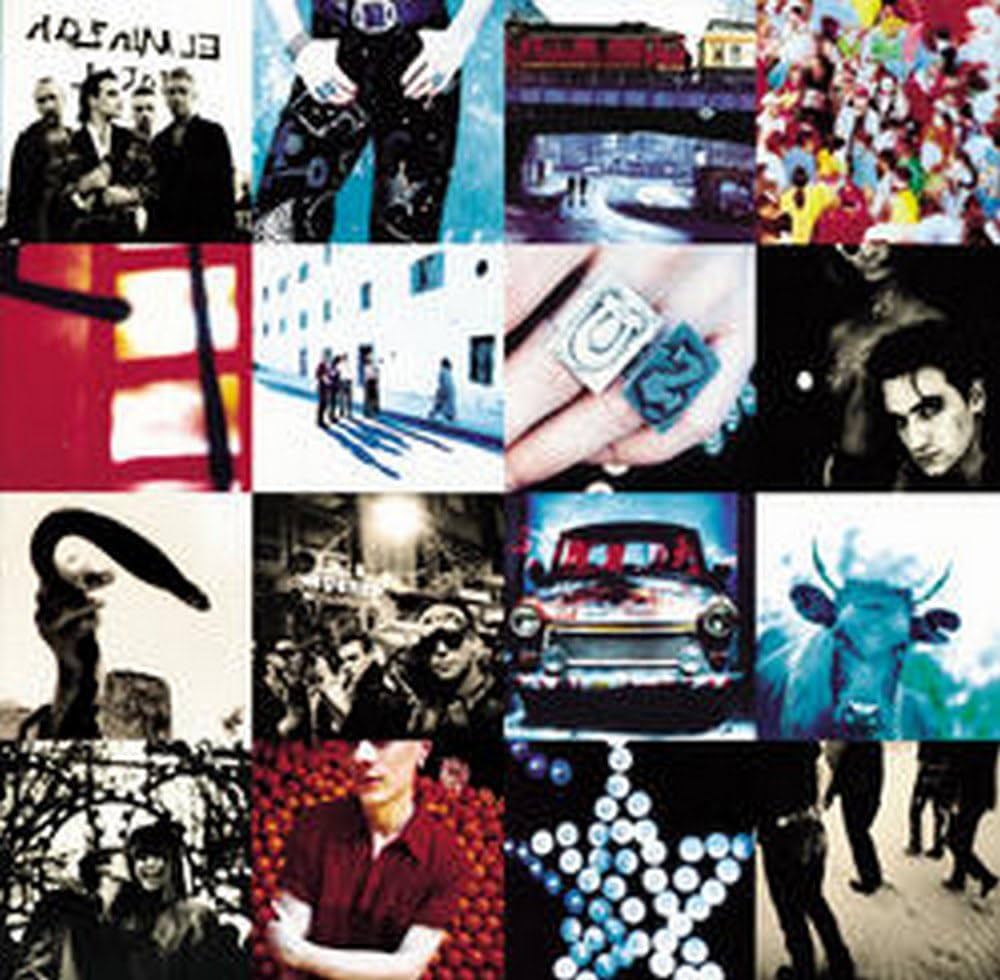
Very few bands survive becoming the biggest rock group in the world. Even fewer reinvent themselves at the height of their success.
After the monumental global triumph of The Joshua Tree and Rattle and Hum, U2 found themselves facing an artistic crossroads. Critics had begun accusing the band of taking itself too seriously, while the changing musical landscape of the early 1990s threatened to leave traditional arena rock behind. Rather than doubling down on their established formula, U2 tore it apart.
Released in 1991, Achtung Baby was a daring reinvention. Drawing inspiration from alternative rock, industrial music, electronic dance music, glam rock, and the reunification-era atmosphere of Berlin, the band abandoned certainty in favor of ambiguity, irony, sensuality, and experimentation.
The gamble paid off spectacularly.
Achtung Baby remains not only U2’s greatest artistic achievement but one of the defining albums of the 1990s.
Album Overview
Recorded largely at Hansa Studios in Berlin during a period of internal tension, Achtung Baby nearly became the album that broke up U2.
Creative disagreements, uncertainty about the band’s future, and struggles to develop a new musical direction made the sessions notoriously difficult. Yet those tensions ultimately became the album’s greatest strength.
The record captures a band willing to question everything.
The soaring Americana of The Joshua Tree gives way to distorted guitars, electronic textures, hypnotic rhythms, and darker emotional landscapes. Themes of fractured relationships, identity, temptation, faith, betrayal, and redemption replace the moral certainty that characterized much of U2’s earlier work.
Remarkably, despite its stylistic shifts, the album never loses the unmistakable chemistry between Bono, The Edge, Adam Clayton, and Larry Mullen Jr.
It is both a reinvention and a reaffirmation.
Songwriting
Bono’s songwriting reaches extraordinary heights on Achtung Baby.
Rather than delivering grand political statements, he turns inward, exploring personal relationships and emotional contradictions with remarkable honesty.
“Zoo Station” immediately announces the band’s transformation. Its distorted vocals, industrial rhythms, and fragmented structure make it one of the boldest opening tracks in rock history.
“One” follows with one of the greatest songs ever written. Built around themes of love, forgiveness, separation, and reconciliation, it achieves universal emotional power without offering easy answers.
“Until the End of the World” reimagines the relationship between Jesus and Judas as a deeply human conversation, showcasing Bono’s growing lyrical sophistication.
“The Fly” brilliantly embraces media saturation, ego, and sensory overload while introducing the ironic stage persona that would define the Zoo TV era.
Even songs like “Mysterious Ways,” “Who’s Gonna Ride Your Wild Horses,” “So Cruel,” and “Love Is Blindness” reveal extraordinary emotional depth and melodic craftsmanship.
Every song feels essential.
Performance
Bono delivers arguably the finest vocal performance of his career.
His voice retains its trademark passion while expanding to include vulnerability, sensuality, sarcasm, and quiet introspection. Whether whispering during “Love Is Blindness” or soaring through “One,” every performance feels emotionally authentic.
The Edge completely reinvents his guitar playing.
Rather than relying solely on shimmering delay effects, he incorporates distortion, feedback, electronic processing, funk-inspired rhythms, and textured atmospheres that redefine his musical identity.
Adam Clayton’s bass work is more adventurous than ever, providing irresistible grooves throughout songs like “Mysterious Ways” and “Even Better Than the Real Thing.”
Larry Mullen Jr.’s drumming remains precise and powerful while adapting effortlessly to the album’s electronic influences.
The four musicians sound revitalized.
Production
Daniel Lanois, Brian Eno, and Steve Lillywhite deserve enormous credit for helping guide U2 through one of rock’s most successful reinventions.
The production is dense without becoming cluttered.
Electronic textures blend naturally with live instrumentation.
Distorted guitars coexist beautifully with synthesizers, drum loops, and atmospheric effects.
Every sonic experiment serves the emotional tone of the songs rather than existing simply for novelty.
Despite its early-1990s influences, Achtung Baby has aged remarkably well because it prioritizes atmosphere, songwriting, and musicianship over passing trends.
Its sonic landscape remains as immersive today as it was upon release.
Standout Tracks
“One”
One of the greatest songs ever written. Its emotional depth, unforgettable melody, and universal themes have made it one of U2’s defining masterpieces.
“Mysterious Ways”
Sensual, playful, and irresistibly funky, this innovative single showcases the band’s remarkable musical transformation.
“The Fly”
A thrilling explosion of distorted guitars, electronic textures, and lyrical wit that perfectly captures the album’s adventurous spirit.
“Until the End of the World”
Dark, dramatic, and emotionally complex, this standout features one of The Edge’s finest guitar performances.
“Love Is Blindness”
A devastating album closer elevated by Bono’s haunting vocal and one of The Edge’s most emotional guitar solos.
“Zoo Station”
A fearless opening statement that immediately announces U2’s artistic rebirth.
Weak Points
Finding meaningful flaws on Achtung Baby is exceptionally difficult.
Some longtime fans expecting another Joshua Tree were initially unsettled by the album’s darker tone and experimental production. A few tracks, particularly the slower, more atmospheric pieces, reveal their full brilliance only after repeated listening.
These are not genuine weaknesses but reflections of an album that demands patience and careful attention.
Legacy
Achtung Baby permanently changed U2’s career.
Rather than becoming prisoners of their own success, the band proved they could evolve without sacrificing their identity. The album revitalized their creative ambitions and paved the way for the groundbreaking Zoo TV Tour, one of the most influential concert productions in rock history.
Its impact extends across alternative rock, electronic music, and modern pop. Countless artists have cited the album’s fearless experimentation as proof that commercial success and artistic risk can coexist.
Today, Achtung Baby consistently appears on lists of the greatest albums ever recorded because it succeeds on every level.
It is emotionally rich, musically adventurous, technically brilliant, and remarkably cohesive.
More than thirty years after its release, it remains not only U2’s masterpiece but one of the defining achievements of modern rock music.
Final Score
10/10
Achtung Baby is a flawless reinvention that transformed U2 from arena rock superstars into one of the most artistically adventurous bands of their generation. Extraordinary songwriting, breathtaking performances, innovative production, and fearless experimentation combine to create one of the greatest rock albums ever recorded. It remains the pinnacle of U2’s career and fully deserves its place among the rare albums worthy of a perfect score.
This post has already been read 62 times!