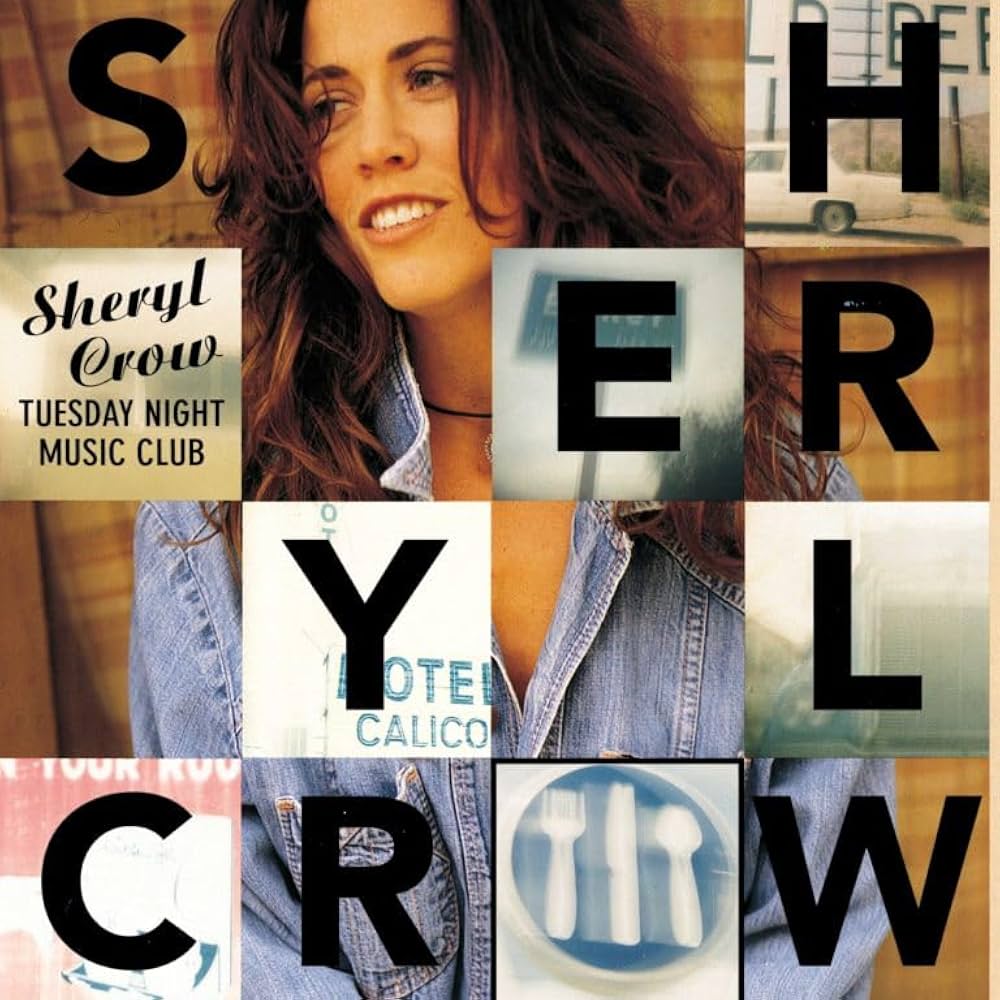
Breakthrough albums often arrive after years of struggle, and few debut successes were as hard-earned as Sheryl Crow’s Tuesday Night Music Club. Before becoming one of the defining singer-songwriters of the 1990s, Crow had spent years working as a backup vocalist, recording commercials, and even touring with Michael Jackson. A completed debut album had been shelved, leaving her career in limbo.
Everything changed when she began collaborating with a loose collective of Los Angeles musicians who gathered for informal songwriting sessions on Tuesday nights. Those relaxed collaborations eventually evolved into Tuesday Night Music Club, released in 1993.
Blending rock, pop, folk, blues, country, and soul with effortless confidence, the album introduced a fresh voice that felt both contemporary and timeless. Its enormous commercial success launched Crow into stardom, but its lasting appeal comes from far more than hit singles. It remains one of the strongest debut albums of the decade.
Album Overview
Unlike many debut records carefully designed by record labels, Tuesday Night Music Club feels remarkably organic.
The collaborative nature of its creation gives the album an easygoing chemistry that can’t be manufactured. Rather than showcasing a single songwriter backed by studio musicians, the record sounds like a talented group of friends discovering songs together.
Musically, the album moves comfortably between roots rock, folk, blues, country, pop, and classic rock influences. Acoustic guitars, Hammond organ, electric piano, harmonica, and tasteful electric guitar arrangements create a warm, inviting atmosphere throughout.
The pacing is excellent.
Upbeat radio-friendly tracks are balanced by introspective ballads and relaxed mid-tempo songs, making the album feel cohesive despite its stylistic variety.
Songwriting
One of the album’s greatest strengths is its conversational approach to songwriting.
Crow and her collaborators avoid unnecessary complexity, instead crafting songs that feel lived-in and relatable. Everyday observations become memorable because of their honesty rather than elaborate metaphors.
“All I Wanna Do” became the album’s defining hit and one of the signature songs of the 1990s. Inspired by Wyn Cooper’s poem “Fun,” its relaxed storytelling, witty lyrics, and infectious groove perfectly capture the album’s laid-back personality.
“Strong Enough” reveals Crow’s emotional vulnerability through a beautifully understated melody and heartfelt lyrics about insecurity within relationships.
“Leaving Las Vegas” balances humor and melancholy while painting a vivid portrait of escape and reinvention.
“Can’t Cry Anymore” showcases Crow’s blues influences through one of the album’s strongest vocal performances, while “Run, Baby, Run” opens the record with urgency and confidence.
Even deeper cuts like “No One Said It Would Be Easy” and “What I Can Do for You” maintain an impressively high songwriting standard.
Performance
Sheryl Crow immediately establishes herself as a remarkably versatile performer.
Her voice isn’t built around technical fireworks but around personality, warmth, and emotional authenticity. Whether delivering bluesy rock, introspective ballads, or upbeat pop songs, she sounds completely natural.
She also proves herself to be an excellent multi-instrumentalist, contributing guitar, keyboards, bass, harmonica, and percussion throughout the album.
The supporting musicians deserve equal praise.
Their performances remain tasteful and restrained, consistently placing the songs above individual virtuosity. Every guitar solo, keyboard flourish, and rhythm section groove serves the music rather than drawing unnecessary attention.
The relaxed chemistry between the musicians becomes one of the album’s defining qualities.
Production
The production perfectly complements the songwriting.
Rather than embracing the heavily processed sounds common during the early 1990s, Tuesday Night Music Club favors warm, natural instrumentation and spacious arrangements.
The acoustic guitars sound rich and detailed.
The rhythm section grooves effortlessly.
Keyboards and organ provide texture without overwhelming the mix, while Crow’s vocals remain comfortably at the center.
Producer Bill Bottrell deserves enormous credit for maintaining the album’s intimate atmosphere while giving every song enough polish for mainstream radio.
More than thirty years later, the production still sounds remarkably fresh.
Standout Tracks
“All I Wanna Do”
One of the defining singles of the 1990s. Relaxed, witty, and endlessly catchy, it remains Crow’s signature recording.
“Strong Enough”
A beautifully vulnerable ballad featuring one of Crow’s finest vocal performances and a timeless melody.
“Leaving Las Vegas”
A thoughtful meditation on reinvention that combines memorable storytelling with outstanding musicianship.
“Run, Baby, Run”
An energetic opener that immediately showcases Crow’s songwriting confidence and the album’s warm production.
“Can’t Cry Anymore”
A soulful blend of rock and blues highlighted by emotional vocals and tasteful guitar work.
“No One Said It Would Be Easy”
A quietly moving deep cut that demonstrates the emotional depth found throughout the album.
Weak Points
Tuesday Night Music Club is remarkably consistent for a debut, though a few of its deeper cuts don’t quite possess the immediate memorability of the album’s biggest singles.
The collaborative songwriting process occasionally results in songs that feel slightly less personal than Crow’s later solo work.
Additionally, listeners seeking edgier alternative rock may find the album’s relaxed pacing and roots-oriented sound somewhat understated.
These are relatively minor observations about an exceptionally accomplished debut.
Legacy
Tuesday Night Music Club established Sheryl Crow as one of the defining singer-songwriters of the 1990s.
The album won three Grammy Awards, including Record of the Year for “All I Wanna Do,” and sold millions of copies worldwide. It also helped pave the way for a generation of female artists who blended rock, folk, country, and pop without being confined to a single genre.
Its influence can be heard in artists ranging from Michelle Branch and Brandi Carlile to Grace Potter and many contemporary Americana performers.
More importantly, the album demonstrated that thoughtful songwriting, authentic performances, and strong musicianship could still thrive in mainstream pop music.
Three decades later, Tuesday Night Music Club remains as charming, warm, and effortlessly enjoyable as ever.
Final Score
9.0/10
Tuesday Night Music Club is an outstanding debut that introduced Sheryl Crow as a gifted songwriter, versatile musician, and deeply engaging performer. Filled with memorable melodies, warm production, and consistently strong songwriting, the album strikes a near-perfect balance between commercial accessibility and artistic substance. While Crow would continue to evolve throughout her career, her first major release remains one of the finest singer-songwriter albums of the 1990s.
This post has already been read 3 times!