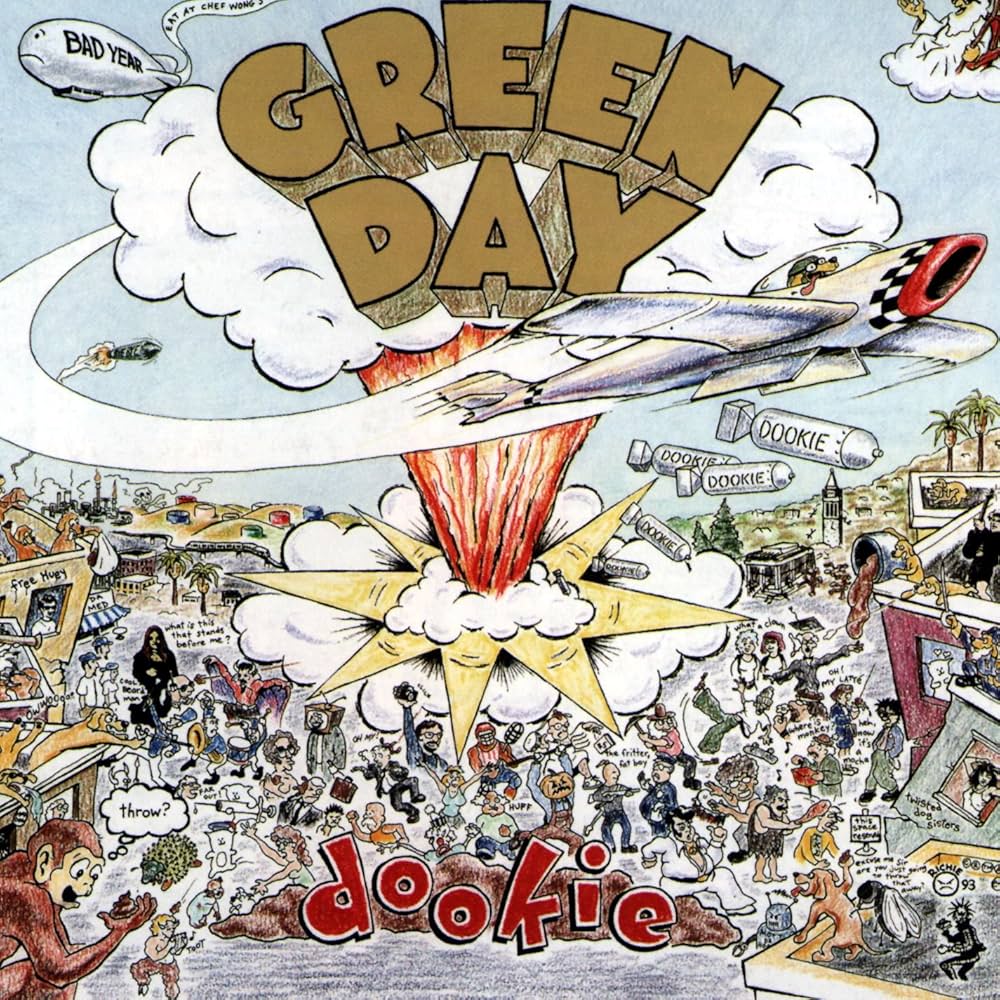
Punk rock had always thrived on the fringes of popular music, but in 1994, Green Day kicked the door wide open. Dookie didn’t just become a massive commercial success—it fundamentally changed the direction of rock music. At a time when grunge dominated the airwaves, the California trio proved that fast, melodic, and irreverent punk could connect with a mainstream audience without losing its edge.
The album sold more than 20 million copies worldwide, won the Grammy Award for Best Alternative Music Album, and introduced millions of listeners to a new generation of punk. While some longtime fans accused Green Day of selling out after signing with a major label, history has largely settled that debate. Dookie expanded punk’s audience while inspiring countless young musicians to pick up guitars and start bands of their own.
More than thirty years later, it remains one of the defining rock albums of the 1990s.
Album Overview
Clocking in at just under 40 minutes, Dookie is a masterclass in efficiency.
There isn’t a wasted moment.
Most songs barely cross the three-minute mark, yet each manages to pack in unforgettable hooks, sharp lyrics, and infectious energy. Rather than relying on technical complexity, Green Day succeeds through exceptional songwriting and an instinctive understanding of melody.
The chemistry between Billie Joe Armstrong, Mike Dirnt, and Tré Cool is immediately apparent. Every member plays a vital role, creating a sound that is far bigger than a three-piece band should be capable of producing.
Lyrically, the album captures the confusion, boredom, anxiety, relationships, and aimlessness of young adulthood with remarkable honesty. Its humor keeps the record from becoming overly serious, while its emotional sincerity prevents it from feeling disposable.
The balance is nearly perfect.
Songwriting
Billie Joe Armstrong’s songwriting is one of Dookie‘s greatest strengths.
His lyrics are direct, funny, self-deprecating, and surprisingly insightful, capturing everyday frustrations without unnecessary melodrama.
“Burnout” immediately establishes the album’s restless energy, opening with one of Green Day’s most memorable guitar riffs and setting the tone for everything that follows.
“Longview” remains one of the defining songs of the decade. Built around Mike Dirnt’s unforgettable bass line, it transforms boredom, loneliness, and youthful frustration into an irresistible punk anthem.
“Basket Case” brilliantly explores anxiety and mental health with wit and vulnerability, becoming one of alternative rock’s signature songs.
“When I Come Around” showcases Armstrong’s gift for writing emotionally resonant melodies without sacrificing punk energy, while “She” delivers one of the album’s strongest combinations of aggression and pop craftsmanship.
Even lesser-known tracks such as “Coming Clean,” “Sassafras Roots,” and “F.O.D.” maintain an impressively high level of quality.
The consistency is remarkable.
Performance
Billie Joe Armstrong delivers an outstanding vocal performance throughout.
His voice isn’t technically flashy, but its youthful urgency, melodic instinct, and emotional honesty make every song believable. Whether delivering sarcastic humor or genuine vulnerability, he remains completely authentic.
His guitar work perfectly serves the songs, favoring memorable riffs and energetic rhythm playing over unnecessary solos.
Mike Dirnt is arguably the album’s secret weapon.
His melodic bass lines elevate nearly every song, particularly on “Longview,” where his iconic opening riff instantly became one of alternative rock’s most recognizable bass performances.
Tré Cool completes the trio with explosive drumming that combines punk aggression with remarkable precision and creativity.
Together, the three musicians display extraordinary chemistry that few bands ever achieve.
Production
Rob Cavallo’s production deserves enormous credit for helping make Dookie a crossover success.
The album sounds polished enough for mainstream radio while retaining the raw energy essential to punk rock.
The guitars are crisp and powerful.
The bass remains unusually prominent in the mix, allowing Mike Dirnt’s playing to shine.
The drums hit with tremendous force without overpowering the songs, while Armstrong’s vocals remain clear and energetic throughout.
Unlike many mid-1990s rock albums, Dookie has aged exceptionally well.
Its clean production continues to sound vibrant decades later.
Standout Tracks
“Basket Case”
One of the defining punk songs of the 1990s. Its unforgettable chorus, frantic energy, and honest exploration of anxiety make it a timeless classic.
“Longview”
Driven by one of rock’s greatest bass lines, this breakthrough single perfectly captures youthful boredom and frustration.
“When I Come Around”
A beautifully written mid-tempo anthem featuring one of Billie Joe Armstrong’s strongest melodies.
“Welcome to Paradise”
Fast, energetic, and endlessly catchy, this fan favorite showcases Green Day’s remarkable ability to combine punk aggression with pop songwriting.
“She”
An emotionally charged standout that balances raw power with melodic sophistication.
“Burnout”
A blistering opener that immediately establishes the album’s relentless pace and infectious energy.
Weak Points
Dookie leaves very little room for criticism.
A handful of deeper cuts don’t quite reach the iconic status of the album’s biggest singles, though even these remain highly enjoyable.
Some punk purists continue to criticize the album’s polished production and commercial success, arguing that it softened the genre’s rough edges.
Ironically, those very qualities helped introduce punk rock to millions of new listeners without fundamentally compromising the band’s identity.
Legacy
Few punk albums have had a greater impact.
Dookie revitalized punk rock for a new generation and helped launch the mid-1990s pop-punk explosion that would later produce bands such as Blink-182, Sum 41, Good Charlotte, New Found Glory, and countless others.
The album also established Green Day as one of the defining rock bands of their generation, laying the groundwork for later masterpieces like American Idiot.
Its influence extends well beyond punk.
Its songwriting, melodic instincts, and youthful honesty continue to inspire rock musicians across multiple genres.
More than thirty years after its release, Dookie remains as energetic, funny, relatable, and exciting as it was in 1994.
It is one of the rare albums that permanently changed the course of modern rock.
Final Score
10/10
Dookie is one of the greatest punk rock albums ever recorded and one of the defining releases of the 1990s. Green Day combined unforgettable songwriting, outstanding performances, impeccable pacing, and timeless production into an album that remains endlessly replayable from beginning to end. Its influence on modern rock is immeasurable, and its remarkable consistency earns it a well-deserved place among the rare albums worthy of a perfect score.
This post has already been read 3 times!