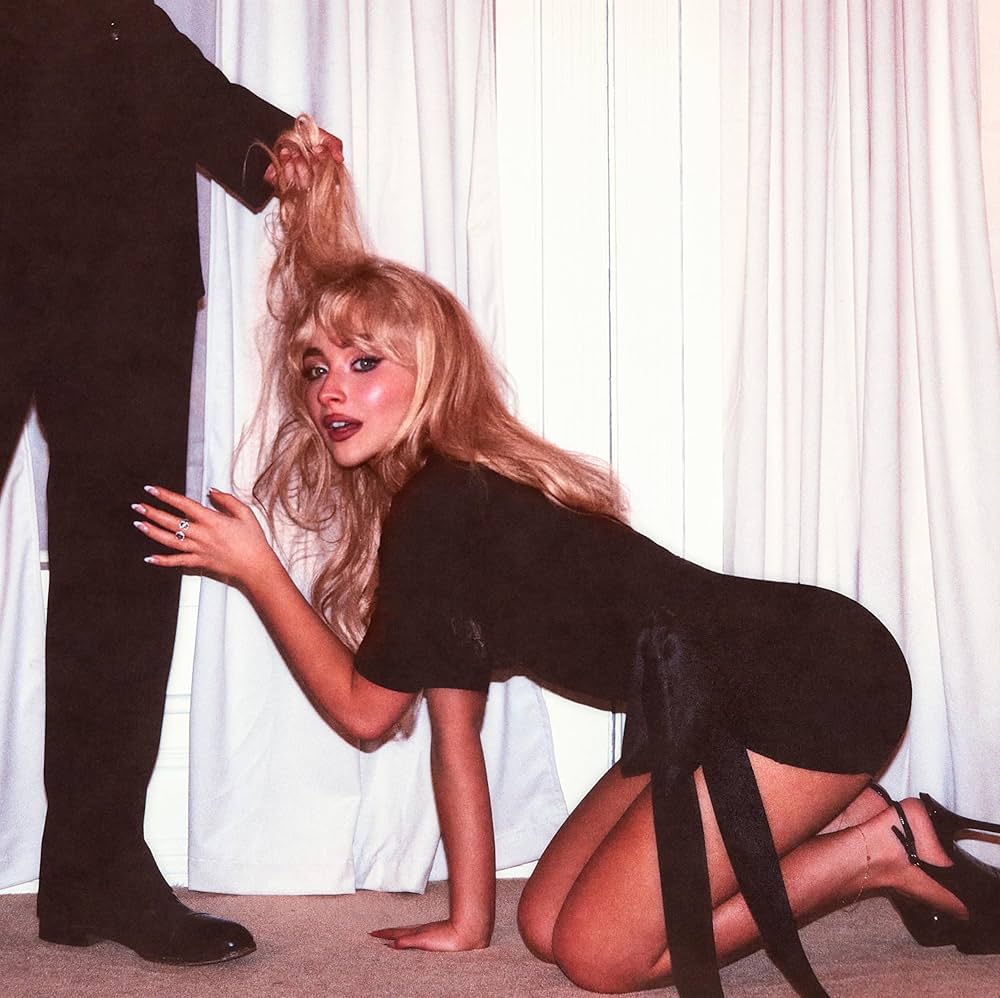
Following the breakthrough success of Emails I Can’t Send and the global pop phenomenon Short n’ Sweet, Sabrina Carpenter entered one of the most difficult phases of any artist’s career: following a blockbuster. Overnight, she had evolved from a steadily rising pop singer into one of the biggest stars in the world, with chart-topping singles, sold-out arenas, and an unmistakable public persona built around sharp wit, self-awareness, and unapologetic confidence.
Released in 2025, Man’s Best Friend finds Carpenter refusing to simply recreate what made its predecessor so successful. While the album retains her signature blend of clever lyricism, polished pop production, and playful humor, it also expands her musical palette and emotional range. The songs are bolder, occasionally darker, and noticeably more reflective beneath their glossy surface.
The title itself hints at one of the album’s recurring themes: expectations placed on women in relationships, public perception, loyalty, independence, and the tension between wanting connection and refusing to lose oneself in the process.
Man’s Best Friend proves that Carpenter’s enormous success wasn’t built on personality alone. She’s become one of modern pop’s smartest songwriters, capable of balancing commercial appeal with genuine artistic growth.
Album Overview
One of the album’s greatest strengths is its confidence.
Nothing feels tentative.
Carpenter sounds completely comfortable occupying center stage.
The record effortlessly blends modern pop with disco, funk, R&B, soft rock, dance-pop, and occasional country influences without ever feeling scattered.
Much like Short n’ Sweet, the album moves quickly from song to song, rarely overstaying its welcome. However, the emotional range is broader this time around.
There are flirtatious pop songs.
Biting observations.
Moments of vulnerability.
Sharp humor.
Quiet introspection.
The sequencing allows these different moods to complement one another, creating an album that remains engaging from beginning to end.
Rather than relying solely on radio-ready singles, Man’s Best Friend succeeds as a complete album experience, with recurring lyrical themes tying the songs together.
Songwriting
Carpenter’s songwriting continues to improve with each release.
Her greatest gift remains her ability to write lyrics that feel conversational while hiding surprising emotional depth beneath playful surfaces.
She’s funny without becoming gimmicky.
Confident without sounding arrogant.
Honest without drifting into oversharing.
Throughout the album, Carpenter explores relationships from multiple angles.
Some songs celebrate romance.
Others dissect unhealthy dynamics.
Several examine the strange intersection between celebrity, social media, and personal identity.
What separates Man’s Best Friend from many contemporary pop records is Carpenter’s willingness to laugh at herself.
She frequently undercuts dramatic moments with clever observations or self-deprecating humor, making the emotional songs feel even more authentic.
The album also benefits from stronger narrative consistency than some of her previous work.
Rather than presenting isolated snapshots, many songs feel like different perspectives on the same evolving emotional journey.
Performance
Vocally, Carpenter delivers the strongest performances of her career.
She has never relied on oversized vocal gymnastics, and Man’s Best Friend wisely continues emphasizing her greatest strengths.
Charm.
Timing.
Clarity.
Character.
Her voice carries warmth during quieter moments and enough playful attitude to sell the album’s cheekier material.
She knows exactly when to soften her delivery and when to lean into a bigger pop chorus.
Her phrasing remains one of her most underrated talents.
Small changes in emphasis often become the emotional center of individual songs.
The layered harmonies throughout the album are particularly effective, adding richness without distracting from the lead vocal.
As a performer, Carpenter sounds increasingly comfortable inhabiting every style the album explores.
Production
The production is polished without becoming sterile.
Drawing from contemporary pop while incorporating vintage influences, the album creates a sonic identity that feels familiar yet fresh.
Funky bass lines.
Warm analog synthesizers.
Bright acoustic guitars.
Disco-inspired rhythms.
Tasteful electronic textures.
Everything serves the songs rather than overwhelming them.
The arrangements remain remarkably detailed throughout.
Background vocal layers emerge gradually.
Percussion subtly evolves within songs.
Unexpected instrumental flourishes reward repeated listening.
Perhaps the production’s greatest achievement is its restraint.
Rather than chasing maximum volume or constant spectacle, many tracks allow Carpenter’s voice and songwriting to remain the focal point.
The result is a record that feels sophisticated rather than overproduced.
Standout Tracks
Although Man’s Best Friend maintains a consistently high level of quality, several songs rise above an already impressive collection.
“Manchild” is one of Carpenter’s sharpest and funniest songs, pairing biting observations with an irresistible pop hook while showcasing her gift for balancing sarcasm and genuine frustration.
“Man’s Best Friend” serves as the thematic centerpiece, cleverly examining expectations, loyalty, and emotional independence through one of the album’s strongest melodies.
“Sugar Talking” blends shimmering production with playful lyricism, creating one of the album’s catchiest moments.
“Don’t Worry, I’ll Make the Coffee” reveals a more reflective side of Carpenter, using everyday details to explore emotional imbalance within relationships.
“Good Girl Complex” balances confidence and vulnerability, demonstrating the emotional growth that distinguishes this album from her earlier work.
“Last Call” closes the record beautifully, ending not with dramatic resolution but with acceptance and quiet optimism.
Weak Points
While Man’s Best Friend is an excellent pop album, it occasionally plays within familiar territory.
Several songs share similar tempos and production styles, making parts of the middle section feel slightly less distinctive than the exceptional opening and closing stretches.
Some lyrical ideas also revisit themes Carpenter explored on Short n’ Sweet. Although they’re presented from new perspectives, listeners hoping for a dramatic stylistic reinvention may find the evolution more subtle than revolutionary.
Additionally, the album’s polished production occasionally smooths away some of the spontaneity that made earlier recordings feel especially immediate.
These are relatively minor criticisms and rarely diminish the overall listening experience.
Legacy
Man’s Best Friend further establishes Sabrina Carpenter as far more than a breakout pop star enjoying a temporary moment.
The album demonstrates remarkable consistency, showing that she can follow a career-defining success with another confident, cohesive project instead of simply chasing bigger singles.
It also reinforces her reputation as one of modern pop’s most distinctive personalities. Her combination of witty songwriting, approachable charisma, and increasingly sophisticated musicianship sets her apart in an increasingly crowded pop landscape.
While it may not carry quite the same surprise factor as Short n’ Sweet, it succeeds by refining and expanding the qualities that made that album so successful.
Sometimes artistic growth comes through reinvention.
Sometimes it comes through refinement.
For Carpenter, refinement proves more than enough.
Final Score: 8.5/10
Man’s Best Friend is a polished, witty, and consistently entertaining pop album that showcases Sabrina Carpenter’s continued evolution as both a songwriter and performer. Clever lyrics, charismatic vocals, and sophisticated production combine to create a record that’s equally fun, emotionally engaging, and endlessly replayable.
While it occasionally stays within the stylistic framework established by its predecessor, the strength of the songwriting and Carpenter’s growing confidence ensure that it never feels like a retread. Instead, it expands her musical identity while reinforcing the qualities that have made her one of pop’s most compelling artists.
It may not eclipse her very best work, but Man’s Best Friend is another impressive step forward and confirms that Sabrina Carpenter has the talent to remain one of the defining voices in contemporary pop.
This post has already been read 81 times!