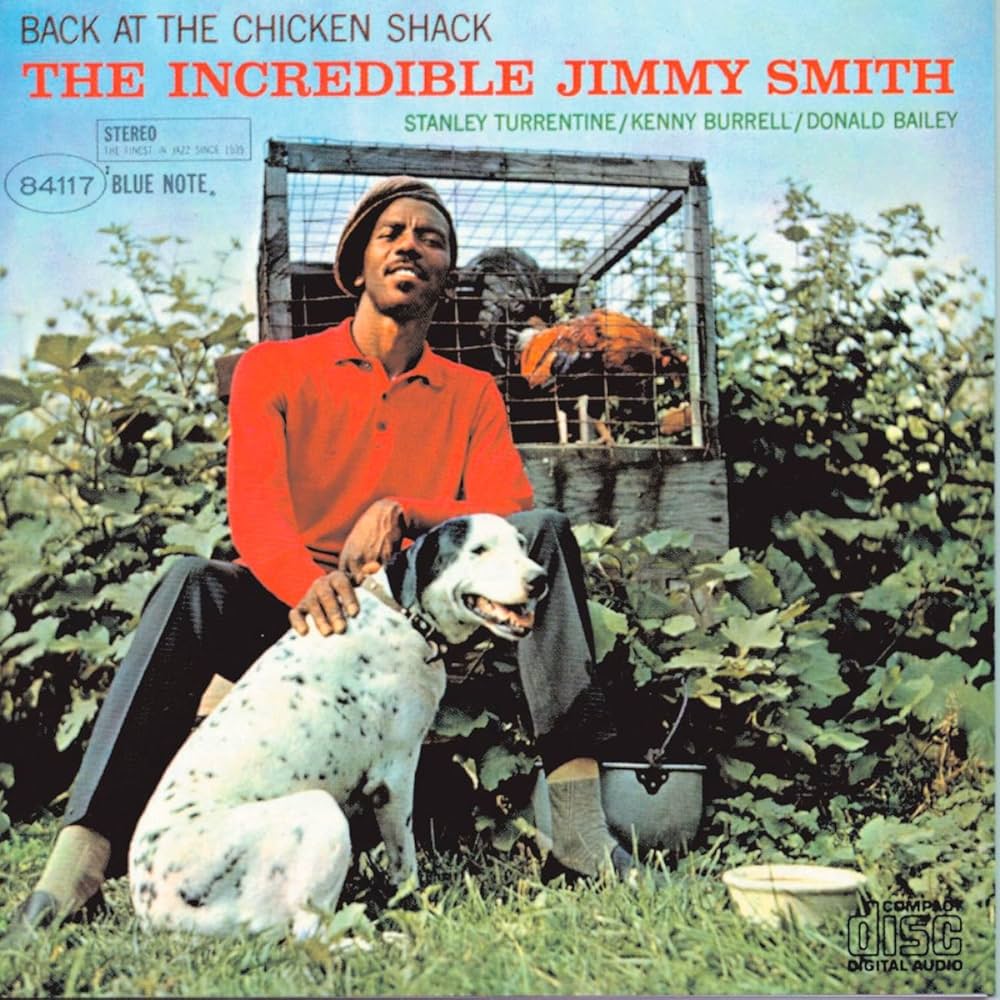
By the dawn of the 1960s, Jimmy Smith had already accomplished something extraordinary. In just a few years, he had transformed the Hammond B-3 organ from a novelty instrument into one of the defining voices of modern jazz. Before Smith, the organ was largely associated with churches, lounges, and rhythm and blues. After Smith, it became a legitimate jazz instrument capable of matching the virtuosity and sophistication of the piano, saxophone, or trumpet.
Released in 1963, though recorded in 1960 during an incredibly productive period for Blue Note Records, Back at the Chicken Shack captures Smith at the peak of his creative powers. Surrounded by an exceptional band featuring tenor saxophonist Stanley Turrentine, guitarist Kenny Burrell, bassist Donald Bailey, and drummer Ben Dixon, Smith creates an album that effortlessly blends hard bop, blues, soul, and gospel into one of the finest organ jazz recordings ever made.
Unlike some of Smith’s more technically dazzling recordings, Back at the Chicken Shack places groove ahead of virtuosity. The musicians never sacrifice sophistication, but every note serves the feel of the music rather than individual showmanship.
The result is one of Blue Note’s defining releases and one of the greatest soul-jazz albums ever recorded.
Album Overview
Few albums establish their atmosphere as quickly as Back at the Chicken Shack.
From the opening notes, listeners are transported into a smoky nightclub filled with warm Hammond organ tones, blues-soaked guitar lines, relaxed saxophone melodies, and an irresistibly swinging rhythm section.
The album perfectly balances accessibility and musicianship.
Jazz newcomers can immediately appreciate the memorable grooves and blues foundations.
Experienced listeners will discover endless subtleties in the improvisation, ensemble interaction, and harmonic sophistication.
Smith never allows technical brilliance to overshadow emotional communication.
Every solo grows naturally from the song itself.
The record also demonstrates the remarkable versatility of soul jazz.
Blues.
Gospel.
Hard bop.
Rhythm and blues.
Even hints of church music.
Everything blends together seamlessly without sounding forced or overly polished.
Although only five tracks make up the album, each performance is given ample room to breathe, allowing the musicians to develop ideas patiently rather than rushing toward climactic moments.
The relaxed pacing becomes one of the album’s greatest strengths.
Songwriting
While improvisation naturally plays a major role, the compositions themselves provide outstanding foundations.
The title track remains one of Jimmy Smith’s signature pieces.
Built around an unforgettable blues groove, “Back at the Chicken Shack” demonstrates how a relatively simple musical idea can become endlessly compelling through inspired performance.
“When I Grow Too Old to Dream” transforms the familiar standard into something entirely new. Rather than treating it as a sentimental ballad, the group infuses it with warmth, sophistication, and remarkable rhythmic subtlety.
“Minor Chant” explores a darker harmonic landscape while maintaining the album’s characteristic sense of swing.
“Messy Bessie” lives up to its playful title through infectious rhythms and spirited improvisation that never loses sight of melody.
The closing rendition of “On the Sunny Side of the Street” provides a joyful conclusion, allowing each musician room to stretch out while maintaining the album’s welcoming atmosphere.
Throughout the record, every composition serves as both a memorable tune and an open invitation for creative improvisation.
That balance defines the very best jazz recordings.
Performance
Jimmy Smith delivers one of the finest performances of his legendary career.
His Hammond B-3 playing remains astonishing decades later.
His left hand provides walking bass lines.
His right hand dances effortlessly across the keyboard.
His foot pedals add further rhythmic complexity.
The result often sounds as though multiple musicians are performing simultaneously.
Yet Smith never overwhelms the listener.
His solos combine breathtaking technique with irresistible blues feeling.
Stanley Turrentine proves the perfect musical partner.
His warm, soulful tenor saxophone contrasts beautifully with Smith’s organ, creating conversations rather than competitions.
Turrentine’s relaxed phrasing allows every note to breathe.
Kenny Burrell contributes tasteful guitar work throughout the album.
His clean tone and blues-infused lines complement Smith perfectly, adding harmonic richness without unnecessary complexity.
The rhythm section deserves equal praise.
Donald Bailey’s bass work anchors every groove with remarkable steadiness.
Ben Dixon’s drumming demonstrates exceptional restraint, driving the music forward without ever becoming intrusive.
Together, the quintet achieves an almost telepathic chemistry.
No one fights for attention.
Everyone serves the groove.
Production
Recorded by Rudy Van Gelder, Back at the Chicken Shack possesses the unmistakable sonic character that made Blue Note one of jazz’s most celebrated labels.
The recording sounds intimate without sacrificing clarity.
Smith’s Hammond organ fills the room with warmth while never overwhelming the other instruments.
Turrentine’s saxophone remains rich and expressive.
Burrell’s guitar sits comfortably within the mix.
The rhythm section maintains remarkable presence throughout.
Van Gelder captures not only individual instruments but also the natural interaction between musicians.
The recording feels alive.
Listeners can almost picture the band assembled together in the studio.
More than sixty years later, the production continues to sound remarkably vibrant.
Its natural warmth has aged beautifully.
Standout Tracks
Although the album contains no weak performances, several tracks rank among the defining recordings of the soul-jazz movement.
“Back at the Chicken Shack” is an absolute classic. Its unforgettable blues groove, relaxed swing, and inspired improvisation perfectly capture everything that makes Jimmy Smith such an extraordinary musician.
“When I Grow Too Old to Dream” transforms a familiar standard into a deeply soulful performance, showcasing Smith’s gift for balancing elegance and accessibility.
“Minor Chant” provides one of the album’s most adventurous harmonic explorations while maintaining its irresistible rhythmic momentum.
“Messy Bessie” bursts with playful energy, allowing every member of the ensemble opportunities to shine without disrupting the album’s remarkable cohesion.
“On the Sunny Side of the Street” closes the album with warmth, optimism, and joyful ensemble playing that leaves listeners smiling.
Weak Points
Finding meaningful criticisms proves difficult.
Some listeners seeking the frenetic virtuosity of bebop or the harmonic experimentation of modal jazz may find the album’s emphasis on groove somewhat conservative.
Its relaxed pacing occasionally favors atmosphere over dramatic development, particularly for listeners accustomed to more aggressive jazz styles.
Additionally, with only five tracks, the album concludes surprisingly quickly.
Still, these observations reflect stylistic preferences rather than genuine shortcomings.
The album accomplishes exactly what it sets out to achieve.
Legacy
Back at the Chicken Shack remains one of the definitive recordings of soul jazz and one of the finest Hammond organ albums ever made.
It helped solidify Jimmy Smith’s reputation as the undisputed master of jazz organ while influencing generations of keyboard players across jazz, blues, funk, rock, and gospel.
Artists ranging from Joey DeFrancesco and Dr. Lonnie Smith to countless funk keyboardists owe an enormous creative debt to Smith’s innovations.
The album also represents Blue Note Records at its absolute best.
Exceptional musicians.
Outstanding compositions.
Impeccable recording quality.
Relaxed yet inspired performances.
Everything that made the label legendary can be heard here.
More than sixty years after its release, Back at the Chicken Shack remains an essential introduction not only to Jimmy Smith but to the entire soul-jazz tradition.
It has lost none of its warmth, swing, or irresistible charm.
Final Score: 9.5/10
Back at the Chicken Shack is a masterclass in groove, restraint, and musical communication. Jimmy Smith demonstrates why he revolutionized the Hammond organ, delivering performances that combine astonishing technical skill with deep emotional expression. Supported by Stanley Turrentine, Kenny Burrell, and an exceptional rhythm section, every track radiates effortless chemistry and timeless soul.
Its memorable melodies, impeccable production, and relaxed confidence make it one of the most accessible jazz albums ever recorded without sacrificing artistic sophistication. Whether serving as an introduction to soul jazz or a longtime favorite for seasoned listeners, the album rewards every return.
Few recordings capture the essence of soul jazz so completely. Back at the Chicken Shack remains one of Blue Note’s crowning achievements and one of the finest jazz albums of the 1960s.
This post has already been read 93 times!