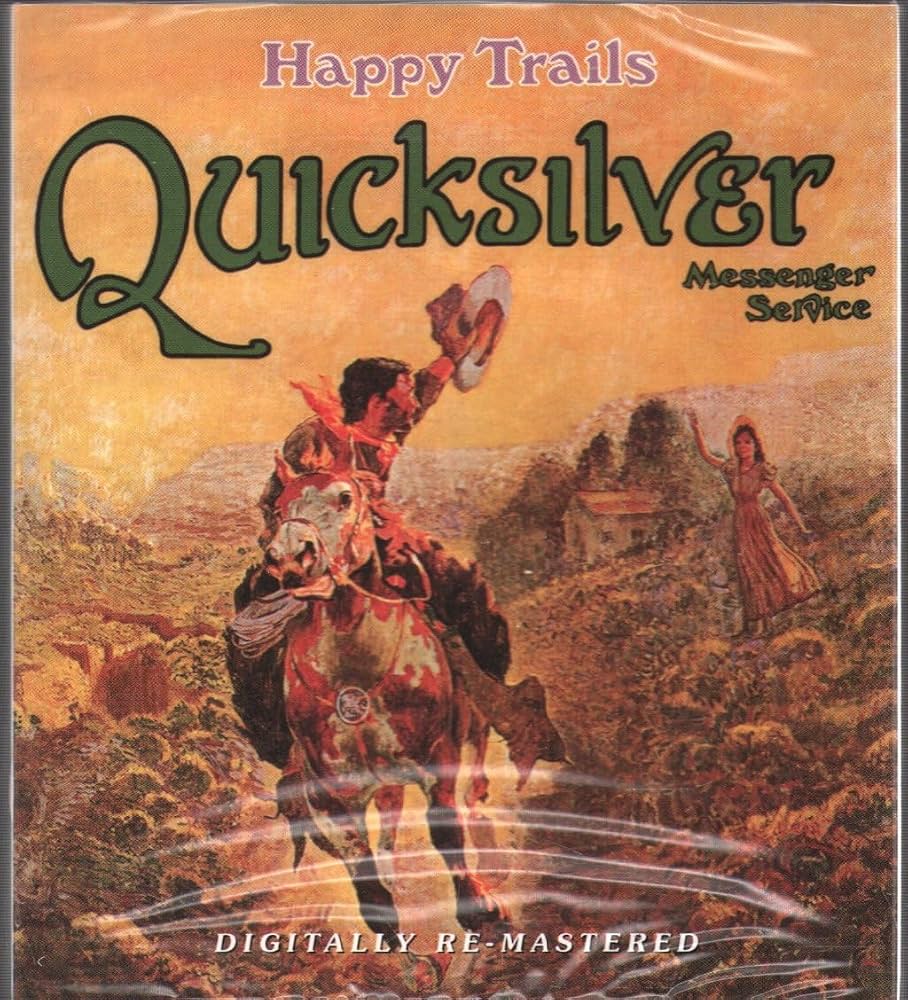
Few albums capture the spirit of San Francisco’s psychedelic ballroom scene as vividly as Happy Trails. Released in 1969, Quicksilver Messenger Service’s second album abandoned the traditional studio approach in favor of something far more adventurous: long, sprawling live performances that showcased the band’s extraordinary chemistry and improvisational brilliance. At a time when many psychedelic groups were experimenting with increasingly elaborate studio productions, Quicksilver looked in the opposite direction, trusting that their greatest strength lay in what happened on stage.
The result is one of the defining live albums of the psychedelic era and one of the earliest masterpieces of what would eventually become known as jam rock. Built around extended interpretations of Bo Diddley’s “Who Do You Love,” the album demonstrates how a simple blues song can evolve into an expansive musical journey through rock, jazz, blues, folk, and improvisation.
Unlike many extended jams that lose focus over time, Happy Trails remains remarkably purposeful. Every solo, rhythmic shift, and dynamic change contributes to a larger musical narrative. Guitarists John Cipollina and Gary Duncan engage in one of rock’s greatest dual-guitar conversations, while the rest of the band provides an endlessly inventive foundation beneath them.
Although Quicksilver Messenger Service never achieved the commercial success of some of their San Francisco contemporaries, Happy Trails stands as one of the era’s greatest artistic achievements.
Album Overview
What immediately distinguishes Happy Trails is its complete confidence.
The band never rushes.
Songs unfold naturally.
Themes develop patiently.
Improvisation becomes conversation rather than competition.
The first side of the original album is devoted almost entirely to a multi-part performance of “Who Do You Love.”
Rather than simply extending the song through endless solos, Quicksilver transforms it into a suite.
Individual sections possess distinct moods.
Some explode with blues-rock intensity.
Others drift into dreamlike atmospheres.
Moments of near silence suddenly erupt into furious guitar interplay.
The second half broadens the musical landscape with additional live performances and a brief studio recording that gently closes the album.
Throughout, the band demonstrates an intuitive understanding of pacing.
Every peak is earned.
Every quiet passage serves a purpose.
The result feels less like a concert recording than a carefully constructed musical journey.
Songwriting
Because much of Happy Trails consists of interpretations rather than original compositions, the band’s creativity lies primarily in arrangement and improvisation.
Bo Diddley’s “Who Do You Love” serves as the album’s foundation, but Quicksilver transforms the blues classic into something almost unrecognizable.
Each movement explores different musical ideas while remaining connected through recurring themes.
Rather than treating improvisation as an excuse for technical display, the band continually develops melodic ideas introduced earlier in the performance.
That compositional thinking separates Happy Trails from many later jam albums.
“Mona” provides another outstanding reinterpretation of a Bo Diddley classic, emphasizing hypnotic grooves and rhythmic intensity.
The traditional “Maiden of the Cancer Moon” introduces darker, more mysterious textures while maintaining the band’s characteristic sense of exploration.
The closing “Calvary” and “Happy Trails” provide an unexpectedly gentle conclusion after the album’s lengthy improvisations, reminding listeners that Quicksilver valued melody every bit as much as experimentation.
Although conventional songwriting plays a smaller role than on most albums, the band’s arrangements become compositions in their own right.
Performance
The musicianship throughout Happy Trails borders on astonishing.
John Cipollina delivers one of the defining guitar performances of the psychedelic era.
His shimmering vibrato, lyrical phrasing, and distinctive tone make every solo immediately recognizable.
Gary Duncan complements him perfectly.
Rather than competing for attention, the two guitarists constantly respond to one another, creating one of rock’s finest examples of dual lead guitar playing.
David Freiberg anchors the music with melodic bass lines while contributing expressive vocals that suit the band’s relaxed approach.
Greg Elmore’s drumming remains remarkably understated.
Instead of overwhelming the music with constant fills, he provides flexible grooves that allow the improvisations to breathe.
Nicky Hopkins does not appear on this album, but keyboard contributions from Gary Duncan and the rest of the ensemble ensure that the arrangements remain harmonically rich without becoming cluttered.
Most importantly, the band listens.
Every performance demonstrates genuine musical communication.
Ideas evolve collectively.
Nobody dominates.
The result feels democratic in the best possible sense.
Production
The decision to rely primarily on live recordings proves inspired.
Producer Al Schmitt captures the band’s stage chemistry with remarkable clarity.
Audience noise remains present enough to establish atmosphere without distracting from the music.
The stereo mix beautifully separates the two guitarists, allowing listeners to follow each improvisation individually while still appreciating the ensemble as a whole.
The recording quality remains impressive for a live rock album from the late 1960s.
Individual instruments remain clear.
Dynamic shifts retain their full impact.
The occasional rough edge only enhances the album’s authenticity.
Rather than polishing away the unpredictability of live performance, the production embraces it.
That honesty becomes one of the album’s greatest strengths.
Standout Tracks
Although Happy Trails functions best as a complete experience, several performances deserve particular recognition.
“Who Do You Love Suite” is one of the greatest extended performances in rock history. Stretching across multiple movements, it transforms a simple blues song into a breathtaking exploration of improvisation, dynamics, and ensemble communication.
“Mona” continues the Bo Diddley influence while emphasizing hypnotic rhythms and dazzling guitar interplay that perfectly showcase the band’s chemistry.
“Maiden of the Cancer Moon” introduces darker textures and some of the album’s most adventurous improvisation without sacrificing melodic focus.
“Calvary” provides a reflective bridge toward the album’s conclusion, allowing the musicians to explore atmosphere rather than virtuosity.
“Happy Trails” ends the album with surprising warmth and simplicity, offering a gentle farewell after the expansive musical journey that precedes it.
Weak Points
The album’s greatest strength—its commitment to extended improvisation—also limits its accessibility.
Listeners expecting concise songs or radio-friendly hooks may struggle with the lengthy performances.
Because the first side focuses almost entirely on variations of a single composition, casual listeners may initially perceive repetition where devoted fans hear continual development.
Additionally, the absence of a broader selection of original material means the album relies heavily on performance rather than songwriting.
These observations reflect the band’s artistic priorities rather than genuine flaws.
Happy Trails was never intended as a conventional rock album.
Legacy
Happy Trails remains one of the defining documents of the San Francisco psychedelic movement and one of the earliest masterpieces of improvisational rock.
Its influence can be heard throughout the jam-band tradition, from the Grateful Dead’s later live explorations to Phish, Widespread Panic, Gov’t Mule, and countless other improvisational groups.
The album also helped establish dual lead guitar interplay as a legitimate artistic approach within rock music, influencing bands ranging from the Allman Brothers Band to Wishbone Ash and beyond.
Although Quicksilver Messenger Service has often been overshadowed by more commercially successful contemporaries, Happy Trails continues to earn recognition as one of the finest live rock albums ever recorded.
Its sense of adventure remains as exhilarating today as it was in 1969.
Final Score: 9.5/10
Happy Trails is one of the great live albums of the rock era and a landmark achievement in psychedelic and improvisational music. Quicksilver Messenger Service transforms blues standards into expansive musical journeys through extraordinary ensemble playing, breathtaking guitar work, and remarkable patience.
While its emphasis on extended jams may not appeal to every listener, those willing to immerse themselves in its hypnotic rhythms and constantly evolving performances will discover one of the richest listening experiences of the 1960s. Every return reveals new details, fresh interactions, and deeper appreciation for the band’s remarkable chemistry.
More than half a century after its release, Happy Trails remains a towering achievement of psychedelic rock and one of the essential albums for anyone interested in the evolution of improvisational music.
This post has already been read 43 times!