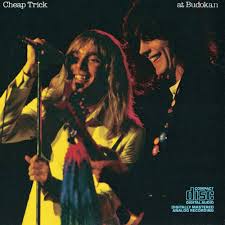
Sometimes a live album does more than capture a great concert—it changes the entire trajectory of a band’s career. Cheap Trick’s At Budokan is one of those rare records. Released in 1978 in Japan and internationally in 1979, the album transformed a critically acclaimed but commercially underperforming American rock band into international superstars almost overnight.
The irony is that Cheap Trick had already recorded three outstanding studio albums. Critics loved them, fellow musicians admired them, and their blend of Beatles-inspired melodies, hard rock guitars, power pop hooks, and sly humor had earned them a fiercely loyal following. Yet mainstream success remained frustratingly elusive in the United States.
Japan was a different story.
Cheap Trick had become genuine rock stars there, with crowds greeting them in scenes that recalled Beatlemania. When the band arrived at Tokyo’s Nippon Budokan in April 1978, the audience’s enthusiasm was unlike anything they had experienced before. Epic Records wisely recorded the concerts, initially intending the album only for the Japanese market. Imports quickly became so popular in America that the label was forced to release it worldwide.
The result is one of the greatest live rock albums ever recorded—a record that captures a band at the absolute peak of its powers while documenting one of the most enthusiastic audiences in rock history.
Album Overview
Few live albums generate excitement as immediately as At Budokan.
From the opening seconds, the audience becomes an essential part of the performance.
The deafening screams never feel distracting.
Instead, they amplify the band’s already explosive energy.
Unlike many live recordings that merely recreate studio performances, Cheap Trick sounds revitalized by the audience’s enthusiasm.
Songs become faster.
Sharper.
More urgent.
Every performance possesses an extra edge that often surpasses the original studio versions.
The setlist strikes an excellent balance.
Power-pop classics.
Hard rock anthems.
Ballads.
Deep cuts.
Everything flows naturally without sacrificing momentum.
Perhaps most importantly, the album perfectly captures Cheap Trick’s unique personality.
Part Beatles.
Part Who.
Part garage band.
Part arena rock.
Entirely original.
That combination remains as thrilling today as it was in 1979.
Songwriting
Although At Budokan consists primarily of songs from the band’s first three studio albums, hearing them performed live reveals just how strong Cheap Trick’s songwriting truly was.
“I Want You to Want Me” undergoes perhaps the most famous transformation.
Originally a relatively restrained pop song on In Color, it becomes a joyous arena anthem that would forever replace the studio version in the public imagination.
“Surrender” remains one of the greatest power-pop songs ever written, balancing adolescent rebellion, humor, and irresistible melodies with astonishing ease.
“Come On, Come On” bursts with youthful energy while showcasing the band’s gift for concise songwriting.
“Ain’t That a Shame,” their inspired reinterpretation of the Fats Domino classic, demonstrates the band’s deep understanding of early rock and roll while making the song entirely their own.
Even lesser-known tracks like “Need Your Love” and “Big Eyes” benefit enormously from the live setting, gaining additional emotional intensity through the band’s energetic performances.
The album consistently reminds listeners that Cheap Trick possessed one of the finest song catalogs of the late 1970s.
Performance
Cheap Trick was always an exceptional live band, and At Budokan captures them firing on every cylinder.
Robin Zander delivers one of the finest vocal performances of the era.
His remarkable range allows him to move effortlessly between soaring rock anthems, delicate ballads, and infectious power-pop melodies.
Rick Nielsen remains endlessly entertaining.
His inventive guitar work combines crunchy riffs, melodic solos, and playful stage presence without ever distracting from the songs themselves.
Tom Petersson’s twelve-string bass gives Cheap Trick a uniquely rich low-end sound, adding harmonic depth rarely heard in rock bands.
Bun E. Carlos anchors everything with steady, tasteful drumming that consistently prioritizes groove over unnecessary flash.
What truly elevates the performances, however, is the chemistry.
The band sounds completely relaxed.
Completely confident.
Completely connected.
Years of relentless touring had forged one of rock’s tightest ensembles.
Every performance reflects that experience.
Production
For a live album recorded in the late 1970s, At Budokan sounds remarkably vibrant.
Producer Jack Douglas wisely preserves the excitement of the concerts rather than polishing away their imperfections.
The audience remains highly audible without overwhelming the music.
Robin Zander’s vocals stay clear throughout.
Rick Nielsen’s guitar cuts sharply through the mix.
The rhythm section remains powerful and well-balanced.
Unlike some live albums that rely heavily on overdubs, At Budokan feels authentic.
Its occasional rough edges only reinforce the excitement of the performances.
The production succeeds because it captures not only how the band sounded but how it felt to be inside the Budokan that evening.
That sense of atmosphere remains extraordinary.
Standout Tracks
Although every performance contributes to the album’s remarkable momentum, several songs stand among the greatest live recordings in rock history.
“Hello There” provides one of the finest opening tracks ever recorded on a live album, immediately launching the concert with explosive energy and setting the tone for everything that follows.
“I Want You to Want Me” is the definitive version of the song. The audience participation, Robin Zander’s outstanding vocal, and the band’s infectious energy transformed it into an international classic.
“Surrender” captures Cheap Trick at their absolute best, pairing unforgettable hooks with one of the greatest singalong choruses in rock music.
“Ain’t That a Shame” brilliantly reinvents the Fats Domino classic, balancing respect for the original with Cheap Trick’s unmistakable style.
“Need Your Love” stretches beyond the concise power-pop format, allowing the band to showcase its heavier side through extended guitar work and dynamic shifts.
Weak Points
There are remarkably few weaknesses to discuss.
Because the original album was edited to fit vinyl limitations, several songs from the complete concerts were omitted, leaving listeners wanting even more.
Some audience screams occasionally overpower quieter musical passages, though that excitement is also central to the album’s charm.
Additionally, listeners unfamiliar with Cheap Trick’s earlier studio work may initially overlook how dramatically these live performances improve upon already excellent originals.
These are minor concerns.
The album accomplishes exactly what every great live record should.
It makes you wish you had been there.
Legacy
At Budokan permanently transformed Cheap Trick’s career.
The album became a massive international success, finally giving the band the commercial breakthrough its studio recordings had deserved all along.
It also reinforced the importance of live albums as more than contractual obligations or souvenir releases.
Like Frampton Comes Alive!, Live at Leeds, and At Folsom Prison, it demonstrated that live performances could become definitive artistic statements.
Its influence can be heard throughout power pop, alternative rock, and arena rock.
Bands from Weezer and Foo Fighters to Fountains of Wayne and countless others have drawn inspiration from Cheap Trick’s perfect balance of heavy guitars, irresistible melodies, and playful attitude.
Today, At Budokan remains not only Cheap Trick’s defining album but one of the greatest live rock records ever made.
Final Score: 10/10
At Budokan is one of the greatest live albums in rock history and the definitive statement of Cheap Trick’s extraordinary strengths as songwriters, musicians, and performers. Every aspect of the album succeeds: the performances are tighter and more energetic than their studio counterparts, the audience creates an unforgettable atmosphere, and the production captures the excitement without sacrificing musical clarity.
Robin Zander sings brilliantly, Rick Nielsen delivers unforgettable guitar work, and the entire band feeds off the audience’s enthusiasm to produce career-defining performances. Songs like “I Want You to Want Me” and “Surrender” become not only the definitive versions but enduring rock classics.
Few live albums have rescued a band’s commercial fortunes while simultaneously surpassing many of its studio recordings. At Budokan accomplished both, securing its place as one of the essential live albums of the rock era.
This post has already been read 41 times!