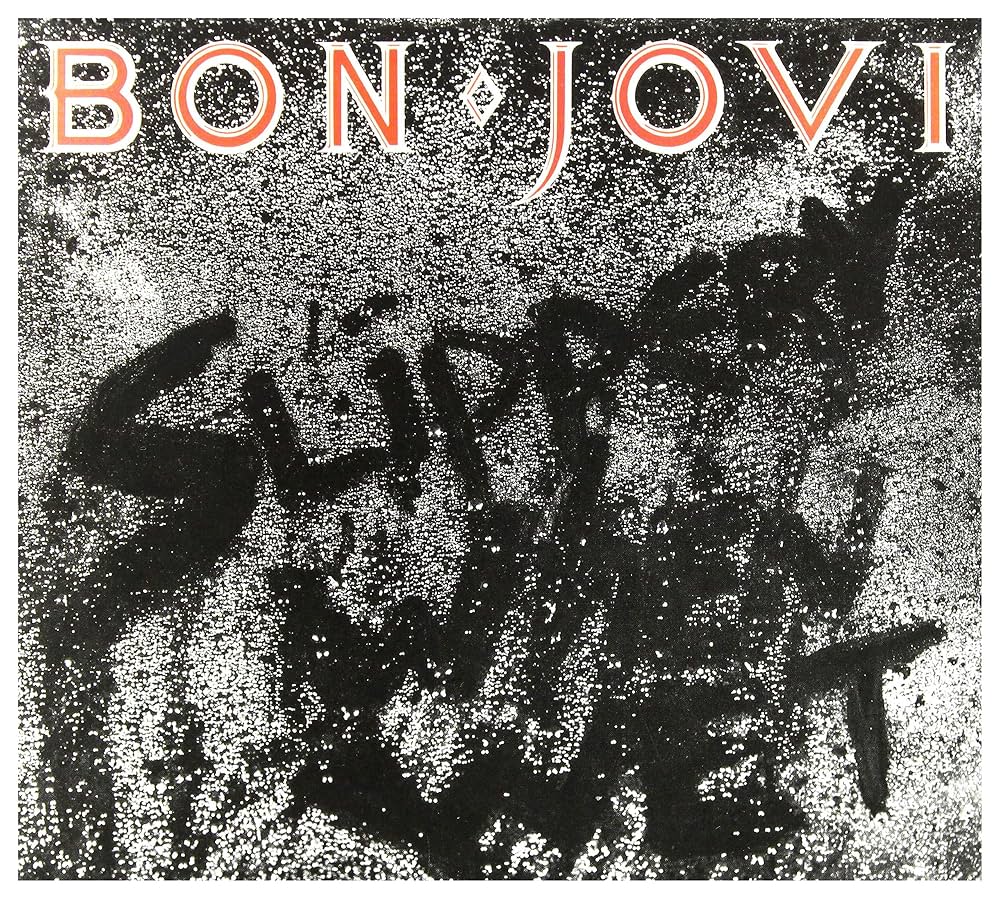
By the mid-1980s, hard rock was becoming bigger, louder, and more theatrical than ever before. Bands filled arenas with towering stage shows, flashy guitar solos, and larger-than-life personalities, but few managed to combine that spectacle with consistently great songwriting. Bon Jovi changed that with Slippery When Wet.
Released in 1986, the band’s third studio album transformed Jon Bon Jovi, Richie Sambora, David Bryan, Alec John Such, and Tico Torres from rising stars into one of the biggest rock bands in the world. While their first two albums had produced modest success, Slippery When Wet perfected the formula they had been chasing: arena-sized choruses, heartfelt storytelling, polished production, and just enough grit to keep the music grounded.
The album became a cultural phenomenon. It produced multiple chart-topping singles, sold millions of copies around the world, and helped define the sound of 1980s arena rock. Yet its success wasn’t simply the result of timing or MTV exposure. At its heart lies an exceptional collection of songs, many of which have become permanent fixtures of classic rock radio.
Nearly forty years later, Slippery When Wet remains Bon Jovi’s definitive statement and one of the essential rock albums of the decade.
Album Overview
One of the album’s greatest strengths is its consistency.
Every song aims for maximum impact.
Towering choruses.
Memorable guitar riffs.
Strong melodies.
Emotional sincerity.
Nothing feels half-finished.
The record effortlessly blends hard rock, pop, blues, and heartland rock into a sound that appealed to rock fans while remaining accessible to mainstream audiences.
Unlike many glam metal albums of the era, Slippery When Wet places songwriting above image.
The production is polished, but the performances never feel artificial.
The pacing is excellent.
High-energy rock anthems naturally alternate with reflective ballads and blues-influenced tracks before building toward another explosive chorus.
Perhaps most importantly, the album avoids taking itself too seriously.
It celebrates romance, friendship, perseverance, and youthful optimism without becoming overly sentimental.
That balance remains a major reason for its lasting popularity.
Songwriting
Jon Bon Jovi, Richie Sambora, and songwriter Desmond Child assembled one of the strongest collections of songs in 1980s rock.
“Let It Rock” opens the album with infectious energy and immediately establishes the record’s arena-ready sound.
“You Give Love a Bad Name” remains one of the defining rock singles of the decade.
Its unforgettable opening riff, explosive chorus, and sharp lyrical hook create one of the most recognizable songs in rock history.
“Livin’ on a Prayer” is the album’s masterpiece.
Tommy and Gina became two of rock’s most enduring fictional characters, representing working-class resilience with remarkable warmth and optimism. The famous talk box guitar solo and massive chorus remain instantly recognizable.
“Wanted Dead or Alive” successfully merges hard rock with Western imagery, creating one of Bon Jovi’s most distinctive songs and a staple of classic rock radio.
“Raise Your Hands” delivers another joyous arena anthem, while “I’d Die for You” and “Never Say Goodbye” showcase the band’s gift for emotional ballads.
Even deeper cuts like “Wild in the Streets” and “Without Love” maintain impressive quality.
The album contains remarkably little filler.
Performance
Jon Bon Jovi delivers one of the strongest vocal performances of his career.
His voice combines youthful energy with genuine emotional conviction.
Whether leading an arena anthem or a heartfelt ballad, he consistently sounds believable.
Richie Sambora proves himself to be far more than an outstanding guitarist.
His harmony vocals become one of Bon Jovi’s defining characteristics, while his tasteful solos consistently serve the songs rather than overshadowing them.
His use of the talk box on “Livin’ on a Prayer” created one of the decade’s most iconic guitar moments.
David Bryan’s keyboards add warmth and melodic richness throughout the album, complementing the guitars rather than competing with them.
The rhythm section of Alec John Such and Tico Torres provides a steady, powerful foundation that keeps every song moving with confidence.
The chemistry between the five musicians remains one of the album’s greatest strengths.
They sound like a genuine band rather than a collection of studio performers.
Production
Bruce Fairbairn’s production remains one of the defining sounds of 1980s arena rock.
Everything feels enormous.
The guitars are massive.
The drums thunder without becoming muddy.
The keyboards add color without overwhelming the arrangements.
Layered vocal harmonies fill every chorus with extraordinary energy.
Unlike some productions from the decade that now sound dated, Slippery When Wet has aged surprisingly well.
Its polished sound still retains enough warmth and dynamic range to keep the performances engaging.
Every instrument occupies its own space within the mix.
The production constantly emphasizes clarity and excitement.
It remains a benchmark for commercially successful rock production.
Standout Tracks
Although the album maintains exceptional consistency, several songs stand among the defining rock recordings of the 1980s.
“Livin’ on a Prayer” is one of the greatest arena rock songs ever written. Its unforgettable chorus, iconic talk box guitar, and uplifting story continue to inspire generations of listeners.
“You Give Love a Bad Name” perfectly captures Bon Jovi’s ability to blend hard rock power with irresistible pop songwriting.
“Wanted Dead or Alive” remains one of the band’s most distinctive songs, combining Western imagery with heartfelt reflection and one of Richie Sambora’s finest guitar performances.
“Never Say Goodbye” provides one of the album’s emotional high points through beautiful melodies and sincere storytelling about growing up and moving on.
“Raise Your Hands” delivers exactly what great arena rock should—infectious energy, enormous hooks, and a chorus built for thousands of voices.
Weak Points
While Slippery When Wet remains remarkably consistent, a few deeper cuts inevitably receive less attention than the album’s legendary singles.
Listeners seeking heavier or more adventurous hard rock may also find the polished production occasionally prioritizes accessibility over raw intensity.
Additionally, the album became so commercially successful that its biggest songs have sometimes suffered from decades of heavy radio airplay.
These factors do little to diminish the quality of the music itself.
The songwriting remains consistently strong.
Legacy
Few albums have defined 1980s rock more completely than Slippery When Wet.
It transformed Bon Jovi into one of the world’s biggest bands and helped establish the template for arena rock throughout the remainder of the decade.
Its influence can be heard across hard rock, country rock, pop-rock, and modern mainstream rock.
Artists from Def Leppard and Hinder to Daughtry and countless contemporary rock bands have borrowed elements of its massive choruses, polished production, and emotionally accessible songwriting.
More importantly, the album demonstrated that commercial rock could combine technical professionalism with genuine heart.
Its songs continue filling arenas, stadiums, sporting events, and radio playlists decades after their release.
Very few albums achieve that level of cultural permanence.
Final Score: 9.5/10
Slippery When Wet is Bon Jovi’s masterpiece and one of the defining rock albums of the 1980s. Combining unforgettable songwriting, outstanding performances, polished production, and some of the biggest choruses ever recorded, it captures arena rock at its absolute peak.
While its enormous commercial success has occasionally overshadowed just how consistently excellent the album really is, repeated listening reveals a remarkably well-crafted record with very little wasted material. Jon Bon Jovi and Richie Sambora deliver career-defining performances, while classics like “Livin’ on a Prayer,” “You Give Love a Bad Name,” and “Wanted Dead or Alive” remain among the greatest rock songs of their era.
Few albums have balanced mass appeal and musical craftsmanship so successfully. Slippery When Wet remains a timeless celebration of big hooks, heartfelt storytelling, and rock-and-roll optimism.
This post has already been read 42 times!