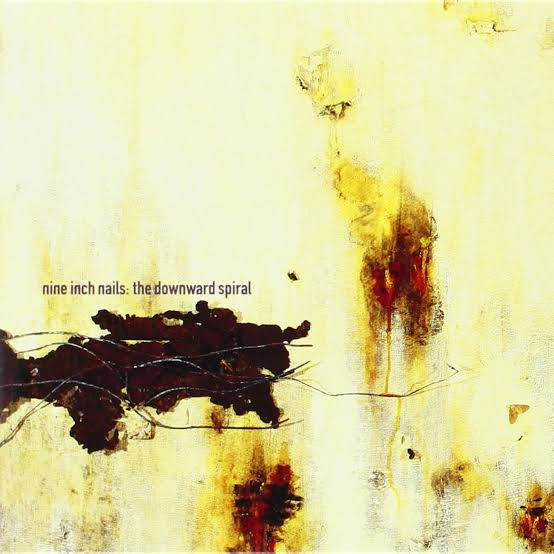
Some albums become classics because they define a genre. Others earn their reputation because they capture a specific moment in time. Then there are records so uncompromising, innovative, and emotionally devastating that they transcend their era entirely.
The Downward Spiral belongs firmly in that last category.
Released on March 8, 1994, Trent Reznor’s second full-length album under the Nine Inch Nails name was nothing short of a seismic event. Building upon the industrial aggression of Pretty Hate Machine and the Broken EP, Reznor crafted a sprawling concept album that explored self-destruction, addiction, alienation, violence, power, depression, and the collapse of identity. It was unsettling, brutally honest, and sonically unlike almost anything in mainstream rock.
Recorded largely in the house where the Manson Family murdered actress Sharon Tate—a fact that added an eerie layer to the album’s mythology—The Downward Spiral pushed industrial rock into the mainstream while simultaneously expanding what rock music itself could be. It fused metal, electronic music, ambient textures, noise, pop melodies, and experimental sound design into a cohesive narrative that remains astonishing more than thirty years later.
Many artists have attempted to combine darkness with accessibility. Very few have succeeded as completely as Trent Reznor did here.
Album Overview
Calling The Downward Spiral an industrial rock album only tells part of the story.
Industrial music provides the foundation, but Reznor continuously bends and reshapes the genre throughout the album. One moment features crushing walls of distorted guitars and machine-like percussion. The next dissolves into delicate piano melodies, ambient electronics, whispered vocals, or eerie soundscapes. Every stylistic shift serves the album’s larger narrative of psychological collapse.
The sequencing is masterful.
Rather than feeling like a collection of songs, the album unfolds as a single descent into emotional and mental ruin. Each track pushes the unnamed protagonist further toward isolation and self-destruction until the devastating conclusion.
What makes this journey so compelling is Reznor’s willingness to embrace contradiction. Beauty exists alongside ugliness. Melody collides with chaos. Moments of tenderness are shattered by explosions of noise. Throughout the record, the listener is never allowed to become comfortable.
Despite its relentlessly dark subject matter, the album is remarkably engaging because every experiment feels intentional.
Songwriting
“The Downward Spiral” contains some of the strongest songwriting of Reznor’s career.
“Mr. Self Destruct” begins with violent intensity, immediately throwing the listener into the album’s fractured world. Its pounding rhythms and layered distortion establish the emotional stakes within seconds.
“Piggy” unexpectedly slows the pace. Built around minimalist grooves and subtle textures, it demonstrates Reznor’s growing confidence as both a songwriter and arranger.
“Heresy” delivers one of the album’s most memorable hooks while combining electronic rhythms with industrial aggression.
“March of the Pigs” remains one of Nine Inch Nails’ defining songs. Its constantly shifting time signatures, explosive dynamics, and relentless energy somehow manage to remain surprisingly catchy.
Then comes “Closer.”
Few songs have entered popular culture as completely as this one. While often remembered for its provocative reputation, its true brilliance lies in the hypnotic groove, layered production, and unforgettable melodic structure. It remains one of the defining alternative rock singles of the 1990s.
“Ruiner,” “The Becoming,” and “Eraser” delve deeper into experimental territory, rewarding repeated listens with increasingly rich sonic details.
The title track serves as the emotional breaking point of the album, preparing listeners for one of modern music’s most haunting conclusions.
“Hurt” closes the record with breathtaking restraint. After nearly an hour of sonic punishment, Reznor strips everything away, leaving only fragile vocals, sparse instrumentation, and overwhelming emotional weight. It is one of the greatest closing songs ever recorded.
Remarkably, every track contributes meaningfully to the album’s larger narrative.
Performance
Although Nine Inch Nails is technically a band, The Downward Spiral is overwhelmingly Trent Reznor’s artistic vision.
His performance throughout the album is extraordinary.
Vocally, Reznor moves effortlessly between whispered vulnerability, melodic introspection, anguished screams, and mechanical detachment. He never relies on technical virtuosity. Instead, every vocal choice reflects the emotional state of the album’s protagonist.
As a multi-instrumentalist, his versatility is astonishing. Guitars, synthesizers, keyboards, percussion, drum programming, and sound manipulation all serve the songs rather than becoming demonstrations of technical ability.
Producer Flood deserves enormous credit for helping shape the album’s complex sonic architecture, balancing Reznor’s experimental instincts with remarkable clarity and cohesion.
Together, they create an immersive listening experience that feels meticulously constructed while retaining an almost frightening emotional immediacy.
Production
Few albums are as sonically adventurous as The Downward Spiral.
Every sound appears carefully chosen.
Distorted guitars frequently dissolve into electronic textures. Mechanical percussion gives way to ambient passages before erupting into walls of noise. Samples appear unexpectedly, often processed beyond recognition.
The mix itself becomes another instrument.
Silence, feedback, distortion, tape manipulation, reversed sounds, digital glitches, and unconventional recording techniques create an atmosphere that constantly shifts between intimacy and overwhelming chaos.
Perhaps most impressive is how well the album has aged.
While many industrial albums from the early 1990s feel trapped by their technology, The Downward Spiral remains startlingly modern because its production emphasizes atmosphere and experimentation over contemporary trends.
It continues to influence rock, electronic music, film scores, and modern pop production alike.
Standout Tracks
“Closer”
One of the defining songs of alternative rock. Beneath its controversial reputation lies brilliant songwriting, unforgettable production, and a hypnotic groove.
“March of the Pigs”
Chaotic, explosive, and exhilarating, this remains one of Nine Inch Nails’ signature recordings.
“Hurt”
An emotionally devastating finale whose vulnerability has resonated across generations. Its quiet power is almost unmatched.
“The Becoming”
One of the album’s most fascinating experiments, combining industrial noise with moments of eerie beauty.
“Mr. Self Destruct”
A blistering opener that immediately establishes the album’s uncompromising tone.
Weak Points
This is not an album designed for casual listening.
Its emotional intensity, abrasive production, and relentlessly bleak atmosphere demand the listener’s full attention. Those seeking conventional rock songs or immediate accessibility may find the experience exhausting.
A handful of experimental passages also prioritize atmosphere over melody, making certain tracks less memorable in isolation than they are within the complete album.
These qualities are deliberate artistic choices rather than genuine flaws, but they naturally limit the album’s universal appeal.
Legacy
Few albums have expanded the boundaries of alternative music as dramatically as The Downward Spiral.
It transformed Nine Inch Nails into one of the most important acts of the 1990s while proving industrial rock could achieve both critical acclaim and commercial success.
Its influence extends far beyond industrial music. Artists across alternative rock, metal, electronic music, pop, hip-hop, and film composition continue drawing inspiration from Reznor’s production techniques and fearless experimentation.
The album also cemented Trent Reznor’s reputation as one of modern music’s great innovators, a legacy that would later expand into acclaimed film scoring and production work.
Songs like “Closer,” “March of the Pigs,” and especially “Hurt” remain cultural touchstones, while the album itself continues to appear near the top of lists celebrating the greatest records of the 1990s.
More than three decades later, The Downward Spiral has lost none of its power.
Final Score: 10/10
The Downward Spiral is one of the greatest and most influential albums ever made. Trent Reznor’s fearless songwriting, groundbreaking production, emotional honesty, and willingness to blur the boundaries between rock, electronic music, industrial noise, and ambient experimentation resulted in a work of extraordinary artistic ambition. Dark, challenging, and endlessly rewarding, it remains a landmark achievement that continues to shape modern music. Few concept albums have matched its emotional impact, and even fewer have aged this gracefully.
This post has already been read 49 times!