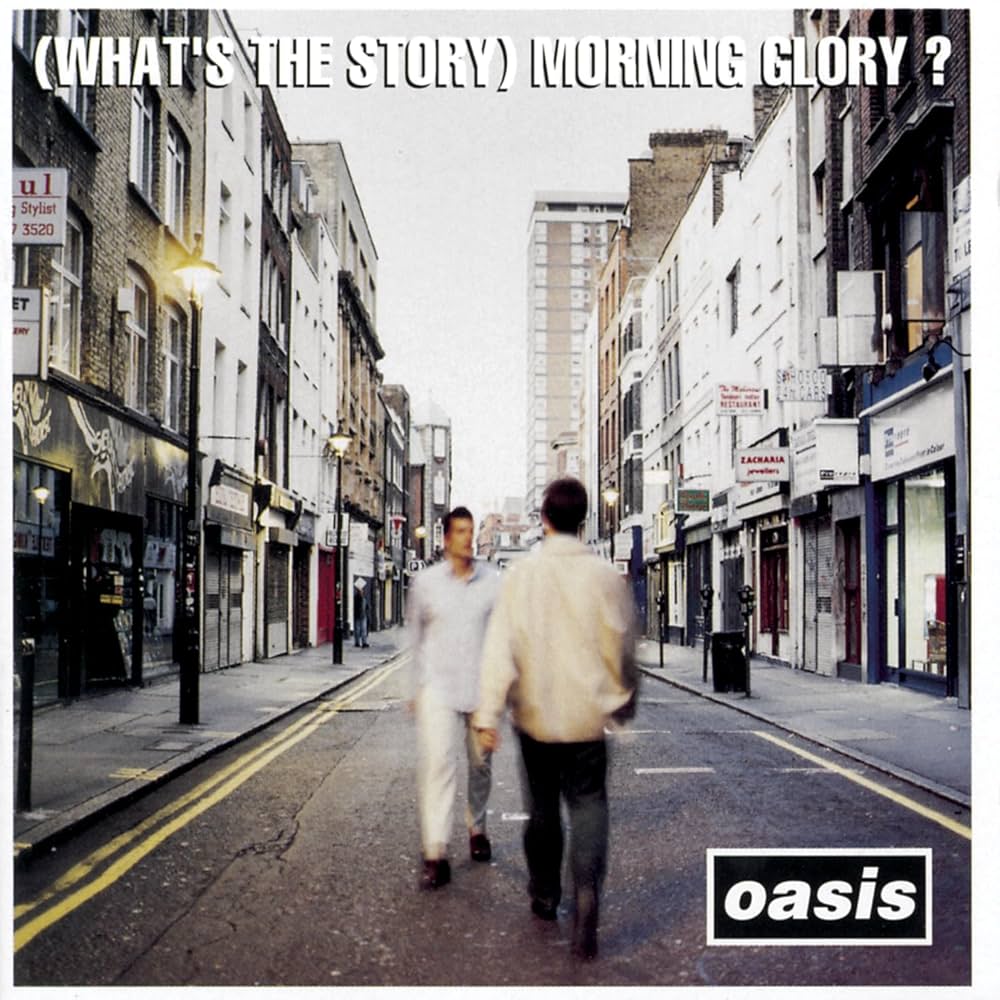
Few albums have captured the spirit of an era quite like (What’s the Story) Morning Glory? Released on October 2, 1995, Oasis’ second album transformed five working-class lads from Manchester into global rock stars and turned Britpop from a thriving movement into a full-blown cultural phenomenon. While Definitely Maybe introduced Oasis as the loudest new band in Britain, Morning Glory? made them one of the biggest bands in the world.
At the heart of the album was Noel Gallagher’s seemingly endless supply of unforgettable melodies. He had an uncanny ability to write songs that sounded instantly familiar while remaining undeniably his own. Paired with Liam Gallagher’s unmistakable sneer and larger-than-life confidence, Oasis created anthems that packed stadiums, dominated radio, and became woven into everyday life.
The timing couldn’t have been better. Britain was embracing a renewed sense of optimism, Britpop bands were battling for chart supremacy, and Oasis stood at the center of it all. Their rivalry with Blur fueled newspaper headlines, but while that competition generated publicity, Morning Glory? ultimately proved that Oasis possessed something even more important: songs that would outlive the hype.
More than thirty years later, the album remains one of the defining records of the 1990s. Its biggest hits have become standards of modern rock, and its influence continues to echo through countless bands that followed.
Album Overview
Produced by Owen Morris and Noel Gallagher, (What’s the Story) Morning Glory? builds upon the straightforward rock approach of Definitely Maybe while broadening the band’s emotional and musical range.
The album balances thunderous guitar-driven rockers with reflective acoustic ballads, allowing moments of vulnerability to coexist with Oasis’ trademark swagger. Unlike many sophomore albums that attempt radical reinvention, Morning Glory? simply refines everything that worked on the debut.
The guitars are enormous. Layers upon layers of overdubs create the famous “wall of sound” that became synonymous with Oasis throughout the mid-1990s. Alan White, making his debut with the band after replacing Tony McCarroll, provides tighter drumming without sacrificing the loose rock-and-roll energy that defines the group.
The sequencing also deserves praise. The short instrumental interludes help separate the larger songs while giving the album a sense of flow rather than simply presenting a string of singles.
Despite containing some of the biggest songs of the decade, the album never feels like a greatest hits package. It functions as a remarkably cohesive listening experience.
Songwriting
Noel Gallagher was operating at an astonishing creative peak during these sessions.
“Hello” opens the album with immediate confidence, setting the tone for what follows.
“Roll with It” became famous because of its chart battle with Blur’s “Country House,” but outside that cultural moment, it remains a joyful, straightforward rock song built around an irresistible chorus.
Then comes “Wonderwall.”
Few songs in modern rock have achieved the universal recognition of this acoustic masterpiece. While endless singalongs and countless amateur guitar covers have made it almost impossible to escape, its brilliance remains undeniable. Noel’s songwriting strips away unnecessary complexity, creating a melody that feels timeless.
“Don’t Look Back in Anger” is arguably Noel Gallagher’s finest composition. Taking over lead vocals himself, he delivers one of rock’s greatest piano-driven ballads, complete with a chorus that has become a communal anthem around the world.
“Some Might Say,” the band’s first UK number-one single, combines Beatles-inspired melodies with hard-driving guitars and Liam Gallagher’s charismatic vocal performance.
“Morning Glory” injects fresh energy midway through the album, while “Champagne Supernova” closes everything with an epic, psychedelic journey that stretches beyond the band’s usual verse-chorus structures. It remains one of Oasis’ most ambitious recordings.
Even lesser-known tracks like “Hey Now!” and “Cast No Shadow” contain melodies that many bands would happily build entire careers around.
The only slight criticism is that several songs rely heavily on familiar chord progressions and obvious influences from artists like The Beatles, T. Rex, Slade, and The Stone Roses. However, Noel consistently transforms those inspirations into songs that feel uniquely Oasis.
Performance
Liam Gallagher delivers one of the defining vocal performances of the Britpop era.
His nasal, swaggering voice shouldn’t work on paper, yet it perfectly suits Noel’s songwriting. Liam sings with remarkable confidence, making even the simplest lyrics sound larger than life. His delivery transforms songs like “Some Might Say” and “Morning Glory” into rock anthems.
Noel Gallagher’s guitar playing remains understated but highly effective. Rather than chasing technical virtuosity, he focuses on memorable riffs, layered textures, and serving the song.
Alan White immediately proves to be a significant addition behind the drums, providing tighter grooves and greater consistency than his predecessor.
Paul “Bonehead” Arthurs and Paul McGuigan rarely seek the spotlight, but together they help create the thick, powerful sound that became Oasis’ trademark.
The chemistry between the musicians feels effortless, despite the personal tensions that would later define much of the band’s history.
Production
The production has become one of the album’s most debated qualities.
Owen Morris embraced an aggressively compressed, densely layered sound that maximized impact through sheer volume. At times, the guitars seem almost impossibly large, creating an overwhelming sonic experience that perfectly suited Oasis’ larger-than-life image.
While critics have occasionally pointed to the album as an example of the “loudness war,” arguing that the compression sacrifices some dynamic range, the production undeniably contributes to its identity.
Rather than sounding polished or pristine, Morning Glory? feels loud, messy, and gloriously oversized.
Importantly, the production never overshadows the songwriting. The melodies remain front and center, allowing even the densest arrangements to feel surprisingly accessible.
Standout Tracks
“Don’t Look Back in Anger”
One of the greatest British rock songs ever written. Noel Gallagher delivers an unforgettable melody supported by a soaring chorus that continues to unite audiences around the world.
“Wonderwall”
Its ubiquity has almost overshadowed its craftsmanship. Beneath the endless radio play lies one of the finest acoustic pop songs of the 1990s.
“Champagne Supernova”
A sprawling, psychedelic finale that demonstrates Oasis could think beyond traditional rock structures while maintaining emotional resonance.
“Some Might Say”
A perfect blend of Britpop swagger, Beatles-inspired melody, and hard rock energy.
“Morning Glory”
Driving guitars, infectious momentum, and Liam Gallagher’s unmistakable vocal make this one of the album’s most exhilarating tracks.
Weak Points
Although the album is remarkably consistent, “Hey Now!” runs slightly longer than necessary and lacks the immediate impact of the surrounding classics.
Some listeners may also find the heavily compressed production fatiguing during extended listening sessions. While it contributes significantly to the album’s character, it occasionally sacrifices subtlety for sheer power.
Finally, Noel Gallagher’s influences are often worn openly. Certain melodies and chord progressions invite inevitable comparisons to classic British rock bands, though his songwriting talent consistently prevents them from feeling like simple imitation.
Legacy
Very few albums define an entire cultural movement.
(What’s the Story) Morning Glory? became the soundtrack to Britpop’s commercial peak and established Oasis as one of the biggest rock bands in the world. It sold more than 20 million copies worldwide and remains one of the best-selling albums in British history.
Its influence stretches far beyond the 1990s. Countless indie rock and alternative bands have borrowed from Noel Gallagher’s melodic instincts, Liam Gallagher’s vocal confidence, and the album’s massive guitar sound.
Songs like “Wonderwall,” “Don’t Look Back in Anger,” and “Champagne Supernova” have transcended their original context to become modern standards, sung in stadiums, pubs, festivals, and sporting events across the globe.
Even after decades of changing musical trends, these songs continue to resonate because they combine universal melodies with genuine emotional power.
Few albums have produced so many enduring classics in a single package.
Final Score: 9.5/10
(What’s the Story) Morning Glory? is one of the defining rock albums of the 1990s and the crowning achievement of Britpop. Noel Gallagher’s extraordinary songwriting, Liam Gallagher’s iconic vocals, unforgettable melodies, and towering production combine to create an album packed with songs that have become part of popular culture. A handful of tracks and the occasionally over-compressed production keep it just shy of perfection, but its lasting influence and remarkable consistency secure its place among the greatest British rock albums ever recorded.
This post has already been read 51 times!