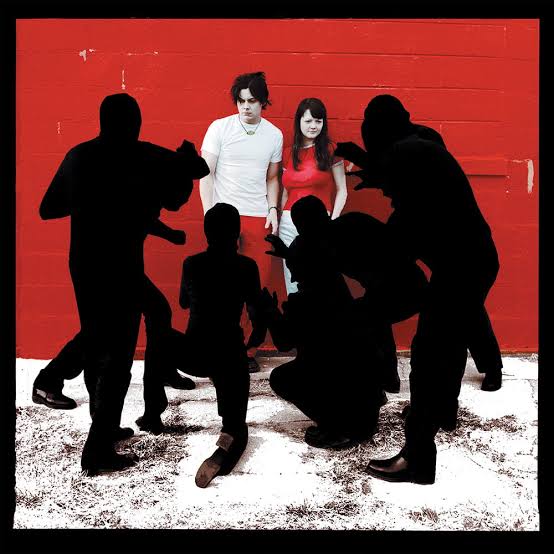
At the dawn of the 21st century, mainstream rock had become increasingly polished. Nu metal dominated the charts, post-grunge filled radio playlists, and major-label productions often layered songs with countless overdubs and digital enhancements. Then two musicians from Detroit—armed with a guitar, a drum kit, and a strict red, white, and black color scheme—released an album that reminded listeners how powerful simplicity could be.
Released on July 3, 2001, White Blood Cells was the breakthrough that transformed The White Stripes from underground garage-rock favorites into one of the most exciting bands in modern rock. While their first two albums hinted at Jack White’s remarkable songwriting and the duo’s explosive chemistry, this third release refined those ideas into a concise, exhilarating collection of songs that balanced raw energy with surprisingly sophisticated craftsmanship.
The album also arrived at exactly the right moment. Alongside bands like The Strokes, The Hives, and later The Vines, The White Stripes helped ignite the garage rock revival that would reshape alternative rock throughout the early 2000s. Yet unlike many of their contemporaries, The White Stripes were never content to simply recreate the past. Their music borrowed heavily from blues, country, punk, folk, and classic rock while filtering those influences through Jack White’s singular creative vision.
More than twenty-five years later, White Blood Cells remains one of the defining indie rock albums of its era.
Album Overview
Clocking in at just over forty minutes, White Blood Cells demonstrates remarkable discipline.
Rather than overwhelming listeners with elaborate arrangements, the album embraces limitation as a creative strength. Jack White’s guitar often shifts between snarling garage-rock riffs, delicate acoustic passages, and blues-inspired leads, while Meg White’s deceptively simple drumming provides a steady, almost primal foundation.
Producer Jim Diamond wisely avoids excessive polish. The recording feels immediate, almost as if the duo is performing in the same room as the listener. Guitars occasionally distort, drums sound loose rather than perfectly quantized, and imperfections are preserved rather than corrected.
That rawness becomes one of the album’s defining qualities.
The sequencing is equally effective. Fast, energetic rockers are balanced with quieter moments, allowing the album to remain engaging without becoming exhausting. Every stylistic shift feels natural, giving the record surprising emotional variety despite its minimalist approach.
Songwriting
Jack White takes a significant leap forward as a songwriter throughout White Blood Cells.
“Dead Leaves and the Dirty Ground” opens the album with immediate urgency, combining distorted riffs with one of White’s strongest vocal performances.
“Hotel Yorba” quickly shifts gears, offering an irresistibly joyful acoustic singalong that became one of the band’s earliest signature songs.
“I’m Finding It Harder to Be a Gentleman” blends sharp wit with infectious melodies, while “Fell in Love with a Girl” delivers perhaps the album’s defining moment. Lasting barely two minutes, it compresses enormous hooks, frantic energy, and unforgettable riffs into one of the greatest garage rock singles ever recorded.
“We’re Going to Be Friends” demonstrates White’s remarkable versatility. Gentle acoustic guitars and childlike innocence replace distortion entirely, creating one of the sweetest songs in the band’s catalog.
“Little Room,” lasting less than a minute, functions as a brief spoken interlude encouraging artistic growth without sacrificing intimacy.
Later highlights such as “The Union Forever,” “Offend in Every Way,” and “This Protector” continue expanding the band’s musical palette while maintaining remarkable consistency.
Perhaps the album’s greatest achievement is its economy. Few songs overstay their welcome. Jack White says exactly what each song requires before moving on to the next idea.
Performance
Jack White establishes himself here as one of rock’s most exciting performers.
His guitar playing constantly surprises. Rather than relying on technical flash, he favors expressive phrasing, inventive riffs, and fearless experimentation. His vocals are equally compelling, moving effortlessly between whispered vulnerability, soulful melodies, and ragged garage-rock intensity.
Meg White has often been unfairly criticized for her straightforward drumming.
On White Blood Cells, her minimalist style proves perfectly suited to the music. She rarely overplays, instead providing simple grooves that allow Jack’s guitar and vocals to occupy the spotlight. Her restraint becomes one of the band’s greatest strengths rather than a limitation.
The chemistry between the two musicians is exceptional.
Because there are only two performers, every interaction becomes essential. The album succeeds largely because each understands exactly how much space to leave for the other.
Production
Jim Diamond’s production perfectly captures the band’s aesthetic.
The album sounds raw without becoming sloppy. Instruments retain their natural imperfections, creating an immediacy that many larger-budget productions fail to achieve.
The guitars possess remarkable texture despite relatively simple recording techniques. Acoustic tracks sound intimate and warm, while distorted songs maintain clarity even at their loudest moments.
Importantly, the production never attempts to modernize the band’s vintage influences through excessive studio manipulation.
As a result, White Blood Cells has aged beautifully. It feels timeless because it prioritizes performance over technology.
Standout Tracks
“Fell in Love with a Girl”
One of the greatest garage rock songs ever recorded. Short, explosive, and packed with unforgettable hooks.
“Dead Leaves and the Dirty Ground”
A thrilling opener featuring powerful riffs and one of Jack White’s finest vocal performances.
“We’re Going to Be Friends”
A beautifully understated acoustic ballad that reveals the band’s remarkable emotional range.
“Hotel Yorba”
Simple, joyful, and endlessly charming, this remains one of the duo’s most beloved songs.
“The Union Forever”
An ambitious composition that demonstrates Jack White’s increasingly adventurous songwriting.
Weak Points
The album’s commitment to minimalism occasionally limits its sonic variety.
Some listeners may wish for fuller arrangements or more dynamic drumming, particularly during the latter half of the record. While these choices are intentional, they can make certain songs feel less immediately memorable than the standout singles.
Additionally, Jack White’s intentionally rough vocal delivery occasionally borders on strained, particularly during his more aggressive performances.
Neither issue significantly detracts from the album’s overall quality, but they prevent it from achieving absolute perfection.
Legacy
White Blood Cells became one of the cornerstone albums of the garage rock revival.
Its success proved that stripped-down rock music could once again compete in the mainstream without sacrificing authenticity. The album influenced countless indie rock bands throughout the 2000s while helping establish Jack White as one of the most important creative forces of his generation.
It also paved the way for the even greater commercial success of Elephant, but many longtime fans continue to argue that White Blood Cells better captures the band’s raw spirit and creative freedom.
Songs like “Fell in Love with a Girl,” “Hotel Yorba,” and “We’re Going to Be Friends” remain staples of alternative rock playlists, while the album itself continues to appear on lists celebrating the greatest records of the 2000s.
Its influence extends well beyond garage rock, inspiring musicians to embrace simplicity, spontaneity, and personality over technical excess.
Final Score: 9/10
White Blood Cells is a landmark album that transformed The White Stripes into one of the defining bands of the 2000s. Jack White’s exceptional songwriting, inventive guitar work, and fearless creativity combine with Meg White’s perfectly understated drumming to create a record bursting with personality. Although its minimalist approach occasionally limits its sonic range, the album’s remarkable consistency, timeless production, and unforgettable songs make it one of the finest garage rock albums ever recorded.
This post has already been read 46 times!