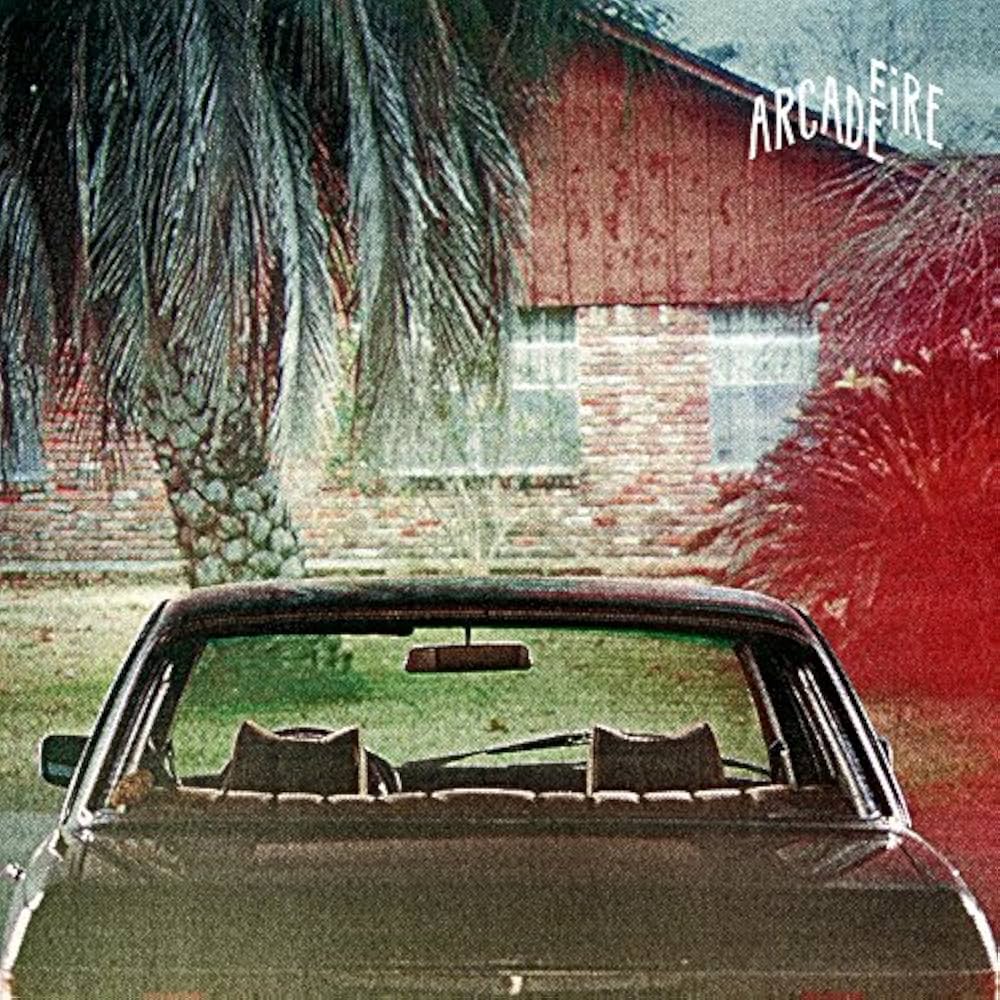
Few bands have followed a pair of universally acclaimed albums with as much confidence as Arcade Fire did in 2010. After the emotional grandeur of Funeral and the darker, more politically charged Neon Bible, expectations for the band’s third album were almost impossibly high. Rather than trying to outdo those records with even bigger orchestration or grander statements, Arcade Fire turned inward.
Released on August 2, 2010, The Suburbs exchanged apocalyptic themes for something far more familiar: the quiet melancholy of growing up. Inspired largely by Win and Will Butler’s childhood experiences in suburban Texas, the album examines nostalgia, adulthood, sprawl, consumer culture, lost innocence, and the uneasy realization that the places we remember rarely remain the same.
It was an ambitious concept, but one grounded in everyday life rather than dramatic spectacle.
The gamble paid off. The Suburbs became Arcade Fire’s first No. 1 album in both the United States and the United Kingdom, won the Grammy Award for Album of the Year, and further cemented the band’s reputation as one of the defining rock acts of the 21st century.
While it may not possess the immediate emotional impact of Funeral, it rewards repeated listening with extraordinary depth and nuance.
Album Overview
Unlike the explosive urgency that characterized Funeral, The Suburbs unfolds gradually.
The production, handled by Markus Dravs alongside Arcade Fire, favors warmth over grandeur. Acoustic guitars, pianos, synthesizers, strings, organs, and layered vocal harmonies create rich arrangements without overwhelming the songs themselves.
The title immediately suggests a central theme, but the album avoids simplistic nostalgia. Instead, it presents suburbia as both comforting and confining, a place filled with childhood memories yet shadowed by monotony and unrealized dreams.
Clocking in at over an hour, The Suburbs is the band’s longest album, yet it rarely feels bloated. The sequencing carefully balances energetic rock songs with reflective ballads, giving the record a natural ebb and flow.
Its emotional power comes less from individual dramatic moments than from cumulative effect.
By the closing tracks, the listener feels as though they have completed an entire journey through memory.
Songwriting
Win Butler delivers some of the strongest songwriting of his career.
The title track opens with understated beauty, immediately introducing the album’s bittersweet perspective on youth and adulthood.
“Ready to Start” injects urgency through driving rhythms and soaring melodies, becoming one of Arcade Fire’s finest rock songs.
“Modern Man” explores disillusionment with subtle humor, while “Rococo” offers one of the album’s most intriguing lyrical portraits.
The centerpiece arrives with “Sprawl II (Mountains Beyond Mountains).” Sung by Régine Chassagne, it transforms suburban anxiety into shimmering synth-pop brilliance. The infectious melody and emotional release make it one of the band’s greatest achievements.
“We Used to Wait” examines how technology has changed human connection, a theme that has only become more relevant over time.
“Suburban War” and “Half Light I” provide quieter emotional highlights before “Month of May” briefly injects garage-rock energy.
The closing “The Suburbs (Continued)” gently brings the journey full circle, ending not with resolution but quiet reflection.
While a handful of deeper cuts don’t immediately stand out, nearly every song gains strength through repeated listening.
Performance
Arcade Fire remains one of rock’s great ensemble bands.
Win Butler delivers heartfelt vocal performances throughout, balancing vulnerability with quiet determination. His voice has never been technically flashy, but its emotional sincerity perfectly suits the material.
Régine Chassagne once again provides essential contrast. Her performance on “Sprawl II” is among the finest of her career, adding warmth and optimism to an otherwise reflective album.
Instrumentally, the band’s chemistry is extraordinary.
Richard Reed Parry, Tim Kingsbury, Jeremy Gara, Sarah Neufeld, and Will Butler all contribute layers of guitars, strings, keyboards, percussion, and backing vocals that constantly enrich the arrangements without making them feel crowded.
Despite the number of musicians involved, every performance remains remarkably disciplined.
The songs always come first.
Production
Markus Dravs helps Arcade Fire achieve one of their warmest and most inviting sonic landscapes.
The production feels expansive but intimate.
Pianos resonate naturally, guitars shimmer without dominating the mix, and orchestral flourishes appear exactly when needed. Electronic elements are incorporated tastefully, particularly during “Sprawl II,” without disrupting the album’s organic atmosphere.
Unlike many indie rock records from the early 2010s, The Suburbs avoids trendy production techniques that would later feel dated.
Instead, it relies on timeless arrangements, dynamic performances, and exceptional engineering.
The result is an album that continues to sound remarkably fresh.
Standout Tracks
“Sprawl II (Mountains Beyond Mountains)”
A breathtaking synth-pop masterpiece that perfectly captures the album’s emotional heart.
“Ready to Start”
One of Arcade Fire’s most powerful rock songs, driven by urgency and unforgettable melodies.
“The Suburbs”
A beautifully understated opener that establishes the album’s themes with remarkable elegance.
“We Used to Wait”
A thoughtful meditation on changing technology and fading human connection.
“Suburban War”
One of the album’s most emotionally affecting songs, blending nostalgia with quiet heartbreak.
Weak Points
The album’s greatest weakness is its length.
Although consistently strong, a few mid-album tracks feel less immediate than the outstanding highlights surrounding them. Trimming several songs may have resulted in an even tighter listening experience.
Additionally, listeners expecting the explosive emotional catharsis of Funeral may initially find The Suburbs more restrained.
Its rewards emerge gradually rather than instantly.
Legacy
The Suburbs confirmed that Arcade Fire was far more than a band capable of making one landmark album.
Its exploration of nostalgia, suburban life, and modern alienation resonated with listeners across generations, while its Grammy victory represented one of the rare occasions an ambitious indie rock album defeated mainstream pop juggernauts for Album of the Year.
The album also demonstrated that large-scale concept records could remain emotionally intimate without sacrificing accessibility.
Its influence continues to be felt across indie rock, heartland rock revival, and alternative pop, inspiring artists to embrace thoughtful storytelling over fashionable trends.
Although debates continue over whether Funeral or The Suburbs represents Arcade Fire’s greatest achievement, there is little question that both belong among the defining rock albums of the century.
Final Score: 9/10
The Suburbs is a beautifully crafted meditation on memory, adulthood, and the places that shape us. Arcade Fire’s rich ensemble performances, emotionally resonant songwriting, and warm production create an album that grows more rewarding with every listen. While its lengthy runtime and understated pacing prevent it from matching the immediate brilliance of Funeral, its emotional maturity, thematic cohesion, and lasting resonance firmly establish it as one of the finest indie rock albums of the 2010s.
This post has already been read 48 times!