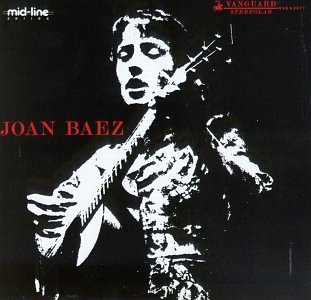
When Joan Baez released her self-titled debut album in 1960, the American folk revival was still gathering momentum. Coffeehouses were beginning to fill with young musicians rediscovering traditional songs, but the movement had yet to produce many nationally recognized stars. Baez changed that almost immediately. Armed with little more than an acoustic guitar and one of the purest voices ever captured on record, she introduced audiences to centuries-old folk songs with a level of grace and sincerity that felt timeless.
Unlike many debut albums that showcase an artist searching for an identity, Joan Baez arrives fully formed. There are no elaborate arrangements, no commercial compromises, and no attempts to chase popular trends. Instead, Baez places complete faith in the strength of traditional music and her extraordinary ability to interpret it. The result is an album that feels both ancient and remarkably fresh.
Long before she became known for her activism or her association with the 1960s counterculture, Baez established herself as one of folk music’s greatest interpreters. This debut remains a stunning introduction to an artist whose influence would extend far beyond the boundaries of folk music.
More than sixty years later, Joan Baez continues to stand as one of the essential recordings of the American folk revival.
Album Overview
Simplicity defines every aspect of Joan Baez. Nearly every performance features only Baez’s voice accompanied by her acoustic guitar, creating an intimacy that immediately draws the listener into the music.
The album consists primarily of traditional folk songs drawn from American, English, Irish, and Scottish traditions. Rather than modernizing the material, Baez approaches each song with deep respect, allowing the melodies and stories to remain at the forefront.
The sequencing creates a quiet, reflective atmosphere that remains remarkably consistent throughout the record. Ballads of love, tragedy, and perseverance unfold naturally, giving the album a cohesive identity despite the varied origins of the material.
Although the minimalist presentation occasionally risks uniformity, Baez’s remarkable vocal control and emotional sensitivity keep every performance engaging.
The album never feels like an academic exercise in preserving folk music. Instead, it reminds listeners why these songs survived for generations in the first place.
Songwriting
Because Joan Baez is built almost entirely around traditional material, its greatness lies in song selection and interpretation rather than original composition.
Baez demonstrates exceptional judgment in choosing songs that showcase both the richness of the folk tradition and the expressive possibilities of her voice.
“Silver Dagger” opens the album with haunting beauty, establishing the emotional sincerity that defines the entire record.
“House of the Rising Sun”, years before it became a rock classic, receives a restrained and deeply moving interpretation that emphasizes its tragic narrative.
“Wildwood Flower” highlights Baez’s connection to traditional American folk music, while “Mary Hamilton” and “East Virginia” preserve centuries-old storytelling traditions with remarkable authenticity.
The lyrics throughout the album explore universal themes of love, loss, betrayal, and resilience. Their enduring appeal lies in their emotional honesty rather than elaborate poetic language.
Baez never attempts to reinvent these songs. Instead, she trusts their timeless qualities, allowing their beauty to emerge naturally.
Performance
Joan Baez’s voice is the unquestioned centerpiece of the album.
Clear, expressive, and almost ethereal, her soprano possesses extraordinary purity without ever sounding cold or detached. She sings with impeccable intonation and remarkable control, yet her performances always feel emotionally genuine rather than technically calculated.
One of Baez’s greatest strengths is her restraint. She rarely resorts to dramatic vocal flourishes or theatrical interpretations. Instead, she communicates through subtle phrasing and emotional sincerity.
Her guitar playing is equally effective. While relatively simple, the accompaniment provides steady rhythmic support without distracting from the vocals.
Perhaps most impressive is her ability to make centuries-old songs feel immediate. Every performance sounds deeply personal, as though the stories remain as relevant today as when they were first written.
The understated nature of the performances ultimately becomes one of the album’s greatest virtues.
Production
The production perfectly complements the album’s artistic goals.
Recorded with minimal studio embellishment, Joan Baez captures the warmth and intimacy of a solo folk performance with remarkable clarity.
Baez’s voice remains front and center throughout, while the acoustic guitar is balanced naturally beneath it.
The absence of elaborate arrangements allows every vocal nuance to remain audible, reinforcing the album’s sense of honesty and authenticity.
Even by modern standards, the recording has aged exceptionally well. Rather than sounding dated, its simplicity gives it a timeless quality that many more elaborate productions struggle to achieve.
The producers wisely understood that the songs required little beyond faithful documentation.
Standout Tracks
The album contains numerous memorable performances.
“Silver Dagger” remains one of Baez’s signature recordings, combining haunting storytelling with breathtaking vocal purity.
“House of the Rising Sun” offers one of the earliest and most emotionally affecting recorded versions of the traditional ballad.
“Mary Hamilton” showcases her remarkable ability to sustain dramatic tension through subtle interpretation alone.
“East Virginia” beautifully illustrates the warmth of her voice, while “Donna Donna” became one of the defining songs of her early career.
Every performance reflects the same unwavering commitment to emotional honesty and musical authenticity.
Weak Points
While Joan Baez is an outstanding debut, it is not without limitations.
The album’s minimalist approach occasionally results in performances that blend together, particularly for listeners unfamiliar with traditional folk music.
Those seeking greater instrumental variety or original songwriting may also find the record somewhat restrained compared with Baez’s later work.
Additionally, the consistently gentle pacing means the album rarely builds toward dramatic musical climaxes.
These observations reflect the album’s artistic choices rather than genuine flaws, but they slightly limit its broader appeal.
Legacy
Joan Baez helped launch one of the most important careers in folk music while playing a significant role in the American folk revival.
Its success demonstrated that traditional folk songs still possessed tremendous emotional and commercial potential, paving the way for artists including Bob Dylan, Judy Collins, Emmylou Harris, and Nanci Griffith, all of whom admired Baez’s remarkable interpretive abilities.
The album also established Baez as one of the foremost interpreters of traditional music, a reputation she would maintain throughout her career.
Today, it remains one of the definitive folk albums of the early 1960s—a recording that captures both the beauty of traditional songs and the arrival of one of the genre’s most important voices.
Final Score
9.0/10
Joan Baez is a beautifully understated debut that showcases one of the most extraordinary voices in folk music history. Its minimalist production, exceptional song selection, and emotionally honest performances make it one of the foundational albums of the American folk revival. While its restrained presentation and reliance on traditional material may feel less varied than some later classics, the album’s sincerity, elegance, and timeless beauty ensure its place among the essential folk recordings of the twentieth century.
This post has already been read 2 times!