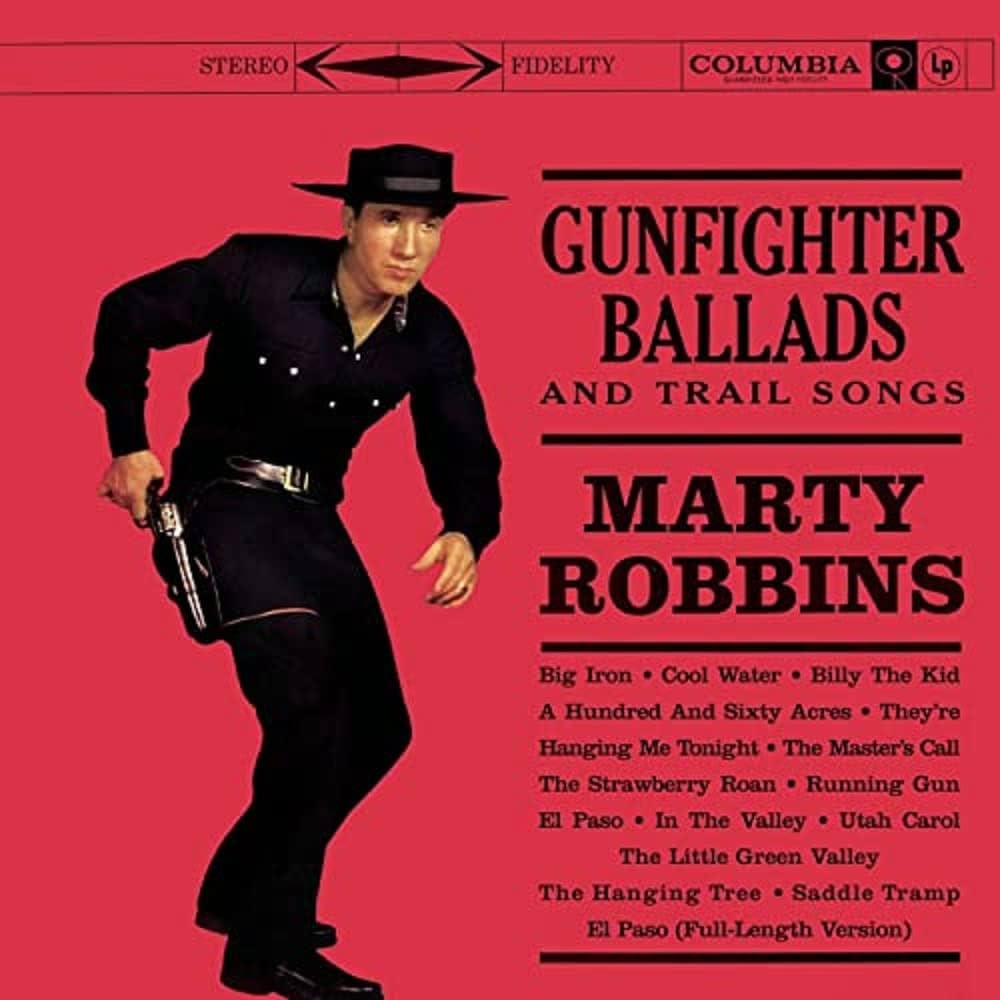
Western music had been a cornerstone of American culture for decades before Marty Robbins released Gunfighter Ballads and Trail Songs in 1959, but few albums elevated the genre to the level of artistry found here. Blending traditional cowboy songs, frontier legends, and vivid storytelling with Robbins’ unmistakable voice, the album became one of the defining releases in country music history. It transformed tales of outlaws, lawmen, and the American West into timeless musical narratives that continue to captivate listeners more than sixty years later.
Robbins was already an established country star by the late 1950s, but this album represented a creative gamble. Rather than chasing contemporary country trends, he devoted an entire record to western ballads—a style many in the music industry believed had already reached its commercial peak. The gamble paid off spectacularly. Led by the unforgettable success of “El Paso,” the album became both a critical and commercial triumph, earning Robbins a Grammy Award and cementing his place among country music’s greatest storytellers.
Although western music has often been treated as a niche within country, Gunfighter Ballads and Trail Songs proves that great storytelling transcends genre. The songs transport listeners into dusty frontier towns, lonely desert landscapes, and dangerous encounters where honor, love, and fate collide.
Few concept-driven albums have remained as vivid, entertaining, or influential as this remarkable collection.
Album Overview
From its opening moments, Gunfighter Ballads and Trail Songs creates an immersive world that feels remarkably cohesive. Every song contributes to the album’s atmosphere, making it feel less like a collection of unrelated tracks and more like a series of interconnected frontier stories.
The arrangements are intentionally restrained. Acoustic guitars, gentle percussion, tasteful strings, and subtle vocal harmonies create a cinematic backdrop without overshadowing Robbins’ storytelling. Rather than relying on flashy production, the album allows the songs themselves to carry the emotional weight.
The pacing is another major strength. Up-tempo western numbers are balanced by reflective ballads, preventing the album from becoming repetitive while maintaining its unmistakable frontier identity.
Robbins’ warm, expressive voice serves as the perfect guide through these tales. Whether singing about doomed romance, dangerous gunfights, or life on the open range, he sounds completely believable in every role.
The result is an album that rewards uninterrupted listening, inviting audiences to lose themselves in a romanticized version of the Old West that feels both mythical and emotionally authentic.
Songwriting
Storytelling lies at the heart of Gunfighter Ballads and Trail Songs, and Marty Robbins proves himself to be one of country music’s finest narrative songwriters.
“El Paso” is the undisputed centerpiece. Spanning more than four minutes—an unusually long running time for a hit single in 1959—the song unfolds like a short western film. Robbins crafts memorable characters, vivid scenery, and a tragic love story that builds toward one of country music’s most famous endings.
“Big Iron” has become equally legendary over the decades. Its tale of an Arizona Ranger confronting the outlaw Texas Red is one of the greatest narrative songs ever written, balancing suspense, memorable melodies, and lyrical economy with remarkable skill.
Elsewhere, songs such as “Cool Water,” “Billy the Kid,” and “They’re Hanging Me Tonight” demonstrate Robbins’ gift for transforming western folklore into emotionally engaging music.
The lyrics throughout the album are richly visual. Robbins paints landscapes, introduces memorable characters, and creates dramatic tension with remarkable efficiency, making every song feel like a miniature motion picture.
Performance
Marty Robbins delivers one of the finest vocal performances of his career.
His voice possesses a remarkable combination of warmth, clarity, and effortless control. Unlike many country singers who rely on overt emotional intensity, Robbins communicates through subtle phrasing and impeccable storytelling.
He understands that these songs require restraint. Rather than overacting the dramatic moments, he allows the narratives to unfold naturally, trusting both the lyrics and the listener’s imagination.
His vocal versatility also deserves praise. Robbins moves comfortably between romantic ballads, dramatic western narratives, and traditional cowboy songs without ever sounding out of place.
The supporting musicians provide tasteful accompaniment throughout the album. Every instrumental performance serves the songs rather than competing for attention, reinforcing the cinematic atmosphere that defines the record.
The understated musicianship allows Robbins’ storytelling to remain the central focus, and the performances benefit enormously from that discipline.
Production
For a country album recorded in 1959, Gunfighter Ballads and Trail Songs sounds remarkably polished.
Producer Don Law wisely avoids unnecessary embellishment, allowing the natural warmth of Robbins’ voice and the acoustic instrumentation to shine.
The stereo image, particularly on modern remasters, preserves impressive separation between instruments while maintaining a cohesive ensemble sound.
The arrangements strike an ideal balance between authenticity and accessibility. Traditional western influences remain prominent, but the production never feels dated or overly rustic.
Because the recording emphasizes timeless musicianship over contemporary trends, the album has aged exceptionally well. Its clean production continues to support the storytelling without distracting from it.
Standout Tracks
The album is filled with memorable performances, but several songs have become enduring classics.
“El Paso” remains one of the greatest country songs ever recorded. Its unforgettable melody, cinematic storytelling, and emotional conclusion have secured its place in American music history.
“Big Iron” has enjoyed an extraordinary revival in recent decades, introducing Robbins’ songwriting to entirely new audiences. Its compelling narrative and instantly recognizable melody make it one of the album’s defining achievements.
“Cool Water” provides a haunting portrait of life in the desert, while “Billy the Kid” transforms western folklore into an engaging musical narrative.
“They’re Hanging Me Tonight” stands among Robbins’ darkest and most emotionally affecting performances, demonstrating his remarkable ability to convey tension and regret.
Nearly every track contributes something memorable, making this one of the most consistently strong country albums of its era.
Weak Points
There are very few genuine weaknesses on Gunfighter Ballads and Trail Songs.
Listeners who prefer modern country production may initially find the arrangements somewhat understated, particularly compared with the more elaborate Nashville sound that emerged during the following decade.
Because the album remains firmly committed to its western theme, there is naturally less stylistic variety than on Robbins’ broader country releases.
Additionally, some traditional cowboy songs are slightly overshadowed by the towering reputation of “El Paso” and “Big Iron,” making them easier to overlook despite their considerable quality.
These are minor observations that do little to diminish the album’s lasting appeal.
Legacy
Gunfighter Ballads and Trail Songs is one of the defining albums in the history of country and western music.
It revitalized interest in western ballads at a time when many believed the genre had faded from mainstream popularity. Robbins demonstrated that storytelling remained one of country music’s greatest strengths, inspiring generations of songwriters to place narrative at the center of their work.
Its influence can be heard in artists such as Johnny Cash, Chris LeDoux, Colter Wall, and Charley Crockett, all of whom embraced the tradition of vivid storytelling and western imagery.
The album also found new audiences through film, television, and video games, particularly as “Big Iron” became a cultural phenomenon decades after its original release.
Today, Gunfighter Ballads and Trail Songs remains the definitive western music album—a record that captures the romance, danger, and mythology of the American frontier with unmatched elegance and authenticity.
Final Score
10/10
Gunfighter Ballads and Trail Songs is a masterpiece of storytelling and one of the greatest country albums ever recorded. Marty Robbins combines unforgettable songwriting, flawless vocals, tasteful production, and vivid frontier imagery to create an album that feels timeless from beginning to end. While its unwavering commitment to western themes may narrow its stylistic scope, it achieves its artistic vision so completely that any criticism becomes insignificant. More than sixty years after its release, it remains the gold standard for western music and one of the finest narrative albums in American popular music.
This post has already been read 3 times!