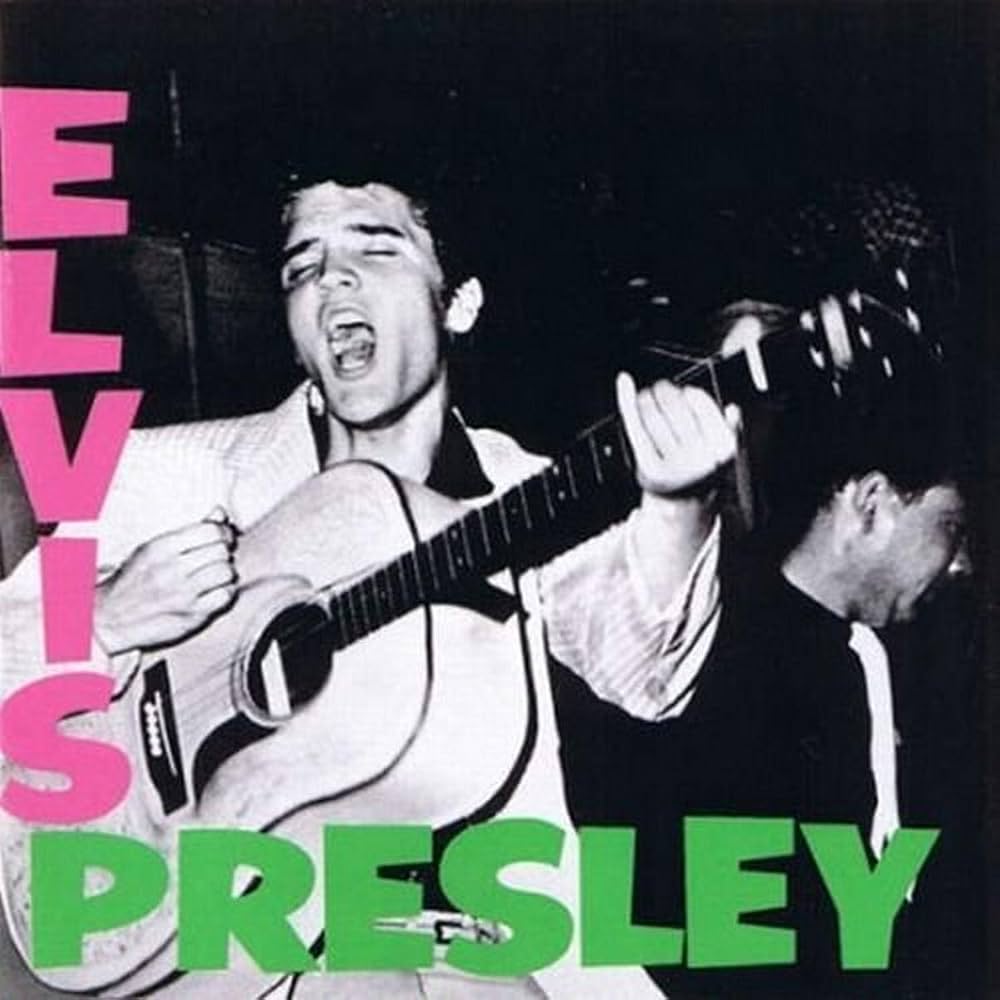
When Elvis Presley was released in March 1956, popular music was in the middle of a revolution. Rock and roll was still in its infancy, and while artists like Chuck Berry, Little Richard, and Fats Domino were making waves, no one had captured the imagination of the American public quite like a 21-year-old singer from Memphis. Elvis Presley had already become a regional sensation through his recordings at Sun Records, but his move to RCA Victor and the massive success of “Heartbreak Hotel” catapulted him into superstardom.
His self-titled debut album wasn’t simply another collection of songs—it became the first rock and roll album to top the Billboard charts and helped establish the LP as a viable format for rock music. More importantly, it introduced millions of listeners to an artist who effortlessly blended country, rhythm and blues, gospel, and pop into a sound unlike anything that had come before.
While later Elvis albums would showcase greater artistic ambition and stronger production, Elvis Presley remains one of the most historically significant debuts in music history. It captures a young performer overflowing with charisma, confidence, and raw energy before Hollywood films and commercial expectations reshaped much of his career.
Album Overview
Unlike many debut albums assembled from hastily recorded material, Elvis Presley feels remarkably cohesive despite drawing from multiple recording sessions. The album balances hard-driving rockers with country ballads, blues numbers, and heartfelt love songs, reflecting the diverse influences that shaped Presley’s musical identity.
At just under thirty minutes, the album moves quickly. There is very little filler, and each song contributes something unique to the listening experience. Rather than sticking strictly to rock and roll, Elvis demonstrates an impressive versatility, moving comfortably between energetic performances and tender ballads.
One of the album’s greatest strengths is its spontaneity. Nothing feels over-rehearsed or overproduced. The performances have the excitement of musicians discovering something new in real time, which gives the record an infectious sense of momentum.
The supporting musicians deserve considerable credit as well. Guitarist Scotty Moore, bassist Bill Black, and drummer D.J. Fontana form one of early rock’s most influential backing bands. Their playing provides the perfect foundation for Elvis’ dynamic vocals without ever overshadowing him.
The album may not tell a unified story like later concept albums, but it succeeds as a showcase for an artist who seemed capable of singing almost anything convincingly.
Songwriting
Like many artists of the era, Elvis was primarily an interpreter rather than a songwriter. The material comes from a variety of writers and musical traditions, but his performances make the songs feel uniquely his own.
“Blue Suede Shoes,” originally written and recorded by Carl Perkins, explodes with confidence and swagger. Elvis wisely avoids simply copying Perkins’ original, instead adding a looser, more playful vocal approach.
“I Got a Woman,” adapted from Ray Charles, demonstrates Elvis’ deep appreciation for rhythm and blues. While his interpretation differs from Charles’ groundbreaking original, it highlights the influence Black music had on early rock and roll.
Ballads such as “I’m Counting on You” and “I’ll Never Let You Go” reveal another side of Presley. His ability to communicate vulnerability would become one of his greatest strengths throughout his career.
The songwriting itself is understandably uneven. Some tracks are timeless classics, while others serve primarily as vehicles for Elvis’ vocal personality. Fortunately, his charisma often elevates even the lighter material.
Performance
The true star of Elvis Presley is, unsurprisingly, Elvis himself.
Few debut albums have introduced a vocalist with such complete command of their style. Presley shifts effortlessly between rockabilly exuberance, country sincerity, gospel passion, and blues-infused swagger without ever sounding forced.
His voice was already remarkably mature. Rich, expressive, and incredibly flexible, it possessed both youthful excitement and emotional depth. Whether delivering the playful attitude of “Blue Suede Shoes” or the heartfelt tenderness of “Trying to Get to You,” Elvis sounds completely committed to every performance.
His phrasing also deserves praise. Elvis had an instinctive understanding of rhythm, often stretching or compressing lines in ways that made familiar songs feel fresh and unpredictable.
The chemistry between Presley and his band is another highlight. Scotty Moore’s inventive guitar work complements Elvis perfectly, while Bill Black’s energetic bass playing injects constant movement into the arrangements.
Even today, these performances feel vibrant and alive, capturing an artist who clearly enjoyed every moment in the studio.
Production
By modern standards, the production is relatively simple, but simplicity works in the album’s favor.
Producer Steve Sholes wisely avoided smoothing out the raw energy that had made Elvis such a sensation. Instead, the recordings retain much of the immediacy that characterized his earlier Sun Records work while benefiting from RCA’s improved recording quality.
The mix emphasizes Elvis’ vocals without burying the musicians, allowing every instrument to contribute to the overall sound.
Because the recordings originated from multiple sessions, there are occasional differences in sonic texture, but they never become distracting. In fact, they add to the album’s documentary feel, capturing Presley during one of the most exciting periods of his early career.
While later studio technology would allow for greater sophistication, the straightforward production preserves the youthful enthusiasm that makes the album so enduring.
Standout Tracks
Several songs remain essential listening for anyone interested in the birth of rock and roll.
“Blue Suede Shoes” is an iconic opener and one of Elvis’ definitive early performances. Its infectious energy immediately establishes the album’s excitement.
“Tutti Frutti” transforms Little Richard‘s explosive hit into another thrilling showcase for Presley’s vocal charisma.
“Trying to Get to You” may be the album’s finest vocal performance, blending gospel emotion with blues intensity in unforgettable fashion.
“Money Honey” closes the record on an energetic note, highlighting Elvis’ ability to inject personality into rhythm and blues material.
“Blue Moon” offers one of the album’s most surprising moments, with its atmospheric arrangement and haunting vocal performance demonstrating a depth beyond straightforward rock and roll.
Weak Points
As groundbreaking as Elvis Presley remains, it is not without imperfections.
Because the album draws from various recording sessions and musical styles, it occasionally feels more like a showcase than a carefully constructed artistic statement. Later Elvis albums would demonstrate greater consistency in tone and sequencing.
A few slower tracks lack the memorable impact of the stronger material, largely because the songwriting isn’t uniformly exceptional.
Listeners seeking the polished production of Presley’s 1960s recordings may also find the sound somewhat primitive, although that rawness is part of the album’s historical charm.
Finally, while Elvis’ interpretations are consistently engaging, several songs inevitably invite comparisons to their original recordings, some of which remain equally compelling in their own right.
Legacy
Few debut albums have changed popular music as dramatically as Elvis Presley.
It helped establish rock and roll as a commercial force, proving that youthful energy, rhythm and blues influences, and country traditions could coexist within mainstream popular music. The album also demonstrated that rock artists could succeed in the LP format rather than relying solely on singles.
Its influence extends across virtually every branch of popular music. Artists ranging from The Beatles and The Rolling Stones to Bruce Springsteen and Chris Isaak have acknowledged Presley’s enormous impact on their own musical development.
More than simply launching one of music’s greatest careers, Elvis Presley helped redefine what a popular singer could be. Elvis wasn’t merely performing songs—he was embodying a new attitude, one that combined confidence, vulnerability, sexuality, and musical curiosity in equal measure.
Nearly seventy years later, the album still feels exciting. While rock music would evolve dramatically over the following decades, the youthful spirit captured here remains timeless.
Final Score
9.5/10
Elvis Presley is one of the greatest debut albums in popular music history. While it lacks the conceptual cohesion and studio sophistication of some later classics, its historical importance is matched by the sheer vitality of its performances. Elvis’ magnetic vocals, the exceptional musicianship of his backing band, and a tracklist filled with early rock and roll essentials make this an album that remains as exhilarating today as it was in 1956. It is both a snapshot of a musical revolution in progress and a lasting testament to the arrival of one of the most influential artists the world has ever known.
This post has already been read 66 times!