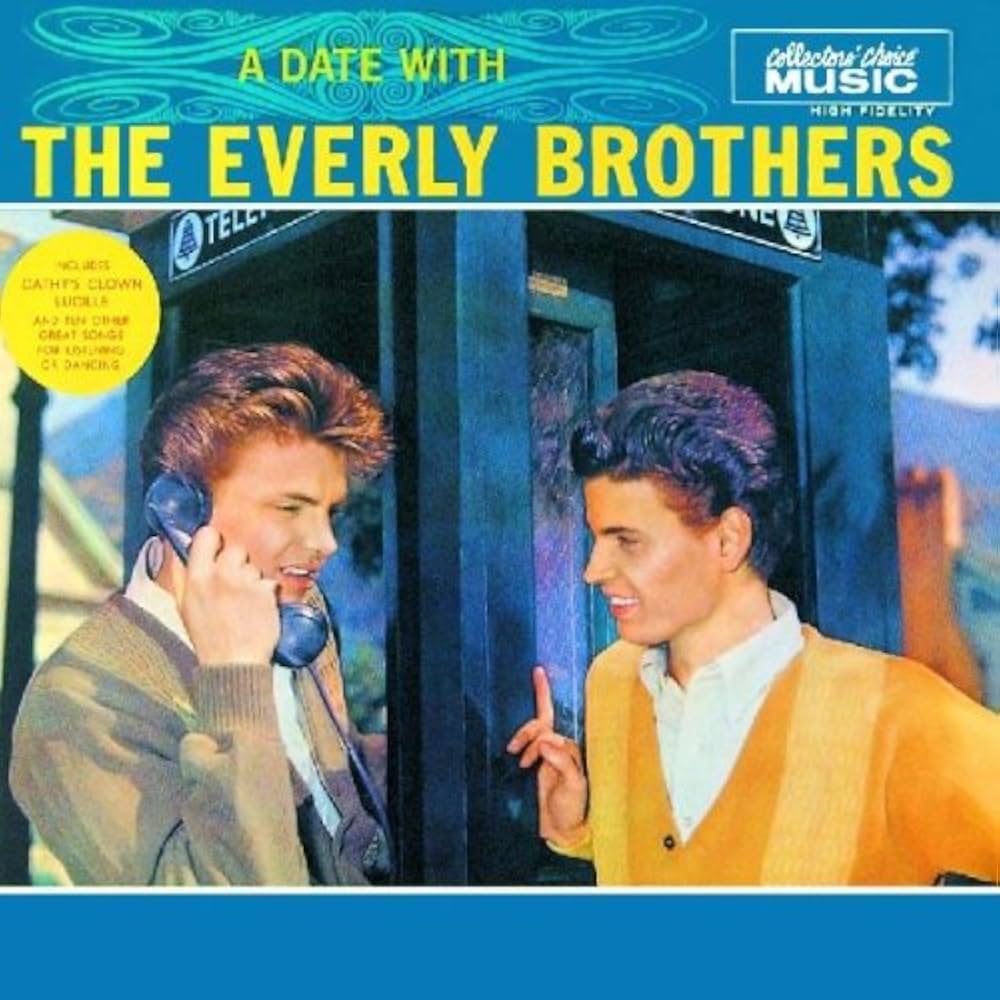
Rock and roll was barely five years old when the Everly Brothers released A Date with The Everly Brothers in 1960, yet Don and Phil Everly had already become two of its defining voices. While many early rock stars relied on raw energy or rebellious swagger, the Everlys carved out their own identity through breathtaking vocal harmonies that blended country, rock and roll, pop, and rhythm and blues into an unmistakable sound. Their influence would eventually reach far beyond the charts, helping shape the vocal approach of countless artists throughout the 1960s and beyond.
A Date with The Everly Brothers arrived at the peak of the duo’s commercial success. Following a remarkable string of hit singles, the album demonstrated that they were capable of more than producing radio-friendly songs. It showcased remarkable consistency, polished musicianship, and an effortless chemistry that few vocal duos have ever matched.
Unlike some of their earlier releases, which leaned heavily on previously issued singles, this album presents a stronger sense of cohesion. It captures two brothers who had perfected their signature style while continuing to refine their songwriting and interpretations.
Although it sometimes lives in the shadow of the Everlys’ greatest individual hits, A Date with The Everly Brothers remains one of the strongest albums of the early rock era and an essential chapter in the evolution of harmony-based pop music.
Album Overview
From beginning to end, A Date with The Everly Brothers radiates warmth and optimism. The album moves comfortably between upbeat rockers, country-influenced ballads, and polished pop songs without ever losing its distinctive identity.
The defining feature, of course, is the harmony singing. Don and Phil’s voices blend with such natural precision that they often sound like a single instrument rather than two separate singers. Their phrasing is effortless, their timing impeccable, and their emotional connection unmistakable.
The arrangements remain relatively simple, allowing the melodies and vocals to dominate. Gentle acoustic guitars, tasteful electric leads, steady rhythm sections, and occasional string embellishments provide just enough support without overwhelming the brothers’ performances.
The pacing is excellent as well. Lively songs are balanced by slower, more reflective moments, creating an album that never feels repetitive despite maintaining a consistent musical style.
The record may not strive for grand artistic statements, but it excels at something equally valuable: delivering beautifully crafted songs performed with remarkable sincerity.
Songwriting
The Everly Brothers built much of their early success on exceptional songwriting, and this album continues that tradition.
“Lucille,” originally written by Little Richard and Albert Collins, receives an energetic reinterpretation that demonstrates the duo’s ability to transform rhythm and blues into their own harmony-driven style.
“Cathy’s Clown,” one of the defining songs of their career, stands as the album’s emotional centerpiece. Its unforgettable melody, innovative production, and heartbreaking lyrics helped make it one of the biggest hits of 1960.
Elsewhere, songs such as “Always It’s You,” “Love Hurts,” and “So Sad (To Watch Good Love Go Bad)” reveal the duo’s gift for emotionally direct storytelling.
The lyrics rarely become overly complicated, instead focusing on universal themes of romance, heartbreak, and youthful longing. Their simplicity becomes a strength because the emotional honesty feels completely genuine.
Whether performing originals or carefully selected covers, the Everlys consistently choose material that complements their extraordinary vocal blend.
Performance
The performances throughout the album are outstanding.
Don and Phil Everly remain among the greatest harmony singers in popular music history. Their voices intertwine with astonishing precision while retaining enough individuality to create rich emotional textures.
Neither brother dominates the performances. Instead, each instinctively understands when to lead and when to support, creating a partnership that feels completely natural.
The instrumental performances deserve recognition as well. The accompanying musicians maintain a relaxed, confident groove throughout the album, providing tasteful support without distracting from the vocals.
The guitar work is especially effective, blending country fingerpicking traditions with early rock and roll rhythms in ways that would heavily influence later artists.
Perhaps the most remarkable aspect of the performances is how effortless they sound. The technical difficulty of singing such perfectly matched harmonies is considerable, yet the Everlys make it appear completely natural.
Production
For an album recorded in 1960, A Date with The Everly Brothers sounds remarkably polished.
Producer Archie Bleyer understood that the Everlys’ harmonies were their greatest asset, placing their vocals prominently in the mix while maintaining excellent instrumental balance.
The recording possesses warmth and clarity that continue to hold up well today. Every vocal line remains distinct, and the subtle instrumental details enrich the performances without cluttering them.
The production also demonstrates admirable restraint. Rather than relying on studio effects or elaborate orchestration, it allows the strength of the songs and performances to remain the focus.
Modern remasters have preserved the album’s inviting sound while revealing additional detail in the harmonies and instrumentation.
Standout Tracks
Several songs rank among the finest recordings of the Everly Brothers’ career.
“Cathy’s Clown” is an undeniable masterpiece, combining unforgettable harmonies with one of the most emotionally compelling performances in early rock and roll.
“Lucille” injects exciting rock-and-roll energy into the album while showcasing the brothers’ versatility.
“Love Hurts” offers a moving interpretation of a song that would later become famous through numerous other artists, revealing emotional depths that remain deeply affecting.
“Always It’s You” demonstrates the elegance of their vocal blend, while “So Sad (To Watch Good Love Go Bad)” perfectly captures the bittersweet romanticism that defined so much of their work.
Even the lesser-known tracks maintain an impressive level of quality, making this one of the duo’s most consistent releases.
Weak Points
While A Date with The Everly Brothers is an excellent album, it falls just short of the very highest tier of rock classics.
A handful of deeper cuts, while enjoyable, do not quite reach the unforgettable standard established by the album’s biggest hits.
The production, although beautifully executed for its era, occasionally reflects the cleaner, more restrained style of early 1960s pop, lacking some of the raw edge that later rock recordings would embrace.
Additionally, listeners seeking greater stylistic experimentation may find the album somewhat conservative compared with landmark releases that would soon redefine popular music.
These are relatively modest criticisms of an album that consistently delivers exceptional craftsmanship.
Legacy
A Date with The Everly Brothers helped establish the template for harmony-driven rock and pop music during the 1960s.
Its influence can be heard throughout the work of The Beatles, The Beach Boys, Simon & Garfunkel, Crosby, Stills & Nash, and countless other vocal groups that sought to emulate the Everlys’ remarkable blend.
The album also demonstrated that rock and roll could embrace country influences without sacrificing its mainstream appeal, helping lay the foundation for country rock later in the decade.
Although individual singles such as “Bye Bye Love,” “Wake Up Little Susie,” and “All I Have to Do Is Dream” often dominate discussions of the duo’s legacy, this album reveals just how consistently excellent the Everly Brothers were during their creative peak.
It remains one of the strongest examples of early rock and pop craftsmanship before the arrival of the album-oriented revolution of the mid-1960s.
Final Score
9.0/10
A Date with The Everly Brothers is one of the finest albums of the early rock-and-roll era, combining flawless vocal harmonies, memorable songwriting, and understated production into an effortlessly enjoyable listening experience. While it lacks the groundbreaking ambition of some of the decade’s most revolutionary albums, its consistency, warmth, and lasting influence make it an essential recording. The Everly Brothers’ extraordinary chemistry elevates every song, resulting in an album that remains as charming and emotionally resonant today as it was upon its release.