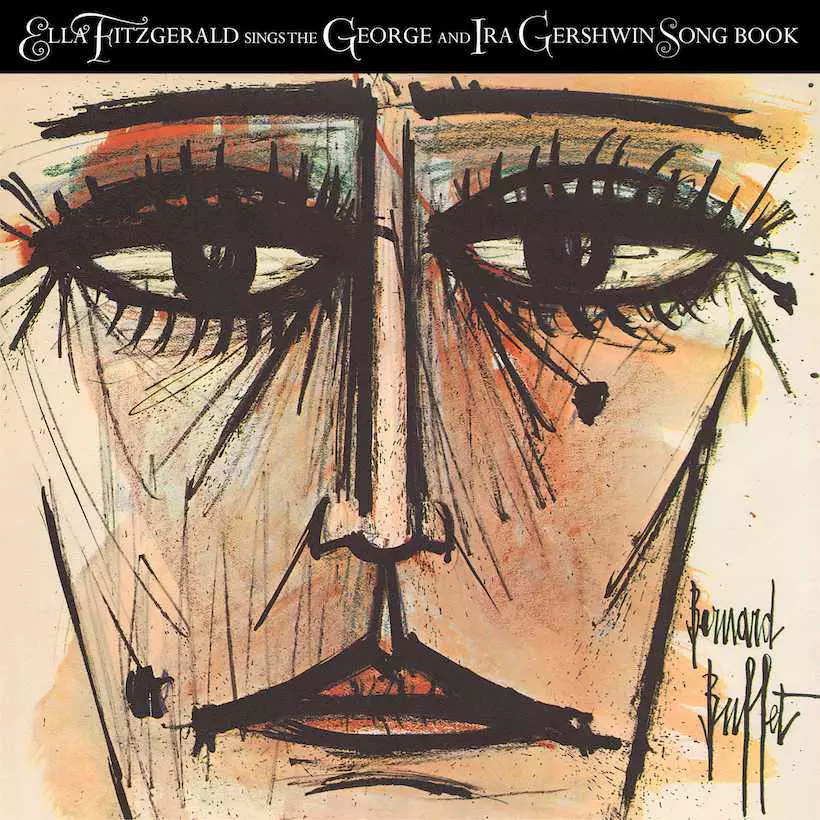
The Great American Songbook has inspired countless recordings, but very few have achieved the artistic ambition and enduring brilliance of Ella Fitzgerald Sings the George and Ira Gershwin Song Book. Released in 1959 as part of Norman Granz’s celebrated Song Book series, this expansive collection pairs one of history’s greatest vocalists with the timeless compositions of George and Ira Gershwin. The result is more than a tribute to legendary songwriters—it is one of the defining achievements in vocal jazz.
At the time of its release, Ella Fitzgerald was already widely recognized for her impeccable technique, joyful swing, and astonishing vocal range. Yet this project allowed her to demonstrate another side of her artistry. Rather than dazzling listeners with extended scat improvisations or virtuosic displays, Fitzgerald focused on the emotional richness, wit, and sophistication of the Gershwins’ songs. Every lyric is delivered with clarity and respect, while every melody receives the graceful interpretation it deserves.
Supported by Nelson Riddle’s magnificent orchestral arrangements, Fitzgerald transforms an already extraordinary catalog into an unforgettable listening experience. The performances possess elegance without becoming overly formal, balancing technical perfection with warmth and genuine affection for the material.
More than six decades later, the album remains one of the finest vocal recordings ever made and one of the greatest celebrations of American songwriting.
Album Overview
Spanning multiple LPs in its original release, Ella Fitzgerald Sings the George and Ira Gershwin Song Book is an ambitious undertaking that never loses its sense of purpose. Rather than feeling like an overwhelming collection of standards, the album unfolds as a carefully curated journey through one of popular music’s greatest catalogs.
Nelson Riddle’s arrangements provide the ideal setting for Fitzgerald’s voice. Rich orchestral textures complement the melodies without overshadowing them, allowing every song to retain its individual personality. Strings, brass, woodwinds, and rhythm section all contribute subtle colors that enhance the emotional character of each performance.
The album moves effortlessly between lively swing numbers, romantic ballads, playful novelties, and theatrical show tunes. This variety prevents the lengthy running time from becoming repetitive while showcasing the remarkable breadth of the Gershwins’ work.
Throughout the collection, Fitzgerald remains the emotional center. Her ability to shift from lighthearted charm to profound tenderness ensures that every song feels fresh, even for listeners already familiar with these timeless standards.
Songwriting
Few songwriting partnerships have left a greater mark on American music than George and Ira Gershwin.
George’s unforgettable melodies combined seamlessly with Ira’s witty, intelligent, and emotionally insightful lyrics to produce songs that have become permanent fixtures of the American musical landscape. Ella Fitzgerald Sings the George and Ira Gershwin Song Book serves as a reminder of just how extraordinary their collaboration truly was.
Classics such as “Someone to Watch Over Me,” “‘S Wonderful,” “They Can’t Take That Away from Me,” and “I’ve Got Rhythm” demonstrate the brothers’ remarkable versatility. Romantic ballads coexist naturally alongside upbeat show tunes, each displaying memorable melodies and lyrical sophistication.
Fitzgerald understands that the songs themselves are the stars. Rather than dramatically reinventing them, she highlights their natural strengths through tasteful phrasing and impeccable timing.
Listening to the album from beginning to end reinforces why the Gershwins occupy such an important place in American music history. Their songs remain endlessly rewarding because they combine emotional honesty with melodic brilliance.
Performance
Ella Fitzgerald delivers one of the finest performances of her remarkable career.
Her voice is in magnificent condition throughout the album. Every note is effortless, every phrase perfectly controlled, and every lyric articulated with astonishing clarity. Yet technical brilliance is only part of the story.
Fitzgerald possesses an extraordinary gift for communication. She can make a playful lyric sparkle with humor one moment before delivering heartbreaking vulnerability in the next. Nothing feels forced or exaggerated.
Her rhythmic instincts are equally remarkable. Whether swinging through an upbeat number or lingering delicately over a romantic ballad, Fitzgerald always finds exactly the right balance between precision and spontaneity.
Nelson Riddle’s orchestra provides equally exceptional support. The arrangements never compete with Fitzgerald, instead framing her performances with elegance and subtle sophistication.
The partnership between singer and arranger proves nearly flawless, creating performances that sound as fresh today as they did in 1959.
Production
The production remains outstanding, particularly considering the scale of the project.
Norman Granz understood that Fitzgerald’s voice required space rather than excessive studio embellishment. The recording captures every nuance of her performance while allowing Riddle’s orchestra to retain its richness and warmth.
The stereo image, particularly in modern remasters, provides impressive separation between instrumental sections without sacrificing the cohesion of the ensemble.
The balance between voice and orchestra is exemplary. Fitzgerald remains consistently present while every instrumental detail remains clearly audible.
Perhaps most importantly, the production has aged beautifully. Rather than sounding dated, it continues to serve the music with remarkable transparency, allowing listeners to focus entirely on the extraordinary performances.
Standout Tracks
Selecting highlights from a collection of this magnitude is no easy task, but several performances stand among the finest of Fitzgerald’s career.
“‘S Wonderful” opens with infectious optimism and immediately establishes the album’s joyful spirit.
“Someone to Watch Over Me” is breathtaking, combining flawless vocal control with profound emotional sensitivity.
“They Can’t Take That Away from Me” demonstrates Fitzgerald’s gift for understated interpretation, allowing the melody to shine naturally.
“I’ve Got Rhythm” swings effortlessly, showcasing both Fitzgerald’s rhythmic brilliance and Riddle’s sparkling orchestration.
“Embraceable You” ranks among the album’s most intimate performances, revealing the warmth and tenderness that made Fitzgerald such an extraordinary interpreter of ballads.
Even the lesser-known selections maintain an astonishing level of quality, reflecting both the Gershwins’ songwriting and Fitzgerald’s unwavering consistency.
Weak Points
Finding significant weaknesses in Ella Fitzgerald Sings the George and Ira Gershwin Song Book is challenging.
Its greatest limitation may simply be its length. Because the collection is so expansive, casual listeners may prefer experiencing it over multiple sittings rather than in one uninterrupted session.
Some jazz purists may also wish for greater opportunities to hear Fitzgerald improvise. Compared with her small-group recordings, these performances remain relatively faithful to the written melodies.
Additionally, listeners unfamiliar with Broadway standards may naturally connect more strongly with certain songs than others.
These are minor considerations within an album of extraordinary artistic achievement.
Legacy
Ella Fitzgerald Sings the George and Ira Gershwin Song Book stands as one of the greatest vocal recordings ever produced.
It helped preserve the Gershwins’ remarkable catalog for new generations while establishing Fitzgerald as perhaps the definitive interpreter of the Great American Songbook. The album also demonstrated that popular standards could be approached with the same artistic seriousness as classical music.
Its influence extends across jazz, pop, and musical theater. Singers including Diana Krall, Michael Bublé, Harry Connick Jr., and Jane Monheit have all drawn inspiration from Fitzgerald’s elegant balance of technical mastery and emotional sincerity.
The album remains an essential reference point for anyone interested in jazz vocals, American songwriting, or orchestral popular music.
More than sixty years after its release, it continues to represent the very highest standard of vocal interpretation.
Final Score
10/10
Ella Fitzgerald Sings the George and Ira Gershwin Song Book is a masterpiece in every sense of the word. Ella Fitzgerald’s flawless vocals, Nelson Riddle’s exquisite arrangements, and the incomparable songwriting of George and Ira Gershwin combine to create one of the greatest vocal albums ever recorded. Every performance radiates warmth, elegance, and effortless musicality, making this not only the finest entry in Fitzgerald’s celebrated Song Book series but also one of the crowning achievements in the history of American popular music.