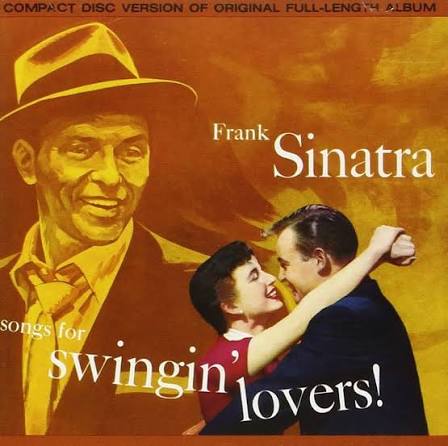
Just one year after exploring heartbreak and loneliness on In the Wee Small Hours, Frank Sinatra made a dramatic change in mood with Songs for Swingin’ Lovers!. Released in 1956, the album showcased the opposite side of Sinatra’s artistic personality. Gone were the sleepless nights and cigarette-lit street corners. In their place came confidence, charm, romance, and effortless cool.
The album arrived during what many consider the absolute peak of Sinatra’s career. His voice had matured into its richest and most expressive form, his partnership with arranger Nelson Riddle had become nearly telepathic, and Capitol Records was giving him the creative freedom to treat albums as complete artistic statements rather than simple collections of singles. The result was one of the defining vocal jazz albums ever recorded.
Although it has often been overshadowed by the emotional weight of In the Wee Small Hours, Songs for Swingin’ Lovers! demonstrates an entirely different kind of mastery. It isn’t built on heartbreak but on optimism, wit, flirtation, and joy. Every performance radiates confidence without ever slipping into arrogance, making it one of the most entertaining and consistently enjoyable albums in Sinatra’s remarkable catalog.
More than seventy years after its release, the album remains a benchmark not only for vocal jazz but for popular music itself, influencing countless singers while capturing an elegance that has never gone out of style.
Album Overview
If In the Wee Small Hours feels like a quiet walk through empty city streets after midnight, Songs for Swingin’ Lovers! is the soundtrack to a glamorous evening where everything seems possible. The contrast between the two albums is remarkable, yet both are united by Sinatra’s commitment to emotional honesty.
Rather than focusing on loss, this album celebrates romance in all its playful forms. The songs sparkle with wit and sophistication, but beneath the lighthearted surface lies an extraordinary level of musical craftsmanship.
Nelson Riddle’s arrangements are central to the album’s success. His orchestra swings with effortless precision while remaining remarkably light on its feet. Brass sections burst with energy, woodwinds dance around Sinatra’s melodies, and the rhythm section keeps everything moving with irresistible momentum.
Despite its upbeat nature, the album never becomes repetitive. Ballads are woven naturally between the swingers, allowing the pacing to breathe while maintaining the record’s optimistic atmosphere.
The sequencing also deserves praise. Every song flows naturally into the next, creating an experience that feels carefully designed rather than randomly assembled. It is another example of Sinatra treating the LP as an artistic statement instead of simply packaging together potential hit songs.
Songwriting
Like most Sinatra albums, Songs for Swingin’ Lovers! draws heavily from the Great American Songbook, featuring compositions by some of the greatest songwriters in American history, including Cole Porter, Rodgers and Hart, Irving Berlin, and George and Ira Gershwin.
What makes these songs exceptional isn’t simply their melodic quality but their lyrical sophistication. They approach romance with intelligence, humor, and emotional maturity rather than sentimentality.
“You Make Me Feel So Young” opens the album with infectious optimism. Its playful lyrics immediately establish the joyful tone that carries through the rest of the record.
“I’ve Got You Under My Skin,” one of Cole Porter’s greatest compositions, perfectly balances romantic obsession with elegant restraint. Sinatra transforms what could have been a straightforward love song into a dramatic emotional performance.
“Pennies from Heaven” reminds listeners that happiness often comes from simple pleasures, while “Love Is Here to Stay” celebrates enduring affection with warmth rather than grandiosity.
The material consistently rewards repeated listening. Clever lyrical details, subtle emotional shifts, and beautifully constructed melodies reveal new qualities each time the album is played.
Performance
This is Sinatra at perhaps his most charismatic.
His voice possesses a remarkable combination of technical precision and conversational ease. Every phrase sounds spontaneous, even though the performances were meticulously crafted. He sings with impeccable timing, frequently playing behind the beat in ways that make each lyric feel natural and relaxed.
Unlike many vocalists who emphasize sheer power, Sinatra focuses on communication. Every pause, breath, and slight change in emphasis serves the emotional meaning of the song.
His versatility is also on full display. He moves effortlessly from exuberant swing numbers to tender ballads without ever disrupting the album’s overall flow.
The chemistry between Sinatra and Nelson Riddle’s orchestra reaches extraordinary heights here. Rather than merely accompanying the vocals, the arrangements interact with Sinatra almost like a musical conversation. Instrumental responses to vocal phrases create a lively back-and-forth that keeps every performance engaging.
Perhaps most impressive is how effortlessly Sinatra makes difficult material sound easy. Behind the relaxed confidence lies incredible technical control, but listeners never feel as though he is trying to impress them. His mastery simply becomes part of the music.
Production
The production on Songs for Swingin’ Lovers! remains stunning even by modern standards.
Recorded during Capitol Records’ golden era, the album captures an orchestra with exceptional warmth and clarity. Every instrument occupies its own space while blending seamlessly into the overall sound.
Producer Voyle Gilmore once again recognized that Sinatra and Nelson Riddle required little interference. The focus remains squarely on musical performance rather than studio trickery.
Nelson Riddle’s arrangements deserve special recognition. They are among the finest orchestral accompaniments ever written for a popular vocalist. Every horn flourish, string passage, and rhythmic accent feels purposeful without overwhelming Sinatra’s voice.
The balance between intimacy and excitement is remarkable. Large orchestral moments never become overpowering, while quieter passages maintain remarkable detail and emotional presence.
Considering the album was recorded in 1956, its sonic quality remains astonishingly fresh.
Standout Tracks
Nearly every song could be considered a highlight, but several stand above even this remarkably consistent collection.
“You Make Me Feel So Young” is one of the greatest album openers ever recorded, instantly establishing the record’s joyful spirit.
“I’ve Got You Under My Skin” is arguably Sinatra’s definitive recording. The famous orchestral build and trombone solo create one of the most thrilling moments in American popular music.
“I’ve Got the World on a String” perfectly captures Sinatra’s effortless swagger without sacrificing musical sophistication.
“Love Is Here to Stay” offers one of the album’s most graceful performances, combining elegance with genuine emotional warmth.
“Makin’ Whoopee” showcases Sinatra’s playful sense of humor, while “Too Marvelous for Words” demonstrates his unmatched ability to deliver clever lyrics with conversational charm.
Weak Points
Finding significant weaknesses on an album this accomplished is difficult, but a few minor observations can be made.
Because the album maintains such a consistently upbeat tone, it occasionally lacks the emotional depth found on In the Wee Small Hours or later albums like Only the Lonely. Listeners seeking profound introspection may find this record comparatively lighter.
A handful of slower songs, while beautifully performed, are overshadowed by the album’s spectacular swing numbers.
Additionally, listeners unfamiliar with the Great American Songbook may not immediately appreciate the sophistication of the material, though repeated listening often changes that impression.
Ultimately, these are extremely minor criticisms of an album whose artistic vision is executed with remarkable consistency.
Legacy
Songs for Swingin’ Lovers! stands as one of the defining albums of the vocal jazz era and one of the finest recordings of Sinatra’s legendary Capitol years.
It helped establish the standard for the modern vocal album, demonstrating that carefully sequenced songs united by mood could become cohesive artistic experiences. Alongside In the Wee Small Hours, it reinforced Sinatra’s reputation as one of the first true album artists in popular music.
The influence of the record extends across generations. Singers including Tony Bennett, Michael Bublé, Harry Connick Jr., and Diana Krall have all drawn inspiration from the effortless vocal style and elegant orchestral arrangements that define this album.
Nelson Riddle’s orchestrations also became a blueprint for countless arrangers working in jazz, pop, and film music. His collaboration with Sinatra reached one of its highest artistic peaks here, producing performances that continue to be studied by musicians and arrangers alike.
Perhaps most importantly, Songs for Swingin’ Lovers! remains immensely enjoyable. Unlike some historically important albums that feel tied to their era, this record still sounds vibrant, sophisticated, and full of life. It captures an enduring sense of optimism that continues to resonate with listeners decades later.
Final Score
10/10
Songs for Swingin’ Lovers! is one of the greatest vocal jazz albums ever recorded and arguably the finest celebration of romance and swing ever committed to tape. Frank Sinatra’s flawless vocals, Nelson Riddle’s brilliant arrangements, and a near-perfect selection of songs combine to create an album that never loses its charm or momentum. Every track contributes to an experience that is both musically sophisticated and irresistibly entertaining. More than just a collection of standards, it is a masterclass in interpretation, orchestration, and album craftsmanship—one that continues to define excellence nearly seventy years after its release.