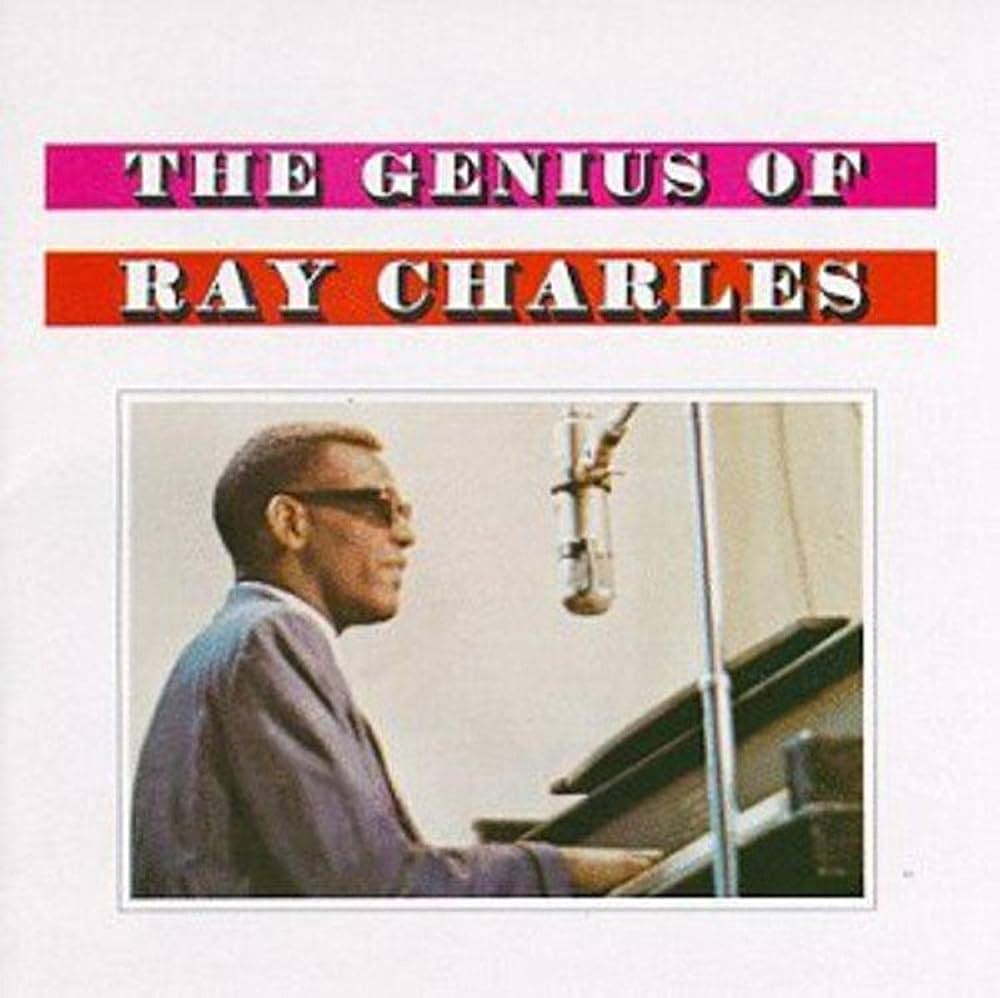
By 1959, Ray Charles had already transformed rhythm and blues with a string of groundbreaking hits that blended gospel, blues, jazz, and country into something entirely his own. Songs like “I Got a Woman,” “Hallelujah I Love Her So,” and “What’d I Say” had established him as one of the most exciting performers in popular music. Yet The Genius of Ray Charles proved that his ambitions stretched far beyond the boundaries of rock and roll and R&B.
Released by Atlantic Records, the album showcases Charles’ remarkable versatility by dividing its material into two distinct halves. One features lush orchestral arrangements accompanying sophisticated pop standards, while the other returns to the small-combo jazz and rhythm-and-blues sound that had made him famous. Rather than feeling disjointed, the contrasting approaches reveal the extraordinary breadth of Charles’ musical vision.
At a time when many artists were expected to remain within a single genre, Charles ignored convention. He approached every song with the same emotional honesty, whether interpreting a romantic ballad or delivering an energetic blues performance. That fearless willingness to cross musical boundaries would soon make him one of the defining artists of twentieth-century American music.
More than sixty-five years after its release, The Genius of Ray Charles remains one of the finest examples of an artist refusing to be confined by expectations.
Album Overview
What immediately distinguishes The Genius of Ray Charles is its ambitious structure. The first half surrounds Charles with elegant orchestral arrangements, while the second places him back in the intimate setting of a jazz combo. On paper, the concept might seem risky, but in practice it highlights just how effortlessly Charles could move between different musical worlds.
The orchestral performances display a sophistication often associated with traditional pop singers like Frank Sinatra, yet Charles never abandons the soulful phrasing that made his voice so distinctive. His interpretations feel deeply personal rather than overly polished.
The second half shifts gears completely. The smaller ensemble allows Charles greater freedom to explore jazz, blues, and rhythm and blues with the spontaneity that defined his live performances.
Despite the stylistic contrast, the album never feels divided. Charles’ unmistakable voice serves as the unifying thread, tying every performance together regardless of arrangement or genre.
The sequencing also keeps the record engaging. By presenting two different sides of Charles’ artistry, the album avoids repetition while offering a remarkably complete portrait of his musical talents.
Songwriting
Like many great vocal albums of its era, The Genius of Ray Charles combines carefully selected standards with original material and blues compositions.
The opening orchestral selections demonstrate Charles’ remarkable ability to reinterpret familiar songs. “Let the Good Times Roll” immediately announces the album’s confidence, while “Come Rain or Come Shine” transforms Harold Arlen’s classic into an intensely soulful performance.
“Don’t Let the Sun Catch You Cryin'” showcases Charles’ gift for uncovering emotional depth within well-known material, allowing every lyric to feel deeply personal.
The jazz-oriented second half includes standout originals such as “Deed I Do” and “Alexander’s Ragtime Band,” where Charles blends traditional melodies with his unmistakable rhythmic instincts.
Although the songwriting itself is consistently excellent, it is Charles’ interpretive genius that elevates every selection. He rarely sings a melody exactly as written, subtly reshaping phrases and rhythms until each song becomes uniquely his own.
Performance
Ray Charles delivers one of the finest vocal performances of his career.
His voice possesses extraordinary range—not simply in pitch but in emotional expression. He can move effortlessly from playful humor to heartbreaking vulnerability within a single phrase, always maintaining complete conviction.
The orchestral performances reveal a level of vocal sophistication sometimes overlooked by those who associate Charles primarily with rhythm and blues. His phrasing rivals the finest traditional pop singers, yet his gospel influences give every note a distinctive emotional intensity.
The jazz combo recordings showcase another side of his artistry. Here, Charles’ piano playing becomes far more prominent, displaying remarkable swing, blues feeling, and harmonic imagination.
The supporting musicians are outstanding throughout. The orchestras provide lush accompaniment without becoming sentimental, while the smaller ensemble interacts with Charles in ways that feel spontaneous and deeply musical.
Perhaps most impressive is Charles’ complete command of every stylistic setting. Whether accompanied by strings or a swinging rhythm section, he sounds completely at home.
Production
The production on The Genius of Ray Charles remains impressive more than six decades after its release.
Atlantic Records invested considerable care in capturing both the intimate jazz performances and the expansive orchestral arrangements with equal clarity.
The orchestral recordings possess warmth and richness without overwhelming Charles’ vocals. Every section of the orchestra is balanced carefully, allowing the arrangements to complement rather than compete with the singer.
The jazz sessions sound equally natural. Charles’ piano remains clearly audible, the rhythm section swings effortlessly, and the recording preserves the immediacy that defines the performances.
Producer Ahmet Ertegun understood that Charles’ voice should always remain the emotional center of the album, and every production decision reinforces that philosophy.
Modern remasters have only enhanced an already excellent recording.
Standout Tracks
The album contains numerous exceptional performances.
“Let the Good Times Roll” opens the record with tremendous confidence, blending sophisticated orchestration with Charles’ unmistakable soulfulness.
“Come Rain or Come Shine” ranks among the greatest interpretations of the standard ever recorded, demonstrating his remarkable command of phrasing and emotional nuance.
“Don’t Let the Sun Catch You Cryin'” reveals Charles’ extraordinary ability to communicate heartbreak without resorting to melodrama.
On the jazz side, “Sticks and Stones” bursts with energy, while “Deed I Do” showcases his remarkable chemistry with the accompanying musicians.
Every track contributes meaningfully to the album’s remarkable consistency.
Weak Points
Finding significant flaws in The Genius of Ray Charles is difficult, though a few observations are worth mentioning.
The album’s two-part structure, while artistically successful, may initially feel unusual to listeners expecting a single stylistic direction throughout.
Some fans who prefer Charles’ raw rhythm-and-blues recordings may find the orchestral arrangements slightly more restrained than his most electrifying performances.
Conversely, listeners drawn primarily to the sophisticated pop material may be surprised by the looser, bluesier atmosphere of the second half.
Ultimately, these contrasts are central to the album’s artistic identity rather than genuine weaknesses.
Legacy
The Genius of Ray Charles confirmed what many musicians already knew: Ray Charles could excel in virtually any musical setting.
The album helped redefine the possibilities for African American artists working within popular music, demonstrating that rhythm and blues, jazz, and traditional pop could coexist naturally within a single artistic vision.
Its influence can be heard in the work of artists including Stevie Wonder, Van Morrison, Billy Joel, Norah Jones, and Michael McDonald, all of whom drew inspiration from Charles’ ability to transcend genre boundaries.
The album also paved the way for his even more ambitious recordings during the 1960s, including his groundbreaking exploration of country music.
Today, The Genius of Ray Charles stands as one of the essential recordings in American popular music—a brilliant demonstration that great artistry knows no stylistic limits.
Final Score
9.5/10
The Genius of Ray Charles is one of the defining albums of Ray Charles’ extraordinary career and a masterclass in musical versatility. By effortlessly combining elegant orchestral pop with intimate jazz and rhythm-and-blues performances, Charles demonstrates a level of artistic confidence that few musicians have ever matched. While its dual structure may surprise first-time listeners, the consistently outstanding performances, exceptional production, and emotional depth make this an enduring classic that fully lives up to its ambitious title.