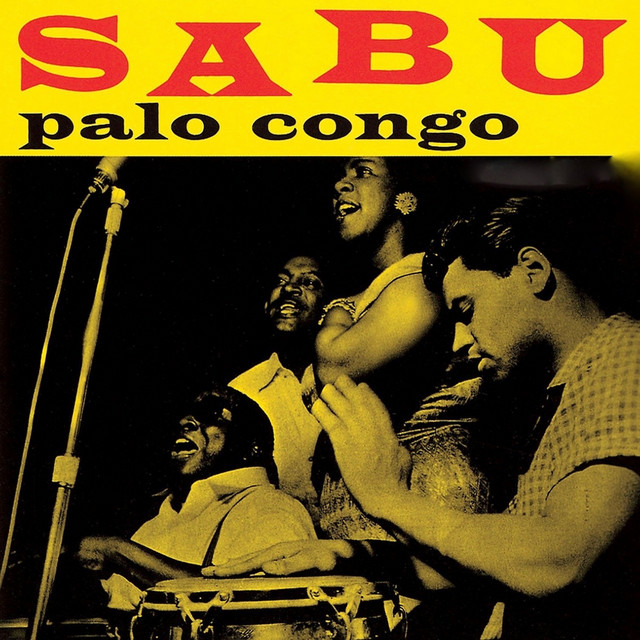
When discussions turn to the greatest jazz albums of the 1950s, names like Miles Davis, Duke Ellington, and Charles Mingus usually dominate the conversation. Yet one of the decade’s most adventurous and influential recordings came from a musician who was charting a very different course. Released in 1957, Palo Congo by Sabu Martinez fused Afro-Cuban rhythms, jazz improvisation, and African percussion traditions into a groundbreaking album that was years ahead of its time.
Born in New York to Puerto Rican parents, Sabu Martinez was already one of the most respected conga players in jazz. Having performed with artists such as Dizzy Gillespie and Art Blakey, he understood both the rhythmic traditions of Latin music and the harmonic language of modern jazz. On Palo Congo, however, he stepped into the spotlight as a bandleader, creating an album that placed percussion—not horns or piano—at the center of the musical experience.
The result is one of the earliest masterpieces of Afro-Cuban jazz and world music. Long before terms like “global fusion” or “worldbeat” became common, Palo Congo demonstrated how musical traditions from different cultures could blend naturally without sacrificing their individual identities.
Although it has never achieved the mainstream recognition of some jazz classics from the same era, Palo Congo has quietly become one of the most respected recordings in Afro-Latin music, influencing generations of percussionists, jazz musicians, and experimental artists.
Album Overview
Palo Congo is unlike almost any jazz album released during the 1950s.
Rather than revolving around virtuosic horn solos or elaborate bebop harmonies, the album is driven almost entirely by rhythm. Congas, bongos, batá drums, timbales, and hand percussion create dense, hypnotic grooves that continuously evolve without becoming repetitive.
That doesn’t mean melody is absent. Horns, piano, bass, and occasional vocals weave in and out of the percussion, adding texture and direction while allowing the rhythmic foundation to remain the focal point.
The sequencing feels remarkably organic. Individual pieces flow through changing moods and tempos while maintaining a strong sense of cohesion. There are moments of explosive intensity followed by passages that feel almost meditative, giving the album an ebb and flow that rewards uninterrupted listening.
Perhaps the most striking aspect of the record is its confidence. Sabu never attempts to dilute Afro-Cuban traditions for a wider audience. Instead, he invites listeners into that musical world on its own terms, trusting the rhythms to communicate across cultural boundaries.
Even nearly seventy years later, the album still feels adventurous and refreshingly original.
Songwriting
Traditional songwriting takes a back seat on Palo Congo.
Rather than emphasizing memorable choruses or lyrical storytelling, the compositions function as frameworks for rhythmic exploration and ensemble interaction. That approach reflects both Afro-Cuban musical traditions and jazz improvisation.
The title track, “Palo Congo,” immediately establishes the album’s identity with interlocking percussion patterns that gradually build into an exhilarating ensemble performance.
“Billumba-Palo Congo” expands on those ideas, layering increasingly complex rhythmic figures while maintaining an infectious groove.
Throughout the album, melodies often emerge naturally from the percussion instead of existing separately from it. The music feels less like songs in the conventional sense and more like living rhythmic conversations.
Although listeners accustomed to traditional verse-chorus structures may initially find the material unfamiliar, repeated listening reveals sophisticated compositional architecture beneath the apparent spontaneity.
The album’s writing succeeds because every piece develops organically rather than relying on predictable formulas.
Performance
This is, first and foremost, a percussion masterclass.
Sabu Martinez delivers performances that are both technically astonishing and emotionally engaging. His conga playing demonstrates remarkable precision, speed, and imagination without ever becoming an exercise in empty virtuosity.
Instead of dominating every track, Sabu constantly interacts with the other percussionists, creating intricate rhythmic dialogues that form the heart of the album.
The supporting musicians deserve equal recognition. The ensemble performs with exceptional discipline while leaving plenty of room for improvisation. Every player understands that the collective groove matters more than individual spotlight moments.
The horn players add bursts of melodic excitement without overwhelming the percussion, while the rhythm section provides subtle harmonic support that keeps the music grounded.
Perhaps the greatest compliment one can pay these performances is that they never sound academic. Despite their rhythmic sophistication, they remain joyful, energetic, and deeply danceable.
The enthusiasm of the musicians is infectious, making even the most rhythmically complex passages feel inviting rather than intimidating.
Production
Considering the technical limitations of 1957, Palo Congo sounds remarkably vibrant.
Recording an ensemble built around multiple percussion instruments was no easy task during the mono era, yet the engineers capture surprising clarity and balance throughout the album.
Each drum retains its own distinct character, allowing listeners to appreciate the intricate conversations taking place between the performers.
The horns and piano sit naturally within the mix, providing harmonic color without obscuring the rhythmic foundation.
The production wisely avoids excessive studio manipulation. Instead, it emphasizes the natural sound of musicians performing together in the same space, preserving the spontaneity that defines the album.
While modern recordings offer greater dynamic range and stereo imaging, Palo Congo remains impressive for its era and continues to communicate the excitement of the performances with remarkable effectiveness.
Standout Tracks
Although the album works best as a complete experience, several performances deserve special attention.
“Palo Congo” is the obvious centerpiece, introducing listeners to Sabu’s extraordinary rhythmic vision through an exhilarating blend of Afro-Cuban tradition and jazz improvisation.
“Billumba-Palo Congo” expands the album’s rhythmic vocabulary while delivering one of its most exciting ensemble performances.
“Hotel Alyssa-Sousse Tunisia” introduces subtle North African influences, broadening the album’s already impressive cultural palette.
“El Cumbanchero” injects an irresistible sense of celebration, demonstrating the band’s ability to combine dazzling musicianship with sheer entertainment.
Throughout the record, however, the greatest standout is the ensemble itself. Every musician contributes to a unified musical experience that feels greater than the sum of its individual parts.
Weak Points
Palo Congo is an extraordinary album, but it won’t appeal equally to every listener.
Its emphasis on rhythm over conventional melody may prove challenging for audiences unfamiliar with Afro-Cuban music or percussion-centered jazz.
Similarly, those expecting extended bebop solos or traditional jazz standards may find the album’s structure unconventional.
The original album’s relatively short running time also leaves listeners wanting more, particularly once they become immersed in its hypnotic grooves.
Finally, because so much attention is devoted to rhythmic interplay, individual melodic themes are occasionally less memorable than the extraordinary performances supporting them.
These are largely matters of expectation rather than genuine shortcomings.
Legacy
Although Palo Congo never achieved massive commercial success, its influence has steadily grown over the decades.
The album became a foundational recording for Afro-Cuban jazz, demonstrating that Latin percussion could occupy the center of an ambitious artistic statement rather than serving merely as accompaniment.
Its innovations helped shape the work of artists including Tito Puente, Mongo Santamaría, Ray Barretto, and Poncho Sanchez, while its adventurous fusion of cultural traditions anticipated later developments in world music and Latin jazz.
The album also expanded jazz’s rhythmic vocabulary, proving that percussion could function as the primary narrative voice of an entire recording.
Today, Palo Congo is widely regarded as one of the essential recordings in Afro-Latin music. Its influence extends well beyond jazz, inspiring percussion ensembles, experimental musicians, and world music artists who continue to explore the possibilities of rhythm as the foundation of musical expression.
Final Score
9.0/10
Palo Congo is a groundbreaking achievement that pushed jazz and Afro-Cuban music into exciting new territory. Sabu Martinez’s extraordinary percussion work, the ensemble’s remarkable chemistry, and the album’s fearless embrace of rhythmic complexity make it one of the most innovative recordings of the 1950s. While its unconventional structure and percussion-heavy focus may not appeal to every listener, those willing to immerse themselves in its hypnotic grooves will discover a richly rewarding album that remains as fresh, adventurous, and influential today as it was upon its release.