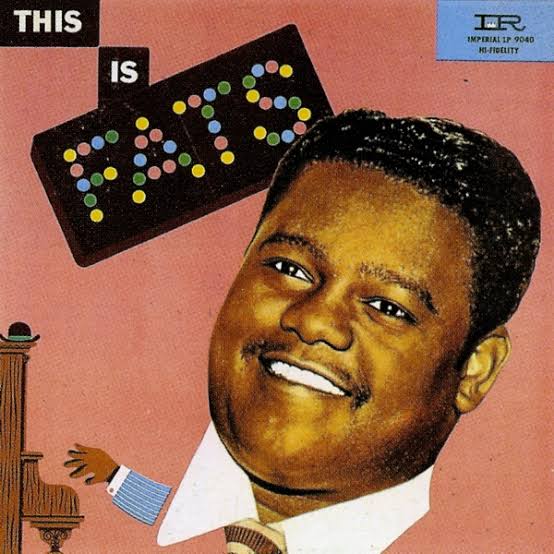
Few artists helped shape the sound of early rock and roll as profoundly—or as effortlessly—as Fats Domino. While some of his contemporaries built their reputations on explosive stage antics or rebellious attitudes, Domino won audiences over with warmth, irresistible melodies, and a piano style that blended New Orleans rhythm and blues with pop accessibility. His music crossed racial and cultural boundaries during a deeply divided era, making him one of the first true crossover superstars in American popular music.
Released in 1956, This Is Fats arrived during the most successful period of Domino’s career. Rather than being conceived as a thematic album, it served as a showcase for many of the hit singles that had already made him a household name. That was common practice in the mid-1950s, when singles remained the primary focus of the music industry. Fortunately, Domino’s consistency meant that gathering these recordings together produced one of the strongest rock and roll albums of the decade.
Listening today, This Is Fats feels remarkably timeless. The songs remain joyful without becoming frivolous, emotionally sincere without becoming sentimental, and rhythmically irresistible without relying on excessive production tricks. Domino’s relaxed vocal delivery and unmistakable piano playing give the album a welcoming quality that few records can match.
It may not receive the same attention as some of the era’s more revolutionary releases, but This Is Fats stands as one of the finest examples of classic New Orleans rock and roll and one of the defining recordings of Fats Domino’s extraordinary career.
Album Overview
From its opening moments, This Is Fats establishes an atmosphere of effortless enjoyment. Unlike Little Richard’s explosive intensity or Elvis Presley’s swagger, Domino approaches every song with an easygoing confidence that immediately puts listeners at ease.
The album blends rhythm and blues, boogie-woogie, blues, jazz, and early rock and roll into a sound that is unmistakably New Orleans. The city’s musical traditions are present in every piano riff, horn arrangement, and rolling rhythm.
Although assembled from various recording sessions, the album maintains impressive consistency. Much of that comes from Domino’s instantly recognizable musical personality. Whether singing a love song or an upbeat dance number, his relaxed voice and rhythmic piano provide a familiar anchor.
The supporting musicians also deserve significant credit. Producer Dave Bartholomew assembled one of the finest studio bands in rhythm and blues, and their tight ensemble playing gives every song tremendous energy without ever overshadowing Domino himself.
The result is an album that feels cohesive despite its compilation-like origins. Every track reinforces the same musical identity while offering enough variation to keep the listening experience engaging from beginning to end.
Songwriting
Like many artists of the era, Domino recorded material from a variety of writers while also collaborating extensively with Dave Bartholomew. Together, they created some of the most memorable songs of early rock and roll.
The songwriting rarely strives for lyrical complexity. Instead, it focuses on universal themes—love, happiness, heartbreak, dancing, and everyday life—expressed with remarkable honesty and charm.
“Blueberry Hill,” although originally written years earlier, became inseparable from Domino’s name. His relaxed interpretation transformed the standard into one of rock and roll’s most beloved recordings.
“I’m in Love Again” combines infectious rhythm with playful romance, while “My Blue Heaven” demonstrates Domino’s gift for making older pop songs sound completely natural within his New Orleans style.
“Blue Monday” explores working-class frustration with humor and resilience, proving that even simple lyrics could resonate deeply when delivered with genuine conviction.
Rather than dazzling listeners with elaborate poetry, the songwriting succeeds through memorable melodies, concise storytelling, and emotional sincerity.
Performance
Fats Domino possessed one of the most likable voices in popular music.
He never relied on vocal acrobatics or dramatic emotional outbursts. Instead, his singing is warm, conversational, and wonderfully relaxed. That understated approach becomes one of the album’s greatest strengths, allowing every performance to feel genuine and approachable.
His piano playing, however, is the true centerpiece.
Domino’s rolling left-hand rhythms and blues-infused right-hand melodies create an unmistakable groove that drives nearly every track. His playing combines technical skill with remarkable restraint, always serving the song rather than calling attention to itself.
The chemistry between Domino and Dave Bartholomew’s band is equally impressive. The horn arrangements add color and excitement without becoming overwhelming, while the rhythm section maintains an irresistible swing throughout the album.
Perhaps the most remarkable aspect of the performances is how effortless they sound. Domino never appears to be trying too hard. His natural charisma carries every song, making even familiar material feel fresh and inviting.
Production
The production on This Is Fats remains impressive nearly seventy years after its release.
Recorded under the guidance of Dave Bartholomew, the album captures the rich, rhythmic sound of New Orleans better than almost any contemporary release. The piano sits prominently in the mix without burying the horns or rhythm section, creating a balanced sound that remains engaging today.
The recordings possess a warmth that complements Domino’s musical personality perfectly. Nothing feels overly polished or artificially enhanced.
Considering the technological limitations of the mid-1950s, the sound quality is remarkably clear. Every instrument occupies its own space, and Domino’s vocals remain consistently prominent without dominating the arrangements.
The straightforward production has aged gracefully because it prioritizes performance over studio gimmicks. As a result, the album continues to sound vibrant despite its vintage origins.
Standout Tracks
The album is filled with songs that have become permanent fixtures in the history of American popular music.
“Blueberry Hill” is the obvious centerpiece. Domino’s definitive interpretation remains one of the most recognizable recordings ever made, balancing nostalgia, romance, and effortless charm.
“I’m in Love Again” delivers infectious energy while showcasing Domino’s wonderful piano work.
“Blue Monday” combines memorable storytelling with one of the strongest grooves on the album.
“Honey Chile” captures Domino’s playful side, while “My Blue Heaven” demonstrates his remarkable ability to reinterpret older standards without losing his distinctive musical identity.
Even the lesser-known tracks maintain a consistently high level of quality, reflecting Domino’s remarkable run of hit recordings during this period.
Weak Points
Although This Is Fats remains an immensely enjoyable album, it reflects the conventions of its era.
Because it functions primarily as a collection of singles, it lacks the artistic cohesion that would become more common in rock albums during the following decade.
Several songs also follow similar rhythmic and structural patterns. While Domino’s consistency is part of his appeal, listeners seeking greater stylistic variety may occasionally wish for more dramatic contrasts.
Additionally, the album rarely ventures into deeper emotional territory. Its focus remains squarely on entertainment, romance, and good times rather than personal introspection or experimentation.
These are relatively minor observations, however, and do little to diminish the album’s overall appeal.
Legacy
This Is Fats represents one of the defining statements of New Orleans rhythm and blues during the birth of rock and roll.
Fats Domino’s influence extends across virtually every branch of popular music. His piano style, relaxed vocal delivery, and melodic songwriting inspired artists including Elvis Presley, The Beatles, John Lennon, Randy Newman, and Dr. John.
Unlike some early rock pioneers whose influence came primarily through attitude or stage presence, Domino’s legacy rests on musicianship. His songs demonstrated that rock and roll could be sophisticated without losing its accessibility, and his crossover success helped bring rhythm and blues into the mainstream.
The album also serves as a reminder that rock and roll was never solely about guitars. Domino’s piano became one of the genre’s defining instruments, influencing generations of keyboard players who followed.
Today, This Is Fats remains one of the essential recordings of the 1950s—a joyful celebration of melody, rhythm, and the unmistakable spirit of New Orleans.
Final Score
9.0/10
This Is Fats is one of the strongest showcases of Fats Domino’s remarkable talent and one of the finest collections of early rock and roll ever assembled. While its singles-based structure prevents it from feeling as unified as some later classic albums, the consistently outstanding songwriting, Domino’s irresistible piano playing, and the warmth of every performance make it an endlessly enjoyable listen. It captures one of rock’s founding architects at the height of his powers and remains an essential record for anyone interested in the roots of modern popular music.