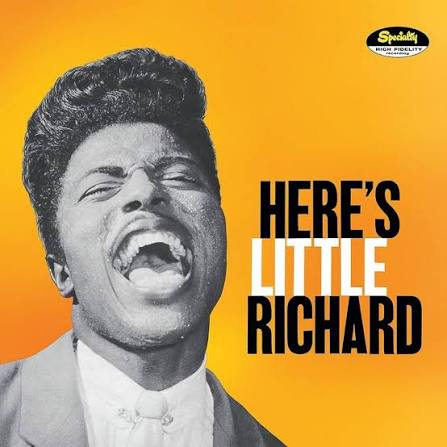
If rock and roll had a heartbeat in the mid-1950s, it was probably pounding somewhere inside Here’s Little Richard. Released in 1957, this explosive debut album introduced mainstream audiences to one of the most electrifying performers popular music has ever produced. While artists like Elvis Presley, Chuck Berry, and Fats Domino were helping define the new genre, Little Richard brought something entirely different: unrestrained energy, flamboyant showmanship, gospel-inspired vocals, pounding piano, and an intensity that seemed almost impossible to contain.
Long before heavy metal singers screamed into microphones or punk bands turned volume into attitude, Little Richard Penniman was shattering conventions with every shout of “A-wop-bop-a-loo-bop-a-lop-bam-boom!” His music wasn’t merely exciting—it was revolutionary. He blurred the lines between rhythm and blues, gospel, boogie-woogie, and rock and roll while challenging social norms through his larger-than-life personality and unforgettable stage presence.
Like many rock albums of the 1950s, Here’s Little Richard is largely a collection of previously released singles rather than a carefully planned concept album. That hardly matters. Song after song bursts with enough excitement to make the album feel like an uninterrupted celebration of early rock and roll.
Nearly seventy years later, it remains one of the most exhilarating records ever made and one of the essential building blocks of modern popular music.
Album Overview
From the opening moments of “Tutti Frutti,” Here’s Little Richard grabs listeners by the collar and refuses to let go. There is virtually no downtime throughout its twelve tracks. Every performance seems determined to be louder, faster, and more joyful than the last.
The album captures Little Richard at exactly the right moment. His voice was in phenomenal shape, his band played with unmatched precision, and producer Bumps Blackwell wisely recognized that trying to tame Richard’s energy would have been a mistake.
The songs blend rhythm and blues, gospel, jump blues, and boogie-woogie into a sound that feels both raw and remarkably polished. Richard’s pounding piano provides the rhythmic foundation, while sharp saxophone arrangements and driving backbeats create constant momentum.
Although the album lacks the thematic unity of later rock classics, it possesses a consistency of spirit that few records can match. Every song celebrates movement, excitement, romance, or pure musical exuberance.
Even today, the album feels astonishingly modern. Its relentless pace and emotional intensity continue to sound fresh despite being recorded in the earliest years of rock and roll.
Songwriting
The songwriting on Here’s Little Richard is deceptively simple.
Many songs rely on straightforward chord progressions and concise lyrical themes, but their effectiveness lies in their unforgettable hooks and rhythmic power rather than poetic complexity.
“Tutti Frutti” remains one of the greatest opening tracks in rock history. Its famous nonsensical introduction instantly announces that listeners are entering unfamiliar territory. The lyrics themselves are relatively uncomplicated, but the sheer force of Richard’s performance transforms them into something unforgettable.
“Long Tall Sally” is another masterpiece of economy. Running barely over two minutes, it packs more excitement into its brief runtime than many albums manage across forty.
“Rip It Up” celebrates youthful freedom with infectious enthusiasm, while “Ready Teddy” and “Jenny, Jenny” maintain the album’s nonstop momentum.
Perhaps the greatest strength of the songwriting is its universality. These songs are easy to sing, impossible to forget, and built around melodies that have endured for generations.
Although Little Richard often worked with collaborators, his larger-than-life personality permeates every composition, making them feel unmistakably his.
Performance
This is where Here’s Little Richard becomes truly extraordinary.
Few singers in the history of popular music have possessed a voice as instantly recognizable—or as explosive—as Little Richard’s. His powerful upper register, gospel-inspired screams, joyful laughter, and relentless enthusiasm transformed every performance into an event.
His vocals never sound restrained. Instead, Richard attacks every lyric with complete commitment, creating performances that remain thrilling even after decades of repeated listening.
His piano playing deserves equal recognition. While his voice naturally commands attention, Richard’s pounding boogie-woogie rhythms drive the music forward with remarkable force. His piano is never simply accompaniment—it is an extension of his personality.
The supporting musicians are exceptional throughout. The rhythm section maintains relentless momentum, while the saxophones add sharp, energetic accents that became one of the defining sounds of early rock and roll.
Most importantly, every performance feels spontaneous. Even though these were carefully produced studio recordings, they retain the excitement of a live performance on the verge of spinning completely out of control.
Production
Considering the limitations of mid-1950s recording technology, Here’s Little Richard sounds remarkably powerful.
Producer Bumps Blackwell deserves enormous credit for preserving Richard’s raw energy while maintaining enough clarity for every instrument to shine.
The recordings emphasize Richard’s vocals and piano without burying the rhythm section or saxophones, resulting in a balanced mix that still packs tremendous punch.
Unlike many early rock records that sound cautious or overly polished, these recordings embrace controlled chaos. Slight rough edges become strengths rather than weaknesses because they reinforce the music’s emotional authenticity.
The relatively simple production also helps the album age gracefully. Without unnecessary studio gimmicks, the performances remain timeless and immediate.
Modern listeners may notice the narrower frequency range compared to contemporary recordings, but the sheer vitality of the performances more than compensates for any technical limitations.
Standout Tracks
The album is overflowing with classics.
“Tutti Frutti” remains one of the defining songs in rock history. Its unforgettable introduction and unstoppable energy make it an all-time classic.
“Long Tall Sally” is arguably even more exhilarating, combining blistering vocals with one of the tightest performances of the era.
“Rip It Up” perfectly captures the youthful excitement that made early rock and roll feel revolutionary.
“Ready Teddy” showcases Richard’s remarkable vocal control beneath all the apparent chaos, while “Jenny, Jenny” continues the album’s remarkable streak of infectious rockers.
Even relatively lesser-known songs like “Miss Ann” and “She’s Got It” maintain an extraordinarily high level of quality.
Weak Points
There are surprisingly few weaknesses on Here’s Little Richard, but a handful are worth mentioning.
Because the album consists primarily of hit singles recorded over multiple sessions, it lacks the structural cohesion found on later rock albums that were conceived as complete artistic works.
The relentless pace can also become somewhat overwhelming. Nearly every track aims for maximum excitement, leaving little room for emotional contrast or quieter moments.
Additionally, while the songwriting is consistently catchy, several songs follow similar musical formulas. Greater stylistic variety might have made the album even stronger as a complete listening experience.
These criticisms, however, are relatively minor and reflect the conventions of 1950s rock albums more than any shortcomings unique to Little Richard.
Legacy
Few albums have had a greater impact on the development of rock music.
Here’s Little Richard helped establish the vocabulary of rock and roll—its vocal style, rhythmic drive, piano-based arrangements, and uninhibited sense of excitement. Countless musicians have cited Little Richard as a foundational influence.
Artists including The Beatles, James Brown, Prince, David Bowie, Elton John, and Paul McCartney have all spoken about Little Richard’s enormous influence on their own careers.
Beyond the music itself, Richard challenged expectations surrounding race, gender expression, stage performance, and popular entertainment. His fearless individuality expanded the possibilities of what a rock star could be.
Today, Here’s Little Richard stands not simply as one of the finest albums of the 1950s but as one of the essential recordings in the history of modern popular music. Its excitement has never faded, and its influence remains impossible to overstate.
Final Score
9.5/10
Here’s Little Richard is one of the most exhilarating rock and roll albums ever recorded. While its collection-of-singles format prevents it from achieving the cohesion of later album-oriented classics, the sheer quality of the performances more than compensates. Little Richard’s explosive vocals, relentless piano playing, unforgettable songs, and groundbreaking personality make every minute of the record feel alive. It remains a joyful, thrilling, and historically indispensable masterpiece that helped define the sound and spirit of rock and roll.