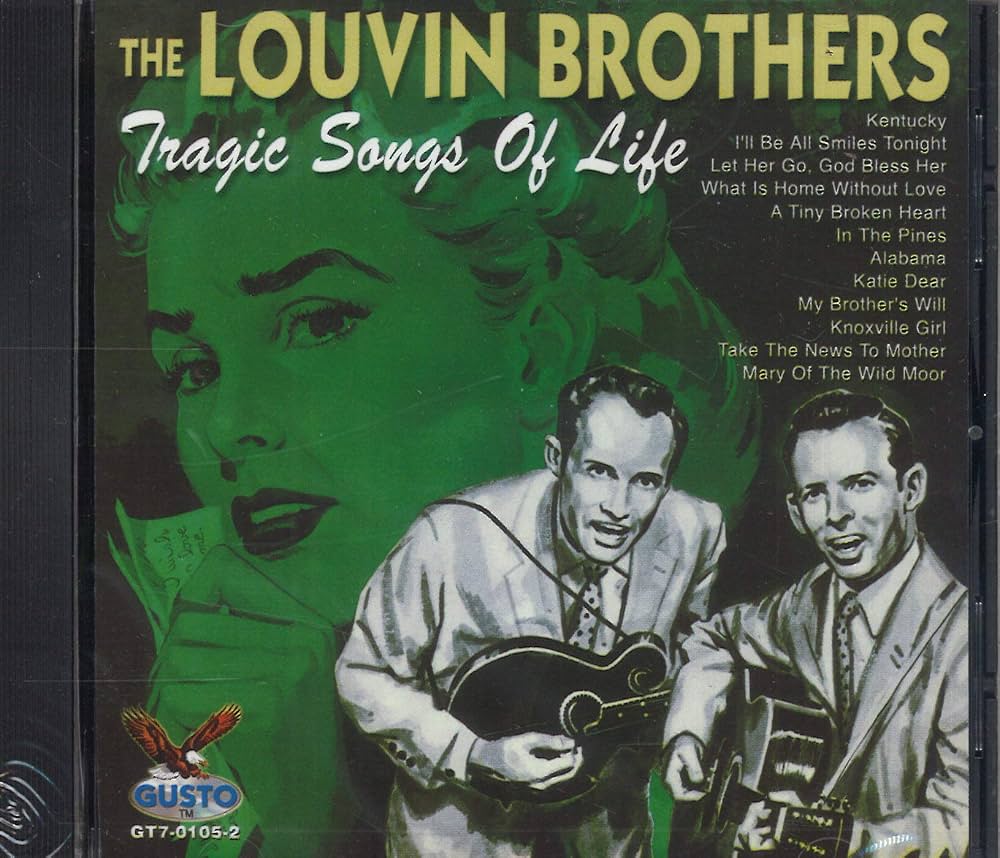
Country music has never shied away from heartbreak, loss, or hardship, but few albums embrace those themes as completely—or as beautifully—as Tragic Songs of Life. Released in 1956, this landmark recording by The Louvin Brothers distilled the essence of Appalachian folk traditions, gospel harmonies, and early country music into one unforgettable collection. Long before the term “Americana” existed, Charlie and Ira Louvin were preserving centuries-old musical traditions while shaping the future of country, bluegrass, and folk music.
The title may suggest an album filled with relentless despair, but Tragic Songs of Life is much more nuanced than that. Yes, death, betrayal, murder, and heartbreak dominate the lyrics, but the performances are filled with warmth, compassion, and astonishing vocal beauty. Rather than glorifying suffering, the Louvin Brothers tell stories of ordinary people caught in extraordinary circumstances, often reminding listeners that life can be fragile and unpredictable.
Over the decades, the album has grown from a respected country classic into one of the most influential recordings in American roots music. Its fingerprints can be found on generations of musicians, from traditional bluegrass acts to alternative country bands and modern folk revivalists. More importantly, it remains an emotionally gripping listen that sounds just as authentic today as it did nearly seventy years ago.
Album Overview
Tragic Songs of Life feels less like a commercial studio album and more like an evening spent listening to stories on a front porch somewhere in rural Appalachia. Every song carries a sense of history, as though it has been passed from generation to generation before finally finding its way onto vinyl.
Many of the tracks are traditional folk songs or adaptations of older material, allowing the Louvin Brothers to serve not only as performers but also as caretakers of America’s musical heritage. Rather than modernizing these songs, Charlie and Ira present them with remarkable respect for their origins while adding their unmistakable vocal identity.
The sequencing creates a surprisingly cohesive experience despite the variety of source material. Murder ballads sit comfortably beside tales of lost love, family tragedy, and moral caution. The emotional thread connecting every song is humanity itself. Whether the story involves betrayal, accidental death, or impossible romance, each character feels real and deeply sympathetic.
The instrumentation is equally understated. Acoustic guitars, mandolin, and occasional supporting instruments provide tasteful accompaniment without distracting from the album’s true centerpiece: the extraordinary harmony singing.
There is no unnecessary embellishment. Every note exists to support the storytelling, giving the album an intimacy that many modern productions struggle to achieve.
Songwriting
Although the Louvin Brothers wrote some of their own material during their career, much of Tragic Songs of Life draws from traditional folk music and classic country songwriting. That actually becomes one of the album’s greatest strengths.
These songs have endured because they speak to universal emotions. They explore grief, guilt, sacrifice, devotion, jealousy, and redemption through vivid storytelling rather than abstract sentiment.
“Katie Dear” opens the record with heartbreaking tenderness, presenting lost love through simple yet emotionally powerful lyrics. The understated language allows listeners to fill in the emotional gaps themselves.
“In the Pines,” one of the oldest songs in American folk tradition, becomes haunting in the Louvins’ hands. Rather than emphasizing mystery or horror, they focus on loneliness and isolation, creating one of the album’s most memorable moments.
“My Brother’s Will” explores family responsibility with remarkable sincerity, while “Knoxville Girl” remains one of country music’s most infamous murder ballads. Its chilling narrative works precisely because the Louvins refuse to sensationalize the violence, allowing the story itself to carry the emotional weight.
Throughout the album, the songwriting demonstrates that tragedy does not require melodrama. The lyrics are often direct and economical, trusting listeners to understand the emotional consequences without excessive explanation.
Performance
If Tragic Songs of Life has a defining characteristic, it is undoubtedly the harmony singing.
Charlie and Ira Louvin created one of the most recognizable vocal blends in country music history. Charlie’s smooth, steady lead provides an emotional anchor while Ira’s higher harmony cuts through with remarkable intensity. Together, they produce harmonies that are simultaneously beautiful, unsettling, and emotionally overwhelming.
Unlike many vocal duos, the Louvins never sound as though one singer is merely supporting the other. Their voices intertwine so naturally that they become a single expressive instrument.
That vocal chemistry proves especially effective on slower material, where subtle phrasing and sustained harmonies heighten every emotional moment. Even songs that have been recorded countless times by other artists feel fresh because of the brothers’ distinctive delivery.
Instrumentally, the performances remain restrained throughout. Acoustic guitar work is clean and tasteful, while mandolin and supporting accompaniment serve the songs rather than showcasing technical virtuosity.
The album’s greatest accomplishment is its sincerity. Nothing sounds forced or theatrical. Charlie and Ira believe every word they sing, and that conviction becomes impossible for listeners to ignore.
Production
Recorded during country music’s transition from regional tradition to national commercial success, Tragic Songs of Life benefits from production that wisely avoids excessive polish.
The recording captures the warmth of the brothers’ harmonies while maintaining impressive clarity for its era. The balance between vocals and instruments is excellent, ensuring the storytelling always remains front and center.
Producer Ken Nelson understood that the Louvin Brothers required very little embellishment. Instead of adding elaborate arrangements, he allowed their natural chemistry to define the sound.
The simplicity of the production has helped the album age remarkably well. Rather than sounding dated, it feels timeless because it never chased contemporary trends.
The recording environment also contributes to the album’s intimacy. Listeners feel as though they are sitting just a few feet away from the performers, an effect that perfectly complements the personal nature of the songs.
Modern listeners accustomed to heavily layered productions may initially find the recording sparse, but that openness allows every harmony and lyrical detail to resonate with unusual emotional force.
Standout Tracks
Several songs stand among the finest recordings in country and folk music history.
“Katie Dear” immediately establishes the emotional honesty that defines the album. Its graceful melody and heartfelt harmonies make it one of the Louvins’ signature performances.
“In the Pines” remains haunting decades after its recording. The brothers transform the traditional song into something deeply intimate and quietly devastating.
“Knoxville Girl” is impossible to ignore. One of America’s most famous murder ballads, it combines beautiful harmonies with disturbing storytelling in a way that leaves a lasting impression.
“Take the News to Mother” delivers heartbreaking family tragedy through restrained, compassionate singing rather than exaggerated emotion.
“Mary of the Wild Moor” demonstrates the brothers’ remarkable ability to communicate empathy, turning another traditional tragedy into an unforgettable performance.
“My Brother’s Will” stands as one of the album’s most emotionally affecting pieces, emphasizing family devotion with remarkable sincerity.
Weak Points
The album’s greatest strengths may also present challenges for some listeners.
Because many songs share similar themes of death, loss, and sorrow, the emotional atmosphere remains consistently heavy. Those looking for lighter moments or stylistic variety may find the experience emotionally demanding.
Likewise, the sparse instrumentation places enormous emphasis on the vocals. Listeners who prefer more elaborate arrangements or instrumental showcases may find the production almost too restrained.
A few traditional songs also reflect storytelling conventions from earlier centuries that can feel stark or unsettling to contemporary audiences. Their historical authenticity is important, but modern listeners should recognize the cultural context in which these songs developed.
Ultimately, however, these observations reflect artistic intention rather than genuine flaws. Tragic Songs of Life succeeds precisely because it refuses to dilute its emotional focus.
Legacy
Few country albums have exerted such lasting influence while remaining so firmly rooted in tradition.
Tragic Songs of Life helped preserve Appalachian folk music at a time when commercial country was becoming increasingly polished. By treating traditional material with respect rather than nostalgia, the Louvin Brothers demonstrated that centuries-old songs could remain emotionally immediate for modern audiences.
Their close harmony singing became enormously influential, inspiring artists across multiple genres. Groups like The Everly Brothers adapted elements of the Louvins’ vocal approach for early rock and roll, while country artists such as Emmylou Harris and The Judds carried their harmony tradition into later generations.
The album also became a cornerstone for the Americana movement decades before the genre had a name. Artists including Uncle Tupelo, Gillian Welch, and Alison Krauss have all reflected aspects of the Louvins’ emphasis on authenticity, storytelling, and acoustic performance.
Perhaps the album’s greatest achievement is its timelessness. While musical fashions have changed dramatically since 1956, the emotions contained within these songs remain universal. Love still ends. Families still grieve. People still search for hope amid hardship.
That enduring humanity allows Tragic Songs of Life to transcend both genre and era, standing today not merely as an important country album but as one of the defining recordings of American roots music.
Final Score
10/10
Tragic Songs of Life is a masterpiece of traditional country and American folk music. Charlie and Ira Louvin transformed centuries-old stories into deeply personal performances through extraordinary harmony singing, understated production, and unwavering emotional honesty. Every track contributes to a cohesive portrait of love, loss, faith, and human resilience. More than just a collection of sad songs, the album is a celebration of storytelling itself, preserving America’s musical heritage while influencing generations of artists who followed. Nearly seventy years after its release, it remains one of the finest and most emotionally powerful country albums ever recorded.