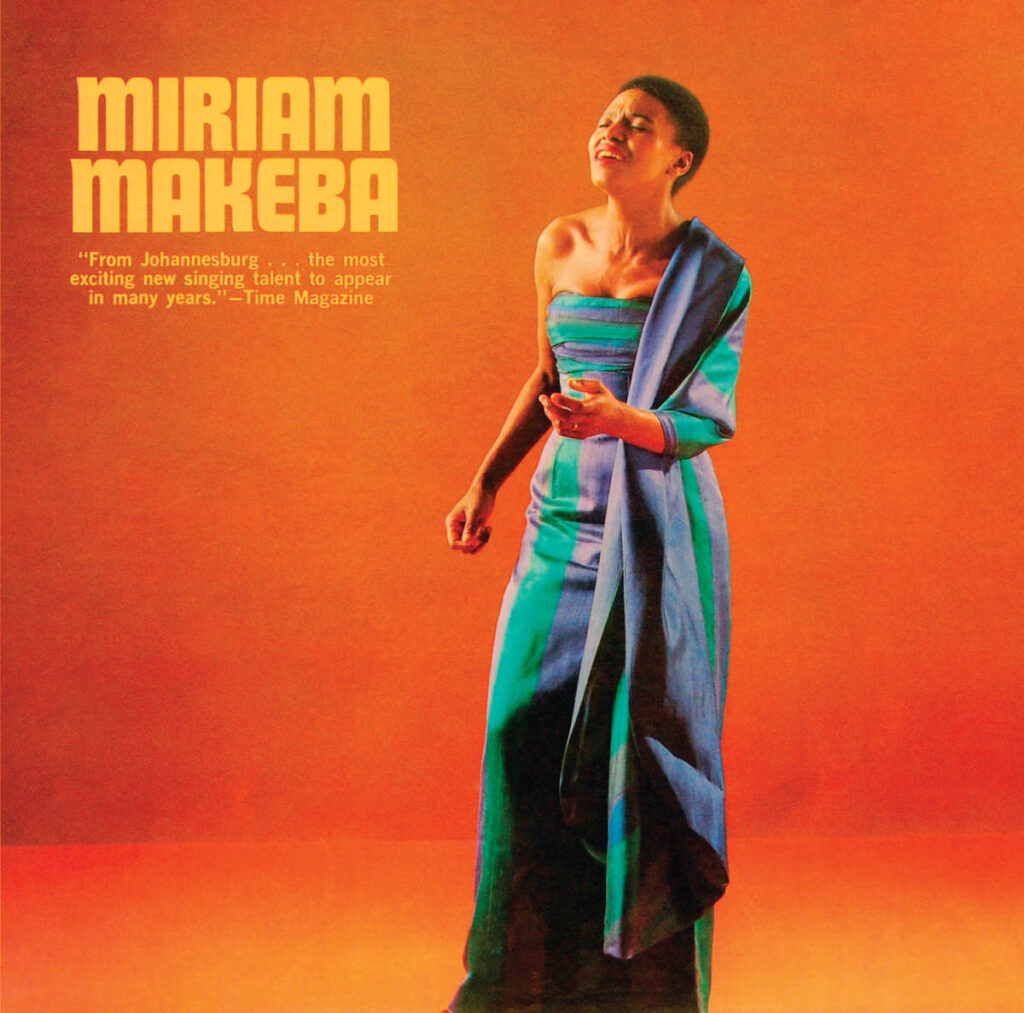
Some debut albums introduce a talented new performer. Others introduce an entirely new musical world. Miriam Makeba accomplished both. Released in 1960, the album introduced much of the international audience to the extraordinary voice of South African singer Miriam Makeba, an artist whose music would soon become inseparable from her activism, cultural influence, and unwavering fight against apartheid.
At the time of the album’s release, Makeba had recently left South Africa following her appearance in the anti-apartheid documentary Come Back, Africa. Exiled from her homeland for decades, she found herself representing not only her own remarkable artistry but also the music and culture of an entire nation. That responsibility could easily have overshadowed the music itself, yet Miriam Makeba succeeds first and foremost because of its exceptional performances.
Blending traditional South African melodies with jazz, folk, and popular music, the album creates a sound unlike anything American audiences were accustomed to hearing in 1960. Makeba’s effortless vocal control, natural charisma, and deep emotional connection to every song immediately set her apart from nearly every contemporary singer.
Long before she became known worldwide as “Mama Africa,” this debut established Miriam Makeba as one of the most distinctive voices of the twentieth century.
Album Overview
Miriam Makeba is both accessible and deeply rooted in tradition. Rather than dramatically reshaping South African music for international audiences, Makeba presents it with remarkable authenticity while allowing subtle jazz and pop influences to broaden its appeal.
The arrangements remain tasteful throughout. Acoustic guitars, light percussion, horns, and vocal harmonies create colorful settings without distracting from Makeba’s extraordinary voice.
The album flows naturally between upbeat celebrations and reflective ballads, offering enough variety to maintain interest while preserving a cohesive musical identity.
One of the album’s greatest strengths is its sincerity. Every performance feels genuine, never giving the impression that the music has been simplified or commercialized for foreign listeners.
Even for audiences unfamiliar with the languages or traditions represented, the emotional communication remains immediate and universal.
Songwriting
The album draws upon traditional South African songs alongside contemporary material, creating a rich and varied collection.
“The Click Song (Qongqothwane)” immediately became Makeba’s signature recording. Featuring the distinctive click consonants of the Xhosa language, it introduced countless international listeners to sounds they had never encountered before. Far from feeling unfamiliar or inaccessible, the performance is joyful, inviting, and endlessly memorable.
“Lakutshon’ Ilanga” demonstrates Makeba’s ability to communicate deep emotion through subtle phrasing and graceful melodic interpretation.
Other selections blend African musical traditions with jazz-inspired arrangements, illustrating the remarkable flexibility of the material.
Although many listeners may not immediately understand every lyric, the emotional intent remains unmistakable. Themes of community, love, celebration, and resilience resonate throughout the album.
The song selection reflects Makeba’s determination to present South African music with dignity, authenticity, and artistic excellence.
Performance
Miriam Makeba delivers one of the finest debut vocal performances of the era.
Her voice is remarkable not because of overwhelming power but because of its warmth, clarity, and expressive precision. She moves effortlessly between gentle intimacy and vibrant celebration without ever sounding forced.
Her phrasing is elegant, her pitch impeccable, and her rhythmic instincts exceptional. Every performance feels conversational rather than theatrical.
Perhaps her greatest strength is her ability to communicate emotion beyond language. Even listeners unfamiliar with Xhosa, Zulu, or other African languages can immediately connect with the feeling behind every performance.
The accompanying musicians deserve equal praise. Their tasteful arrangements support Makeba beautifully while allowing her voice to remain the clear focal point.
The chemistry between singer and ensemble gives the album an inviting sense of spontaneity that continues to captivate listeners decades later.
Production
The production reflects the transitional nature of international recordings during the late 1950s and early 1960s.
Rather than relying on elaborate studio techniques, the recording emphasizes warmth, clarity, and natural instrumental balance.
Makeba’s voice remains consistently prominent, while the accompanying instruments retain enough space to showcase their individual textures without cluttering the performances.
The simplicity of the production ultimately serves the music well. It preserves the honesty and immediacy of the performances while allowing the richness of the arrangements to emerge naturally.
Modern remasters have enhanced the recording’s clarity while respecting its original character.
The album remains surprisingly vibrant considering its age.
Standout Tracks
Several performances continue to define both the album and Makeba’s remarkable career.
“The Click Song (Qongqothwane)” is the undeniable highlight, combining irresistible rhythm with one of the most recognizable vocal performances in world music history.
“Lakutshon’ Ilanga” showcases the warmth and emotional depth that made Makeba such a compelling interpreter.
“Mbube”, a song that would later become internationally famous in other forms, receives a deeply authentic performance that reconnects listeners with its South African roots.
Throughout the album, Makeba’s ability to balance cultural authenticity with universal accessibility remains consistently impressive.
Every performance contributes meaningfully to the album’s enduring appeal.
Weak Points
Miriam Makeba is an outstanding debut, though it does have a few modest limitations.
The production, while warm and natural, occasionally reflects the technical constraints of its era, lacking some of the depth heard on Makeba’s later recordings.
A few arrangements remain intentionally restrained, leaving listeners wishing for slightly more instrumental exploration.
Additionally, because the album functions partly as an introduction to South African music, it occasionally favors accessibility over the broader stylistic diversity that would characterize some of Makeba’s later work.
These observations do little to diminish the album’s overall excellence.
Legacy
Miriam Makeba marked the beginning of one of the most important international careers in modern music.
The album introduced South African music to audiences around the world while establishing Makeba as one of its most passionate ambassadors. Her success opened doors for countless African artists and demonstrated that traditional music could achieve worldwide recognition without sacrificing its cultural identity.
Beyond music, Makeba became an internationally respected voice against apartheid, using her growing fame to advocate tirelessly for justice and human rights.
The album’s influence can be heard in artists such as Angelique Kidjo, Youssou N’Dour, Ladysmith Black Mambazo, and Johnny Clegg, all of whom helped continue the global appreciation of African music.
Today, Miriam Makeba remains one of the essential recordings in world music and an unforgettable introduction to one of the twentieth century’s most extraordinary voices.
Final Score
8.5/10
Miriam Makeba is a remarkable debut that introduced the world to one of its most distinctive and influential singers. Through elegant performances, authentic song selection, and beautifully understated production, Makeba created an album that remains both culturally significant and musically rewarding. While later recordings would expand her artistic range and feature even stronger production, this debut stands as a powerful statement of identity, artistry, and tradition, making it an essential chapter in the history of world music.
This post has already been read 63 times!