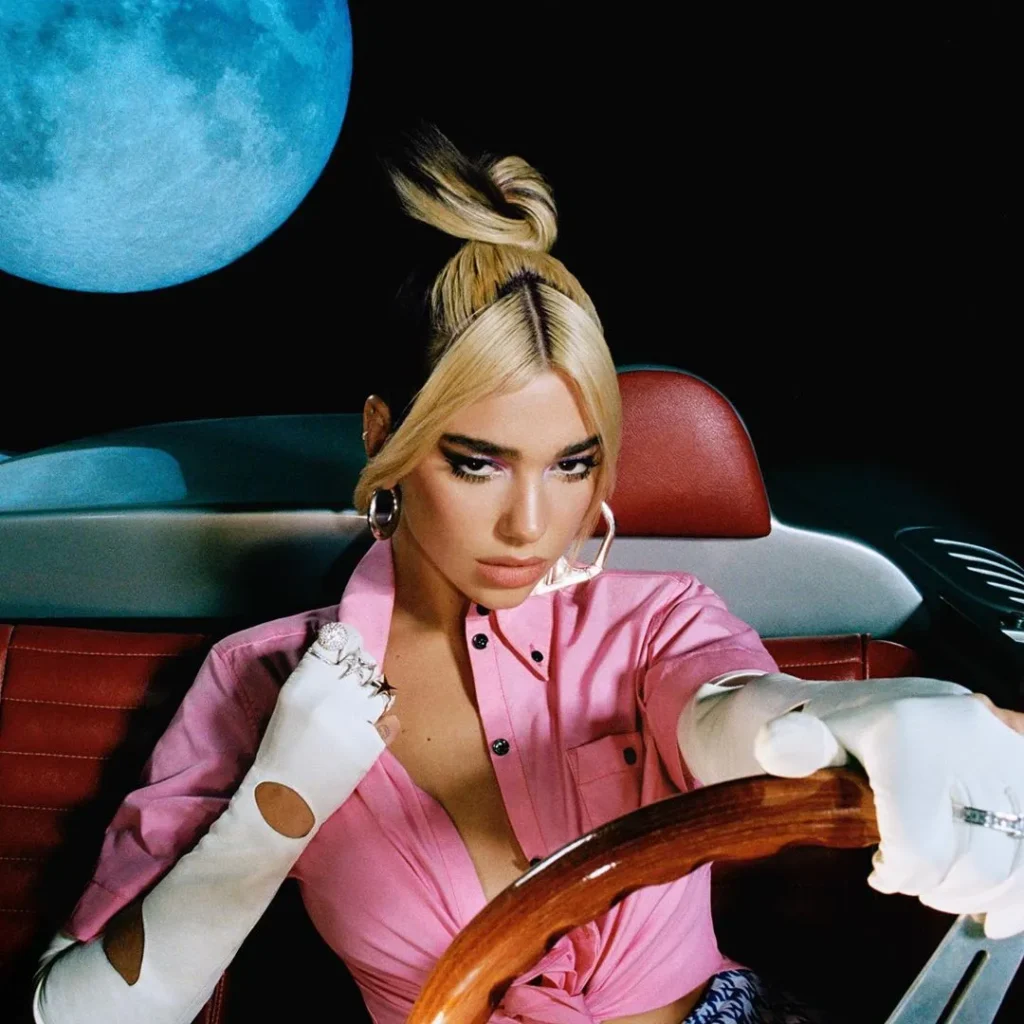
Timing has a way of reshaping how albums are remembered. When Dua Lipa released Future Nostalgia on March 27, 2020, much of the world had come to a standstill. Dance clubs were closed, concerts were canceled, and millions of people were suddenly confined to their homes. Yet an album built around disco grooves, neon-lit pop hooks, and infectious dance rhythms became one of the defining soundtracks of that difficult year.
It would have been easy for Future Nostalgia to become little more than escapism, but its appeal runs much deeper. Dua Lipa and her collaborators—including Koz, Ian Kirkpatrick, Stuart Price, Jeff Bhasker, and others—crafted an album that borrowed heavily from the past while refusing to become an exercise in nostalgia. Drawing inspiration from disco, funk, synth-pop, house, dance-pop, and late-1970s and 1980s club music, the album feels both comfortably familiar and unmistakably modern.
After her successful self-titled debut established her as a rising pop star, Future Nostalgia elevated Dua Lipa into one of the defining artists of contemporary pop. Every aspect of the record—from its production and songwriting to her increasingly confident performances—reflects an artist who had discovered exactly who she wanted to be.
The result is one of the strongest mainstream pop albums of the decade.
Album Overview
The title perfectly summarizes the album’s mission.
Rather than recreating classic disco or synth-pop, Future Nostalgia imagines what those styles might sound like if they had continued evolving into the present day.
Every song balances retro influences with contemporary production techniques.
Vintage bass lines sit alongside modern electronic percussion.
Funky guitar riffs blend seamlessly with crisp synthesizers.
Classic dance rhythms receive sleek twenty-first century polish.
Nothing feels copied.
Everything feels refreshed.
One of the album’s greatest strengths is its consistency.
Unlike many modern pop albums that mix numerous unrelated styles or rely heavily on streaming-friendly filler, Future Nostalgia maintains a remarkably unified sonic identity from beginning to end.
Its pacing also deserves praise.
Energetic dance tracks dominate much of the running order, but enough variation exists to prevent fatigue.
Moments of confidence.
Flirtation.
Empowerment.
Heartbreak.
Playfulness.
They all contribute to an album that feels carefully sequenced rather than assembled around singles.
Songwriting
Lyrically, Future Nostalgia favors confidence over vulnerability.
Rather than diving into deeply personal confessions, Dua Lipa focuses on empowerment, attraction, independence, and self-assurance.
While these themes are hardly new within pop music, the writing succeeds because of its wit and directness.
The title track immediately establishes the album’s playful confidence, presenting Dua as both modern and timeless.
“Don’t Start Now” transforms post-breakup independence into one of the most irresistible dance-pop songs of the decade.
“Physical” celebrates passion with theatrical intensity while paying subtle homage to classic aerobics-era pop without feeling gimmicky.
“Levitating” embraces joyful flirtation through clever wordplay and effortlessly catchy melodies.
“Hallucinate” blurs fantasy and romance into one of the album’s most exhilarating moments.
Even slower songs such as “Love Again” avoid sentimentality by balancing emotional openness with confident self-awareness.
The lyrics rarely attempt profound philosophical observations, nor do they need to.
Instead, they excel at capturing universal emotions with precision and style.
The album understands its purpose perfectly.
It wants listeners to move.
To smile.
To sing along.
And it accomplishes those goals exceptionally well.
Performance
One of the most noticeable differences between Dua Lipa’s debut and Future Nostalgia is her confidence as a vocalist.
Her deeper voice has always distinguished her from many of her pop contemporaries, but here she sounds significantly more relaxed and charismatic.
Rather than chasing difficult vocal runs or oversized power ballads, Dua focuses on groove.
Rhythm.
Attitude.
Every performance feels effortless.
She understands that dance music often depends more on personality than technical vocal gymnastics.
On “Don’t Start Now,” she effortlessly rides the bouncing bass line with cool confidence.
“Physical” allows her to become more theatrical without losing control.
“Pretty Please” showcases her understated sensuality, while “Love Again” highlights a warmer, more vulnerable side.
Her vocal layering throughout the album is also excellent.
Background harmonies subtly reinforce melodies without overwhelming the lead vocal.
Perhaps most importantly, Dua sounds like she’s enjoying herself.
That enthusiasm becomes infectious.
Production
The production is the album’s greatest triumph.
Every song sparkles with immaculate attention to detail.
Bass guitars bounce with irresistible energy.
Synthesizers shimmer across wide stereo landscapes.
Drums punch with remarkable clarity.
String arrangements appear unexpectedly, adding elegance without disrupting momentum.
The production consistently references disco legends, classic house music, synth-pop pioneers, and funk traditions while remaining unmistakably contemporary.
“Don’t Start Now” features one of the finest bass lines in recent pop history.
“Physical” explodes with dramatic synthesizers and relentless percussion.
“Levitating” balances funky grooves with futuristic electronic textures.
“Love Again” cleverly incorporates orchestral samples into modern dance production.
Despite drawing from multiple eras, the album never sounds like a collection of references.
Instead, it feels cohesive and original.
Its polished sound also ages remarkably well.
Years after release, the production remains vibrant and energetic rather than tied to fleeting musical trends.
Standout Tracks
Although Future Nostalgia maintains impressive consistency throughout, several songs stand among the finest pop recordings of the decade.
“Don’t Start Now” is nearly flawless pop craftsmanship. Its unforgettable bass line, confident vocal performance, and exhilarating chorus make it one of the defining singles of the 2020s.
“Physical” pushes the album’s retro influences to thrilling extremes, delivering enormous hooks alongside one of Dua Lipa’s most energetic performances.
“Levitating” perfectly balances disco, funk, and contemporary pop into an endlessly replayable anthem that never loses its charm.
“Hallucinate” bursts with euphoric energy, pairing vibrant production with infectious melodies that capture the joy of losing yourself on the dance floor.
“Love Again” offers the album’s emotional center, blending orchestral elegance with modern production while showcasing one of Dua’s strongest vocal performances.
“Future Nostalgia” serves as an ideal introduction, announcing the album’s artistic vision with swagger, wit, and irresistible groove.
Weak Points
Finding significant weaknesses is difficult, though the album’s focus on style occasionally comes at the expense of deeper emotional exploration.
Listeners seeking intensely personal songwriting may find some lyrical themes somewhat repetitive, as confidence, attraction, and empowerment dominate much of the record.
A few tracks in the latter half, while still enjoyable, lack the immediate impact of the extraordinary opening run.
Additionally, because the production is so polished, certain moments can feel almost too perfect, sacrificing a bit of spontaneity in favor of precision.
These are relatively minor criticisms, particularly given the album’s commitment to creating a cohesive dance-pop experience.
Legacy
Future Nostalgia quickly established itself as one of the defining pop albums of the early 2020s.
Its success demonstrated that dance-pop could once again dominate mainstream music without sacrificing musical sophistication or craftsmanship.
The album helped revive widespread interest in disco-inspired production, encouraging numerous artists to explore funk bass lines, vintage synthesizers, and classic dance rhythms in contemporary pop.
It also transformed Dua Lipa from a successful singer into one of the genre’s leading stars.
The album produced multiple international hit singles, won numerous awards, and remained a fixture on streaming platforms long after its initial release.
Perhaps most importantly, Future Nostalgia arrived at exactly the right cultural moment.
During a period marked by uncertainty and isolation, it reminded listeners of the simple joy of dancing, celebrating, and escaping into great pop music.
Its influence continues to shape mainstream pop years later.
Final Score: 9.5/10
Future Nostalgia is a dazzling modern pop album that successfully bridges the past and present without feeling derivative. Dua Lipa delivers her strongest performances to date, supported by immaculate production, memorable songwriting, and an unwavering artistic vision that remains cohesive from the opening track to the closing notes.
While it occasionally favors style over emotional depth, that choice reflects the album’s purpose rather than a creative shortcoming. Its infectious energy, timeless grooves, and remarkable consistency make it one of the finest dance-pop records of the 21st century.
Confident, stylish, endlessly replayable, and packed with outstanding songs, Future Nostalgia stands as both a career-defining achievement for Dua Lipa and one of the essential pop albums of the 2020s.
This post has already been read 155 times!