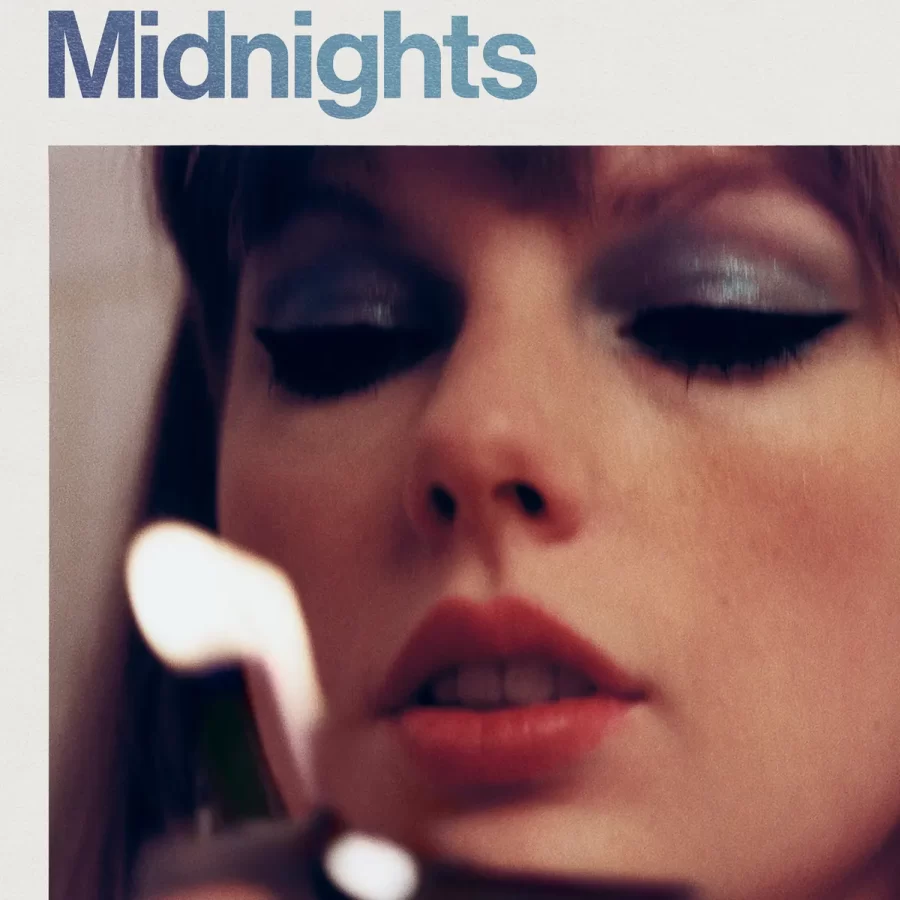
By the time Midnights arrived in October 2022, Taylor Swift had already accomplished something few artists ever achieve. She had successfully reinvented herself multiple times, moving from country prodigy to global pop superstar, then surprising audiences with the indie-folk introspection of folklore and evermore. Rather than continuing down that quieter path, Swift returned to pop—but not the bright, sparkling sound of 1989 or the pastel optimism of Lover.
Instead, she delivered something darker, moodier, and more introspective.
Described as “the stories of 13 sleepless nights scattered throughout my life,” Midnights isn’t a traditional concept album with a linear narrative. Instead, it functions as a collection of emotional snapshots, exploring anxiety, ambition, self-doubt, revenge, romance, insecurity, and the strange thoughts that tend to surface long after midnight when distractions disappear.
Working once again with longtime collaborator Jack Antonoff, Swift crafted an album built around atmospheric synth-pop, understated electronic production, and confessional songwriting. The result became a commercial phenomenon, breaking streaming records, dominating charts worldwide, and reinforcing her status as one of the defining artists of her generation.
While Midnights may not represent the same dramatic artistic leap as some of Swift’s previous reinventions, it showcases a songwriter comfortable enough to explore her own contradictions with remarkable honesty.
Album Overview
One of Midnights’ greatest strengths is its consistency of atmosphere.
Nearly every song feels like it belongs in the same late-night world.
Synthesizers shimmer softly.
Electronic drums pulse beneath restrained melodies.
Vocals remain intimate rather than explosive.
Even the brighter moments carry an undercurrent of uncertainty.
Unlike 1989, which celebrated reinvention, or Reputation, which often confronted public perception head-on, Midnights turns inward.
The conflicts are largely internal.
Self-criticism.
Imposter syndrome.
Relationship anxiety.
Career pressure.
The fear of losing happiness.
The temptation of revenge.
The comfort of nostalgia.
Swift presents these emotions without pretending to have easy answers.
The album’s pacing also deserves praise.
Rather than constantly chasing radio-ready climaxes, many songs unfold gradually, rewarding repeated listening as subtle production details and lyrical nuances reveal themselves.
Although several blockbuster singles emerged from the record, Midnights functions best as a complete listening experience.
Songwriting
Taylor Swift remains one of pop music’s finest lyricists, and Midnights continues that tradition.
Rather than relying solely on autobiographical storytelling, she explores emotional states with increasing sophistication.
“Lavender Haze” opens the album by rejecting outside expectations surrounding relationships and fame, immediately establishing the record’s inward-looking perspective.
“Maroon” transforms memories of a past relationship into vivid shades of color, demonstrating Swift’s remarkable ability to turn ordinary details into emotionally resonant imagery.
“Anti-Hero” stands as one of the album’s defining moments. Rather than presenting herself as misunderstood or victimized, Swift openly examines her insecurities, ego, and self-destructive tendencies with surprising humor and vulnerability.
“You’re on Your Own, Kid” traces personal growth from adolescence to superstardom, ultimately arriving at one of the album’s most uplifting conclusions about resilience and self-reliance.
“Midnight Rain” explores choosing ambition over conventional romance, refusing to portray either path as entirely right or wrong.
“Would’ve, Could’ve, Should’ve,” included on the 3am Edition, is among the most emotionally devastating songs Swift has ever written. Its exploration of regret, trauma, and lingering emotional wounds recalls the narrative power of her finest work.
Throughout the album, Swift consistently balances conversational immediacy with poetic detail, allowing listeners to connect emotionally without sacrificing lyrical sophistication.
Performance
Swift has never relied on overwhelming vocal power, but Midnights demonstrates how much she has grown as a performer.
Her voice has become warmer.
More controlled.
More expressive.
Rather than reaching for dramatic high notes, she emphasizes phrasing, emotional nuance, and storytelling.
That approach perfectly suits the album’s intimate atmosphere.
On “Maroon,” she delivers quiet heartbreak through subtle vocal inflections rather than theatrical performances.
“Anti-Hero” balances self-deprecating humor with genuine vulnerability.
“Labyrinth” requires remarkable restraint, allowing emotional tension to emerge gradually rather than through dramatic crescendos.
Swift’s vocal layering also plays a major role throughout the album.
Background harmonies create dreamlike textures that blend seamlessly into Antonoff’s atmospheric production.
While some listeners may wish for more dynamic vocal showcases, the understated performances consistently serve the songs.
Nothing feels forced.
Everything feels intentional.
Production
Jack Antonoff’s production defines the sonic identity of Midnights.
Unlike the maximalist pop of earlier Swift albums, these arrangements prioritize atmosphere over spectacle.
Synthesizers glow softly beneath understated rhythms.
Electronic percussion remains crisp without dominating the mix.
Bass lines provide warmth rather than aggression.
Songs like “Midnight Rain” experiment with vocal manipulation and unusual textures, while “Karma” introduces brighter pop elements without disrupting the album’s cohesion.
“Maroon” demonstrates Antonoff’s ability to build emotional tension through subtle instrumental layers rather than dramatic orchestration.
The production remains remarkably detailed throughout.
Tiny electronic flourishes.
Delicate keyboard melodies.
Layered harmonies.
Unexpected rhythmic accents.
These elements reward repeated listening.
One criticism occasionally directed at Antonoff’s work is that his production style has become instantly recognizable across multiple artists.
While there are moments on Midnights where that familiarity emerges, the album ultimately develops its own distinct sonic personality through Swift’s songwriting and performances.
Standout Tracks
The album contains numerous highlights that rank among Swift’s strongest recent work.
“Maroon” is a masterclass in emotional songwriting. Its understated production and vivid imagery create one of the album’s richest listening experiences.
“Anti-Hero” became an enormous hit because it pairs irresistible melodies with unusually honest self-examination. It is simultaneously funny, vulnerable, and deeply relatable.
“You’re on Your Own, Kid” evolves into one of Swift’s most inspiring songs, tracing years of personal growth before arriving at a quietly triumphant conclusion.
“Midnight Rain” cleverly subverts traditional relationship narratives, presenting ambition and love as equally valid but sometimes incompatible choices.
“Bejeweled” injects playful confidence into the album while showcasing Swift’s gift for memorable pop hooks.
“Would’ve, Could’ve, Should’ve” is arguably the emotional masterpiece of the extended edition, delivering extraordinary lyrical depth alongside one of Swift’s most powerful vocal performances.
Weak Points
While Midnights is consistently enjoyable, it occasionally plays things a bit too safely.
Coming after the adventurous songwriting of folklore and evermore, the return to sleek synth-pop can feel less artistically daring.
Several songs share similar tempos and production styles, causing portions of the standard edition to blend together during longer listening sessions.
A few tracks rely more heavily on mood than memorable melodic development, making them less immediately distinctive than Swift’s strongest material.
Additionally, the standard edition feels somewhat incomplete given how essential songs like “Would’ve, Could’ve, Should’ve” and “The Great War” became to the album’s overall reputation. Those tracks arguably strengthen the project enough that many listeners now view the expanded edition as the definitive version.
These issues prevent Midnights from reaching the extraordinary heights of Swift’s very best albums, but they do little to diminish its overall quality.
Legacy
Midnights became one of the biggest commercial success stories of the decade.
It shattered streaming records, occupied the entire Top 10 of the Billboard Hot 100 simultaneously, and provided the momentum that helped launch the record-breaking Eras Tour into a global cultural phenomenon.
Critically, the album reinforced Swift’s remarkable consistency. More than fifteen years into her career, she remained capable of producing commercially dominant, critically respected work while continuing to evolve as both a songwriter and performer.
Its influence is already visible across contemporary pop, particularly in the continued popularity of intimate electronic production paired with confessional lyricism.
Although it may not represent the revolutionary shift that 1989 or folklore did, Midnights demonstrates the confidence of an artist who no longer feels obligated to reinvent herself with every release.
Sometimes refinement can be just as compelling as reinvention.
Final Score: 8.5/10
Midnights is a polished, emotionally intelligent pop album that succeeds through atmosphere, introspection, and consistently strong songwriting. Taylor Swift continues to demonstrate why she remains one of the premier songwriters of her generation, delivering memorable melodies alongside deeply personal reflections on ambition, insecurity, relationships, and identity.
Jack Antonoff’s elegant production creates a cohesive late-night mood that rewards repeated listening, even if its understated approach occasionally leads to moments of sameness. While the album does not quite reach the artistic heights of folklore, evermore, or 1989, it remains a thoroughly satisfying addition to Swift’s remarkable catalog.
Confident without being flashy, vulnerable without becoming self-indulgent, and filled with songs that linger long after they end, Midnights is another impressive chapter in one of modern pop’s most consistently fascinating careers.
This post has already been read 175 times!