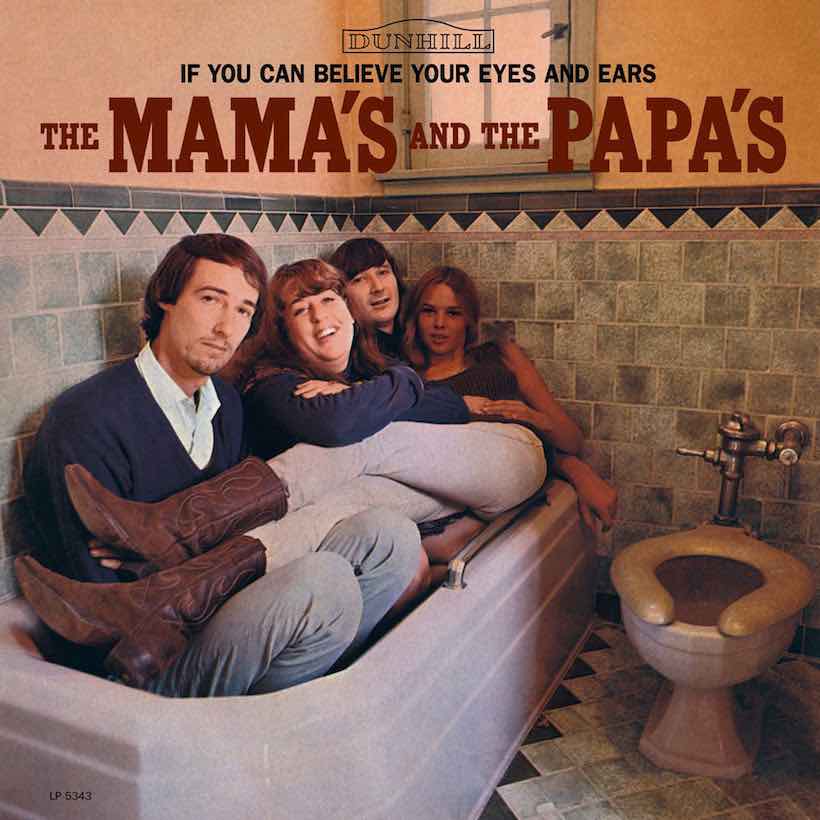
Few debut albums have captured the spirit of an era as completely as If You Can Believe Your Eyes and Ears. Released in 1966, the record arrived just as popular music was shifting away from the straightforward sounds of the early British Invasion toward richer harmonies, more adventurous songwriting, and the emerging California rock scene. The Mamas & the Papas didn’t simply join that movement—they helped define it.
Built around the remarkable vocal chemistry of John Phillips, Michelle Phillips, Denny Doherty, and Cass Elliot, the group’s sound was unlike anything dominating the radio at the time. Their intricate four-part harmonies borrowed from folk music, blended seamlessly with pop craftsmanship, and carried just enough rock and soul influence to create something entirely original. Combined with John Phillips’ increasingly sophisticated songwriting, the result was a record that sounded fresh in 1966 and continues to sound timeless today.
While the group would enjoy several successful albums, their debut remains one of their strongest artistic statements. It introduced a sound that countless artists would imitate but few would ever equal.
More than half a century later, If You Can Believe Your Eyes and Ears remains one of the essential albums of the folk-rock era.
Album Overview
From its opening moments, the album radiates warmth and optimism. Rich vocal harmonies immediately establish the group’s identity, while the carefully sequenced track list moves effortlessly between upbeat pop, reflective folk, and soulful ballads.
The production strikes an ideal balance between accessibility and sophistication. Acoustic guitars, tasteful orchestration, keyboards, and subtle rhythm-and-blues influences support the vocals without ever overshadowing them.
Unlike many debut albums that feel like collections of singles surrounded by filler, If You Can Believe Your Eyes and Ears maintains remarkable consistency throughout. Every song reinforces the group’s signature sound while offering enough variety to keep the album engaging.
The pacing is particularly effective. Bright, energetic songs are balanced by quieter moments, allowing listeners to appreciate both the emotional depth and joyful spirit of the quartet.
Although later albums would become more ambitious, this debut possesses a freshness that is difficult to duplicate.
Songwriting
John Phillips immediately establishes himself as one of the finest songwriters of the 1960s.
“California Dreamin'” is, quite simply, one of the greatest songs ever written. Its haunting melody, vivid imagery, and unforgettable harmony arrangement transformed it into an anthem that continues to define an entire era of American music.
“Monday, Monday” demonstrates Phillips’ gift for writing deceptively simple pop songs filled with emotional complexity. The song’s bittersweet lyrics and memorable chorus earned the group its first number-one hit.
Elsewhere, “Go Where You Wanna Go” combines folk influences with irresistible melodies, while “Straight Shooter” and “Got a Feelin'” reveal a bluesier side of the band’s personality.
The album also includes thoughtfully chosen covers that fit naturally alongside the original material, reinforcing the group’s remarkable versatility.
Throughout the record, the songwriting balances commercial appeal with genuine artistic substance, one of the reasons the album has endured so well.
Performance
The performances are exceptional from beginning to end.
The defining feature is, of course, the vocal blend. Few groups have ever matched the effortless chemistry between Cass Elliot’s rich contralto, Denny Doherty’s warm tenor, Michelle Phillips’ delicate harmonies, and John Phillips’ steady leadership.
Cass Elliot often steals the spotlight with her remarkable voice, bringing tremendous warmth and emotional depth to every performance. Yet the true strength of the group lies in how naturally all four voices intertwine.
The instrumental performances remain understated but highly effective. Rather than competing with the vocals, the musicians create polished arrangements that enhance the songs’ emotional impact.
Every member contributes something essential, and the performances consistently reflect the excitement of a band discovering just how special its sound could be.
Production
Producer Lou Adler gives the album a clean, vibrant sound that perfectly complements the group’s vocal style.
The harmonies remain front and center throughout, while the accompanying instruments are balanced with remarkable clarity.
The production embraces the polished aesthetic of mid-1960s pop without becoming overly elaborate. Every arrangement feels purposeful, allowing the songs themselves to remain the focus.
Even today, the album sounds remarkably fresh. Modern remasters reveal additional detail while preserving the warmth that helped make these recordings so inviting.
Its timeless production has played a significant role in the album’s enduring popularity.
Standout Tracks
The album is filled with memorable performances, but several songs stand among the finest recordings of the decade.
“California Dreamin'” remains one of the defining songs of the 1960s. Every element—from the haunting lyrics to the unforgettable harmonies—comes together perfectly.
“Monday, Monday” showcases the group’s extraordinary vocal chemistry while delivering one of the era’s most memorable choruses.
“Go Where You Wanna Go” captures the band’s folk roots beautifully, while “Straight Shooter” highlights their ability to inject blues influences into polished pop arrangements.
Even lesser-known tracks such as “Spanish Harlem” and “Do You Wanna Dance” demonstrate the group’s versatility and consistently high musical standards.
Weak Points
Although If You Can Believe Your Eyes and Ears is an outstanding debut, it is not entirely without flaws.
A handful of the cover songs, while enjoyable, lack the originality and emotional impact of John Phillips’ strongest compositions.
The production occasionally reflects the polished studio style of mid-1960s pop, making a few arrangements feel slightly more dated than the timeless songwriting itself.
Additionally, the album’s strongest material is so exceptional that a few deeper cuts inevitably struggle by comparison.
These are relatively minor criticisms of an otherwise consistently excellent record.
Legacy
If You Can Believe Your Eyes and Ears helped define the California sound that would dominate much of the second half of the 1960s.
Its sophisticated vocal harmonies influenced artists ranging from The Beach Boys and Crosby, Stills & Nash to Fleetwood Mac and The Eagles. The album also demonstrated that folk-inspired songwriting and polished pop production could coexist beautifully, helping shape the direction of mainstream rock music.
“California Dreamin'” remains one of the most recognizable songs in popular music history, while “Monday, Monday” continues to receive regular airplay nearly sixty years after its release.
The album represents the group at its most vibrant and inspired, preserving a unique musical chemistry that remains virtually unmatched.
Final Score
9.5/10
If You Can Believe Your Eyes and Ears is one of the greatest debut albums of the 1960s and a cornerstone of folk rock. Extraordinary vocal harmonies, consistently excellent songwriting, polished production, and unforgettable performances combine to create a record that still sounds remarkably fresh decades later. While a few album tracks fall just short of the brilliance of its legendary singles, the overall quality is exceptional, making this an enduring classic and one of the defining albums of its era.
This post has already been read 56 times!