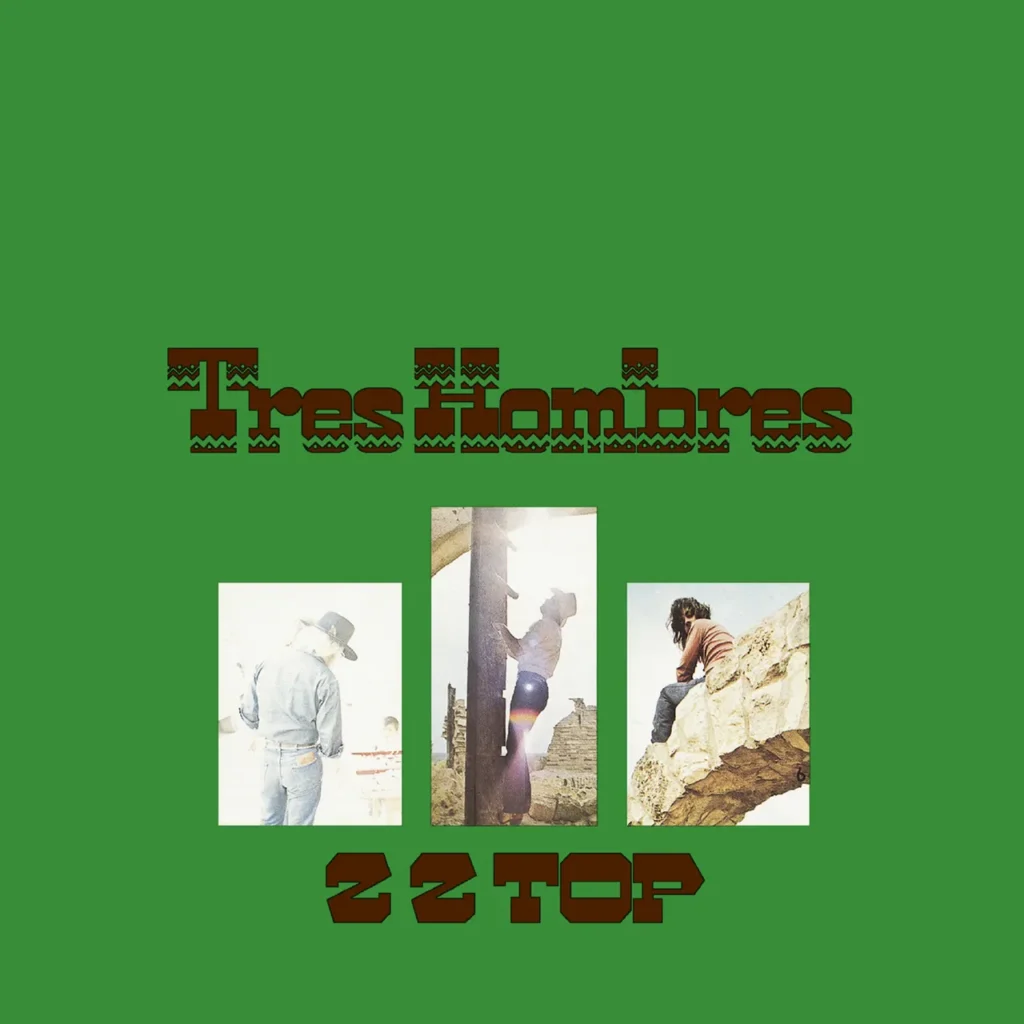
Every great band has the album where everything finally clicks. For ZZ Top, that album was Tres Hombres. Released in 1973, the Texas trio’s third studio album transformed Billy Gibbons, Dusty Hill, and Frank Beard from a respected regional blues-rock act into one of the most exciting bands in American rock. While their first two records hinted at their enormous potential, Tres Hombres delivered it in full, combining gritty Texas blues, boogie rock, Southern swagger, and unforgettable hooks into an album that has never lost its appeal.
Long before the synthesizers and MTV success of the 1980s, ZZ Top built its reputation on raw musicianship, relentless grooves, and Billy Gibbons’ extraordinary guitar playing. Tres Hombres captures the trio before commercial polish softened their edges. Every riff sounds dirty, every rhythm section groove feels effortless, and every vocal performance radiates confidence without slipping into self-parody.
Best known for introducing the world to “La Grange,” the album is far more than a vehicle for one legendary single. From beginning to end, it showcases a band that understood the blues deeply while refusing to treat it like a museum piece. Instead, ZZ Top injected it with humor, attitude, and a distinctly Texan identity that became their trademark.
More than fifty years later, Tres Hombres remains the definitive ZZ Top album and one of the greatest blues-rock records ever made.
Album Overview
One of the album’s greatest strengths is its economy.
Nothing feels excessive.
There are no unnecessary overdubs.
No elaborate studio experiments.
No extended displays of technical virtuosity simply for their own sake.
Instead, every song is built around three musicians who know exactly how much to play—and, more importantly, when not to play.
The album effortlessly blends Texas blues, hard rock, boogie, Southern rock, and rhythm and blues.
The grooves are infectious.
The riffs are unforgettable.
The performances feel relaxed while remaining razor-sharp.
That balance defines the entire record.
Although Tres Hombres contains plenty of heavy guitar work, it never becomes one-dimensional.
Slow blues numbers sit comfortably beside driving rock songs.
Humor coexists with heartbreak.
Traditional blues structures receive modern rock energy without sacrificing authenticity.
The result is an album that remains remarkably cohesive despite its stylistic variety.
Songwriting
Billy Gibbons deserves enormous credit for helping redefine blues songwriting during the early 1970s.
Rather than simply copying the great Chicago blues masters, ZZ Top translated those traditions into something unmistakably American Southwest.
“La Grange” is, of course, the centerpiece.
Built around one of rock’s greatest guitar riffs, the song transforms a simple boogie groove into an unforgettable celebration of Texas mythology.
Its hypnotic rhythm and irresistible swagger have made it one of rock’s most recognizable songs.
“Waitin’ for the Bus” and “Jesus Just Left Chicago” function almost like a single extended composition, opening the album with remarkable confidence while establishing its blues-heavy atmosphere.
“Beer Drinkers & Hell Raisers” perfectly captures the band’s rough-edged sense of humor and blue-collar identity.
“Hot, Blue and Righteous” slows the pace with a soulful performance that reveals another side of the trio’s musical personality.
“Master of Sparks” tells one of the album’s most memorable stories, combining vivid lyrics with dramatic musical dynamics.
Throughout the record, the songwriting consistently favors memorable riffs, concise storytelling, and irresistible grooves over unnecessary complexity.
That simplicity becomes one of its greatest strengths.
Performance
Few power trios have ever displayed chemistry equal to ZZ Top on Tres Hombres.
Billy Gibbons delivers one of the defining guitar performances in blues-rock history.
His tone is instantly recognizable.
Warm.
Dirty.
Expressive.
Every solo serves the song.
Every bend carries emotion.
His remarkable ability to blend blues vocabulary with rock aggression helped redefine electric guitar throughout the decade.
Vocally, Gibbons remains equally effective.
His gritty delivery perfectly complements the band’s earthy sound without ever feeling forced.
Dusty Hill deserves equal praise.
His bass playing anchors every groove while adding melodic movement that prevents the arrangements from becoming predictable.
His harmony vocals contribute significantly to the album’s rich sound.
Frank Beard completes the trio with consistently outstanding drumming.
His performances remain tasteful, powerful, and remarkably restrained.
Rather than filling every measure with flashy techniques, Beard focuses on groove.
That discipline allows the songs to breathe.
Together, the three musicians create a sound far larger than one would expect from only three performers.
Production
Produced by Bill Ham, Tres Hombres captures the band with remarkable clarity while preserving the raw energy of its live performances.
The guitars dominate the mix without overwhelming the rhythm section.
Dusty Hill’s bass remains warm and full.
Frank Beard’s drums sound natural and punchy.
Every instrument occupies its own space.
Unlike many hard rock albums of the early 1970s, the production avoids unnecessary heaviness.
Instead, it emphasizes groove.
The recording retains plenty of dynamic range.
Quiet passages feel intimate.
Louder moments hit with tremendous force.
Even decades later, the album sounds fresh because it never relied on fashionable studio techniques.
It simply documented an exceptional band playing exceptional music.
Standout Tracks
Although Tres Hombres rarely dips below excellence, several songs stand among the greatest recordings of ZZ Top’s career.
“Waitin’ for the Bus” / “Jesus Just Left Chicago” form one of rock’s finest opening sequences, seamlessly blending blues, soul, and hard rock while immediately establishing the album’s effortless groove.
“La Grange” is one of the greatest blues-rock songs ever recorded. Its iconic riff, hypnotic rhythm, and unforgettable guitar work have become permanent fixtures of classic rock history.
“Beer Drinkers & Hell Raisers” perfectly captures the band’s swagger, humor, and remarkable chemistry through one of the album’s most infectious performances.
“Master of Sparks” demonstrates the band’s storytelling abilities while providing one of Billy Gibbons’ strongest vocal performances.
“Hot, Blue and Righteous” offers a soulful change of pace, revealing the emotional depth often hidden beneath the band’s rugged exterior.
Weak Points
Finding significant weaknesses proves difficult.
Listeners seeking the polished hooks and radio-ready production of ZZ Top’s 1980s albums may find Tres Hombres noticeably rougher around the edges.
A handful of deeper cuts occasionally live in the shadow of the album’s towering classics, particularly “La Grange.”
Additionally, the album remains firmly rooted in blues traditions, meaning listeners unfamiliar with the genre may initially overlook the subtle sophistication beneath its seemingly straightforward arrangements.
These are minor observations.
The album succeeds precisely because it remains so focused on its musical identity.
Legacy
Tres Hombres established ZZ Top as one of America’s premier rock bands and laid the foundation for everything that followed.
Without it, albums like Fandango!, Degüello, El Loco, and Eliminator would almost certainly have sounded very different.
Its influence stretches across blues-rock, Southern rock, hard rock, and even heavy metal.
Countless guitarists have studied Billy Gibbons’ tone, phrasing, and remarkable sense of restraint.
Meanwhile, “La Grange” has become one of the essential songs in the rock guitar canon, inspiring generations of musicians while remaining a staple of classic rock radio.
More importantly, Tres Hombres demonstrated that traditional blues could evolve naturally without losing its authenticity.
That achievement remains just as impressive today.
Final Score: 10/10
Tres Hombres is the definitive ZZ Top album and one of the greatest blues-rock records ever recorded. Billy Gibbons’ extraordinary guitar work, Dusty Hill and Frank Beard’s impeccable rhythm section, timeless songwriting, and raw yet elegant production combine into an album that never wastes a note.
Every performance radiates confidence, every groove feels effortless, and every revisit reveals new appreciation for the trio’s remarkable chemistry. Whether delivering slow-burning blues, hard-driving boogie, or unforgettable rock anthems, ZZ Top consistently sounds completely in command.
Only a handful of albums have distilled the essence of Texas blues-rock so perfectly. Tres Hombres remains not only ZZ Top’s crowning achievement but one of the essential American rock albums of the 1970s.
This post has already been read 67 times!