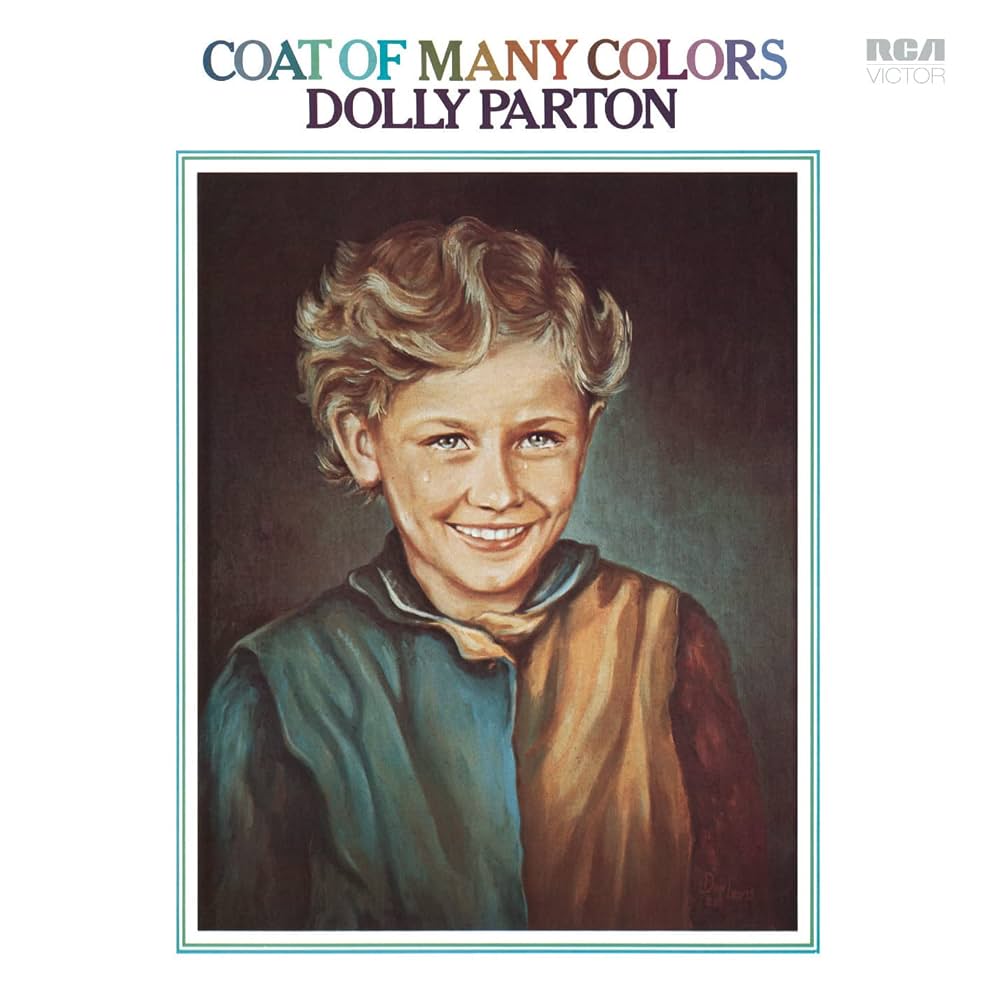
There are albums that make artists famous, and there are albums that reveal exactly who they are. Coat of Many Colors, released in 1971, belongs firmly in the second category. While Dolly Parton had already enjoyed considerable success as both a songwriter and performer, this album established her as one of country music’s greatest storytellers, capable of transforming deeply personal experiences into songs that resonate across generations.
The title track, inspired by Parton’s childhood growing up in rural Tennessee, would become one of the most beloved songs in country music history. Yet focusing solely on that masterpiece overlooks an album filled with exceptional songwriting, remarkable vocal performances, and emotional honesty. Throughout the record, Parton draws from family memories, faith, romance, heartbreak, humor, and perseverance, creating a portrait of Appalachian life that feels intensely personal while remaining universally relatable.
Unlike many country albums of the era that relied heavily on outside songwriters, Coat of Many Colors showcases Parton’s extraordinary gifts as a composer. Nearly every song bears her unmistakable voice, balancing vivid storytelling with melodies that linger long after the music ends.
More than fifty years later, it remains not only Dolly Parton’s finest album but one of the greatest achievements in country music history.
Album Overview
What immediately sets Coat of Many Colors apart is its sincerity.
Nothing feels calculated.
Nothing feels exaggerated.
Parton never romanticizes hardship, nor does she exploit it for sentimentality.
Instead, she writes with remarkable compassion and honesty.
The album moves effortlessly between emotional ballads, uplifting country songs, Appalachian folk influences, and moments of gentle humor.
Its pacing feels completely natural.
Heartbreak gives way to optimism.
Childhood memories lead into reflections on adulthood.
Faith coexists comfortably alongside romance and resilience.
Musically, the arrangements remain beautifully restrained.
Acoustic guitars.
Fiddle.
Steel guitar.
Piano.
Subtle string arrangements.
Everything supports Parton’s voice rather than competing with it.
The result is an album that sounds timeless precisely because it never chases contemporary trends.
Its focus remains firmly on songs and storytelling.
Songwriting
This is one of the finest collections of songwriting ever assembled on a country album.
The title track deserves every bit of its legendary reputation.
“Coat of Many Colors” transforms a simple childhood memory into a profound meditation on poverty, love, dignity, and family. Its emotional power comes not from tragedy but from gratitude.
“The Mystery of the Mystery” explores faith with uncommon humility, avoiding preachiness in favor of thoughtful reflection.
“My Blue Tears” delivers heartbreaking vulnerability through elegant simplicity.
“If I Lose My Mind” combines clever lyrical turns with irresistible melodies.
“Traveling Man” showcases Parton’s gift for creating memorable characters through concise storytelling.
“Early Morning Breeze” captures the beauty of rural life with vivid imagery and graceful melodic writing.
Throughout the album, Parton demonstrates remarkable economy.
Every line matters.
Every verse advances the story.
There are no wasted words.
Few songwriters have ever communicated so much with such apparent ease.
Performance
Dolly Parton delivers one of the defining vocal performances of her extraordinary career.
Her voice possesses a remarkable combination of technical precision and emotional warmth.
She can soar effortlessly into crystalline high notes.
Moments later, she softens into intimate whispers that feel almost conversational.
Most importantly, she understands every lyric she sings.
On “Coat of Many Colors,” she sounds less like a performer than someone sharing a treasured memory.
“My Blue Tears” reveals heartbreaking vulnerability without becoming melodramatic.
The lighter songs sparkle with charm and playful confidence.
Throughout the album, Parton’s Appalachian roots remain central to her vocal style.
Every phrase feels authentic.
Nothing sounds manufactured.
The supporting musicians deserve praise as well.
Their tasteful performances provide rich accompaniment while wisely leaving the spotlight where it belongs.
On Dolly’s voice.
Production
Produced by Bob Ferguson, Coat of Many Colors embraces simplicity without sacrificing richness.
The arrangements remain elegant and uncluttered.
Traditional country instrumentation receives ample room to breathe.
Steel guitar adds emotional shading.
Fiddle contributes warmth.
Acoustic guitars anchor nearly every song.
The production consistently prioritizes clarity.
Parton’s vocals remain front and center.
Every lyric is easily understood.
Every instrument occupies its own natural place within the mix.
Unlike many country productions from the early 1970s, the album avoids excessive orchestration.
That restraint has allowed the recording to age beautifully.
More than five decades later, it still sounds remarkably fresh.
Standout Tracks
Although the album contains no weak songs, several performances stand among the greatest recordings of Dolly Parton’s career.
“Coat of Many Colors” is one of country music’s greatest songs. Its unforgettable story, beautiful melody, and extraordinary emotional honesty continue touching listeners across generations.
“Traveling Man” showcases Parton’s remarkable storytelling abilities through memorable characters and infectious country melodies.
“My Blue Tears” stands among her finest ballads, balancing vulnerability with extraordinary vocal control.
“Early Morning Breeze” beautifully captures Appalachian life through vivid imagery and graceful musical arrangements.
“The Mystery of the Mystery” explores spirituality with intelligence, warmth, and genuine humility, demonstrating the remarkable breadth of Parton’s songwriting.
Weak Points
Finding meaningful weaknesses proves challenging.
Listeners seeking the polished country-pop crossover sound that Parton would embrace later in her career may find the album’s traditional arrangements somewhat understated.
Several excellent songs also live in the shadow of the monumental title track, making them easier to overlook despite their considerable quality.
Additionally, the album rarely ventures beyond its established country and folk foundations, favoring refinement over experimentation.
These observations do little to diminish its extraordinary accomplishments.
Its consistency remains one of its greatest virtues.
Legacy
Coat of Many Colors has grown steadily in reputation over the decades and is now widely regarded as one of the greatest country albums ever recorded.
The title song has become a cultural touchstone, symbolizing resilience, family, compassion, and the idea that love holds greater value than material wealth.
More broadly, the album established Dolly Parton as one of America’s greatest songwriters.
Its influence extends far beyond country music.
Singer-songwriters across folk, Americana, bluegrass, and pop continue to cite Parton’s storytelling, melodic gifts, and emotional honesty as lasting inspirations.
The record also helped redefine what country music could accomplish artistically.
It proved that deeply personal stories rooted in specific places and experiences could achieve universal emotional power.
That achievement remains every bit as remarkable today.
Final Score: 10/10
Coat of Many Colors is one of the greatest country albums ever recorded and the definitive statement of Dolly Parton’s extraordinary gifts as both a songwriter and performer. Every song reflects remarkable craftsmanship, emotional intelligence, and genuine compassion, while the understated production allows the timeless quality of the material to shine.
From the unforgettable title track to the album’s quieter hidden gems, Parton creates a collection of songs that continues to inspire, comfort, and move listeners more than fifty years after its release. Few artists have ever written with such honesty or sung with such warmth.
Only a handful of albums transcend their genre to become enduring works of American art. Coat of Many Colors is unquestionably one of them—a timeless masterpiece whose beauty grows richer with every passing year.
This post has already been read 75 times!