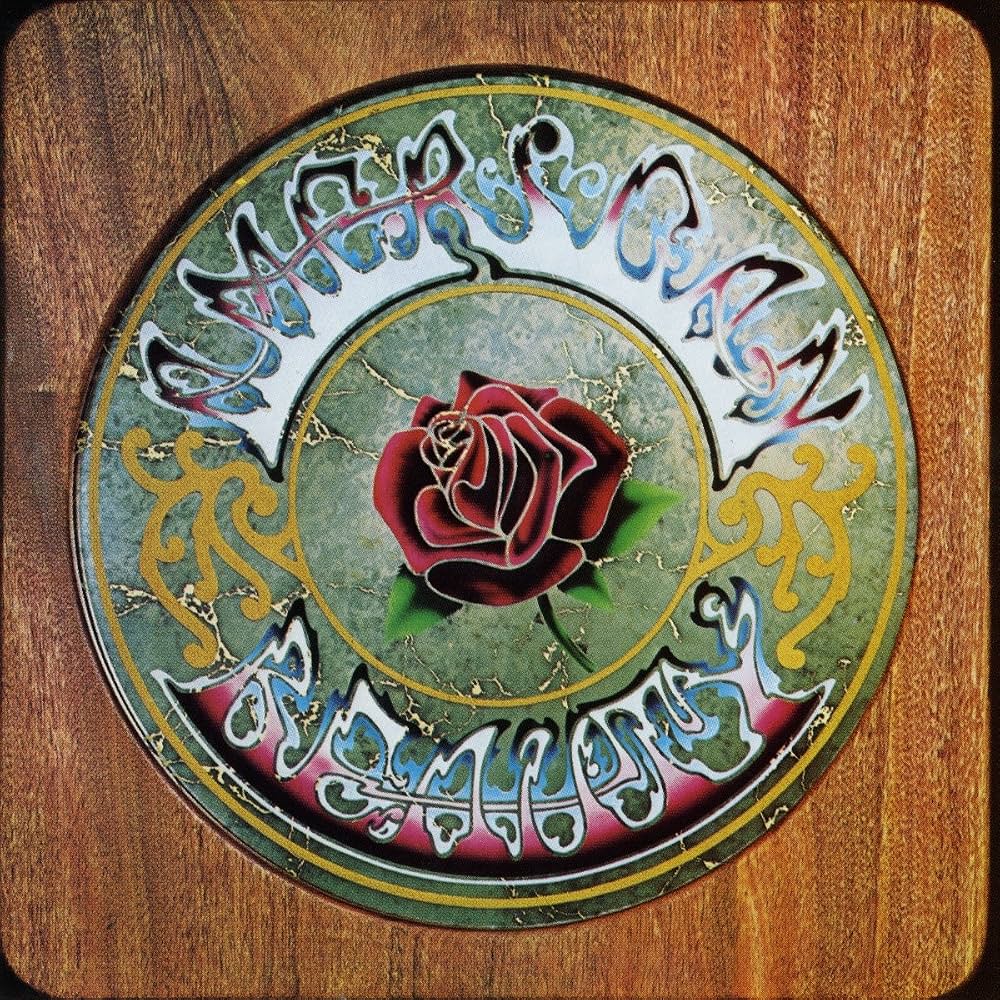
Few bands have undergone as dramatic an evolution as the Grateful Dead during their first five years. Emerging from San Francisco’s psychedelic underground as pioneers of sprawling improvisational rock, the Dead built their reputation on marathon live performances that often stretched songs into half-hour explorations. Studio albums, while occasionally brilliant, struggled to capture the magic that made them one of America’s most celebrated live acts.
Then came 1970.
Within a span of just a few months, the Grateful Dead released Workingman’s Dead and American Beauty, two albums that completely redefined both the band’s sound and its place in American music. Rather than relying on psychedelic experimentation and extended jams, they embraced folk, bluegrass, country, blues, gospel, and traditional American songwriting. The result wasn’t a retreat from creativity—it was a refinement of it.
Released in November 1970, American Beauty remains the Grateful Dead’s finest studio achievement. Rich vocal harmonies, timeless songwriting, understated performances, and an almost effortless sense of warmth combine to create an album that feels less like a product of the counterculture and more like a collection of American folk songs that had somehow always existed.
More than fifty years later, it continues to stand as one of the greatest roots rock albums ever recorded.
Album Overview
One of the most remarkable qualities of American Beauty is its simplicity.
Nothing feels forced.
Nothing tries to impress through technical excess.
Instead, the album succeeds through craftsmanship.
Beautiful melodies.
Exceptional lyrics.
Tasteful arrangements.
Outstanding musicianship.
The psychedelic influences that once defined the Grateful Dead remain present in subtle ways, but they no longer dominate the music.
Acoustic guitars take center stage.
Mandolins.
Pedal steel.
Pianos.
Gentle electric guitar.
Everything serves the songs rather than individual performances.
The pacing is nearly flawless.
Reflective ballads naturally give way to upbeat country numbers.
Philosophical meditations sit comfortably beside joyful singalongs.
The album flows with the ease of an old front-porch jam session among lifelong friends.
It never feels rushed.
It never feels overproduced.
Instead, American Beauty captures a band completely comfortable with its identity.
Songwriting
The songwriting partnership of Jerry Garcia and lyricist Robert Hunter reaches one of its highest peaks here.
Hunter’s lyrics remain among the most poetic in popular music.
Rather than telling straightforward stories, he creates vivid images filled with mystery, wisdom, humor, mortality, friendship, and hope.
His words often resemble traditional folk songs while remaining unmistakably original.
“Box of Rain” opens the album with extraordinary emotional warmth, written by bassist Phil Lesh for his dying father. Its themes of love, memory, and acceptance immediately establish the album’s reflective tone.
“Friend of the Devil” has become one of the Dead’s signature songs. Combining bluegrass influences with unforgettable storytelling, it remains one of the finest songs ever written by the band.
“Sugar Magnolia” balances infectious optimism with irresistible country-rock energy.
“Ripple” stands among the greatest songs of the twentieth century.
Built around little more than acoustic guitar and mandolin, its lyrics explore life’s mysteries without offering easy answers.
Every verse feels timeless.
“Brokedown Palace” closes the album with breathtaking grace, serving as both farewell and celebration.
Its emotional impact only deepens with age.
Even lesser-known songs like “Operator,” “Till the Morning Comes,” and “Candyman” contribute meaningfully to the album’s remarkable consistency.
There isn’t a weak composition anywhere.
Performance
The Grateful Dead had rarely sounded this focused in the studio.
Jerry Garcia delivers some of the finest vocal performances of his career.
His voice lacks technical perfection but overflows with sincerity.
Every lyric sounds lived-in.
His guitar work remains tasteful throughout, favoring melodic support over lengthy solos.
Bob Weir contributes outstanding rhythm guitar while bringing infectious energy to songs like “Sugar Magnolia.”
Phil Lesh’s bass playing deserves particular praise.
Always one of rock’s most unconventional bassists, he approaches the instrument melodically rather than rhythmically, constantly weaving counter-melodies beneath the songs.
His lead vocal on “Box of Rain” remains one of the album’s emotional highlights.
The vocal harmonies represent perhaps the greatest surprise.
Garcia.
Weir.
Lesh.
Together they create warm, natural harmonies deeply rooted in bluegrass and traditional American folk music.
The ensemble playing throughout remains impeccable.
Nobody competes for attention.
Every musician serves the songs.
That humility becomes one of the album’s defining strengths.
Production
Produced by Steve Barncard, the Grateful Dead, and Stephen Barncard, American Beauty possesses an intimacy that perfectly complements its material.
The production avoids unnecessary studio effects.
Acoustic instruments sound wonderfully natural.
Vocals remain warm and present.
Every instrument occupies its own space without cluttering the mix.
The recording captures extraordinary detail.
Mandolins shimmer.
Acoustic guitars resonate beautifully.
The bass remains rich and melodic.
The harmonies blend effortlessly.
Unlike many albums from the early 1970s, American Beauty has aged exceptionally well.
Its understated production avoids the excesses that date many recordings from the era.
Everything still sounds remarkably fresh.
Standout Tracks
Although every song contributes to the album’s greatness, several performances stand among the defining moments of American popular music.
“Box of Rain” opens the album with extraordinary beauty, combining Phil Lesh’s heartfelt vocal with Robert Hunter’s deeply moving lyrics into one of the Grateful Dead’s greatest songs.
“Friend of the Devil” remains a masterclass in storytelling, pairing bluegrass influences with one of Jerry Garcia’s most memorable melodies.
“Ripple” is one of the finest songs ever written. Its poetic lyrics, elegant simplicity, and timeless message make it not only a Grateful Dead masterpiece but one of the greatest folk songs of the rock era.
“Sugar Magnolia” provides joyful energy and unforgettable hooks, balancing the album’s more reflective moments perfectly.
“Brokedown Palace” closes the record with heartbreaking beauty, offering one of the most emotionally satisfying finales in rock history.
Weak Points
Finding meaningful weaknesses is remarkably difficult.
Listeners expecting the extended psychedelic improvisations that defined the Grateful Dead’s live reputation may initially find the concise studio arrangements surprisingly restrained.
A handful of shorter tracks, such as “Till the Morning Comes,” receive less attention than the album’s towering classics despite their considerable charm.
Additionally, the album’s gentle atmosphere rarely seeks dramatic confrontation, favoring reflection over intensity.
These are hardly criticisms.
They simply reflect the artistic goals of the record.
American Beauty succeeds precisely because it embraces subtlety.
Legacy
Few albums have become as deeply woven into the fabric of American music.
American Beauty transcends the Grateful Dead’s own mythology.
It is admired equally by folk musicians, country artists, bluegrass performers, rock bands, singer-songwriters, and countless listeners who may never have attended a Grateful Dead concert.
Its influence extends far beyond jam bands.
Artists ranging from Wilco and Gillian Welch to Jason Isbell and Billy Strings have drawn inspiration from its seamless blending of traditional American music with contemporary songwriting.
The album also demonstrated that the Grateful Dead were far more than an improvisational live act.
They were exceptional songwriters capable of creating timeless studio recordings that stood comfortably alongside the greatest albums of their era.
More than five decades later, American Beauty continues welcoming new listeners with remarkable ease.
Its humanity never fades.
Its wisdom only grows.
Final Score: 10/10
American Beauty is not only the Grateful Dead’s greatest studio album but one of the crowning achievements of American popular music. Every element works in perfect harmony: Robert Hunter’s extraordinary lyrics, Jerry Garcia’s heartfelt melodies, exceptional ensemble playing, beautiful vocal harmonies, and warm, timeless production.
The album abandons excess in favor of craftsmanship, proving that profound emotional impact often comes through simplicity rather than spectacle. Its songs have become modern folk standards, continuing to resonate across generations with remarkable grace.
Very few albums feel both deeply personal and universally timeless. American Beauty accomplishes exactly that. It remains one of the greatest folk-rock records ever made, one of the defining albums of the 1970s, and an enduring masterpiece of American songwriting.
This post has already been read 69 times!