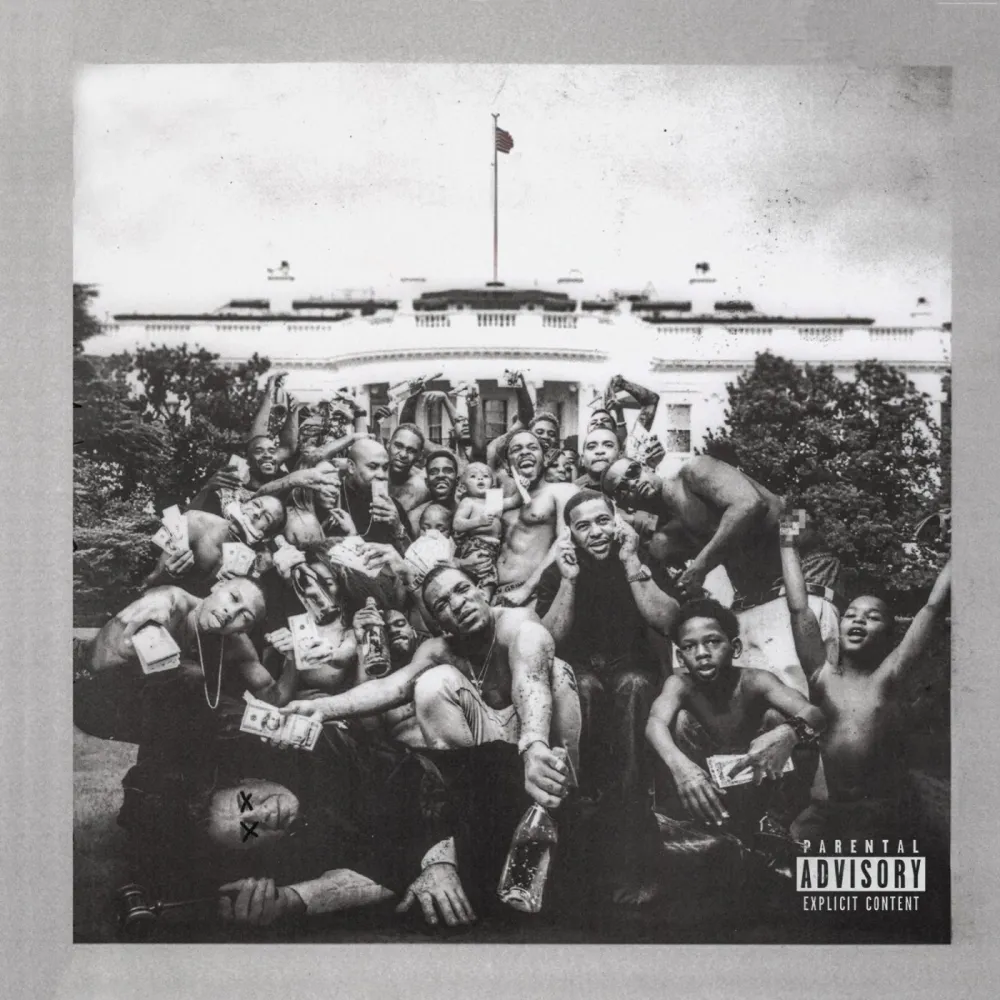
Released on March 15, 2015, To Pimp a Butterfly arrived with enormous expectations. Kendrick Lamar had already established himself as one of hip-hop’s brightest stars after the commercial and critical success of good kid, m.A.A.d city, an album that blended cinematic storytelling with radio-ready production. Rather than chase bigger hits or a safer formula, Kendrick delivered something far more ambitious: a sprawling, politically charged, musically adventurous work that challenged nearly every expectation of what a mainstream rap album could be.
Drawing from jazz, funk, soul, spoken word, G-funk, free jazz, and classic hip-hop, To Pimp a Butterfly feels less like a collection of songs and more like an evolving conversation. Every track feeds into a larger narrative about fame, race, survivor’s guilt, depression, temptation, self-worth, and the complicated experience of being a successful Black artist in America.
Its influence has only grown over time. While many albums become products of their era, To Pimp a Butterfly has become one of those rare records that seems to define an era instead. It remains one of the boldest artistic statements of the 21st century.
Album Overview
One of the album’s greatest strengths is how completely committed it is to its vision. There are no obvious commercial concessions. The record asks listeners to pay attention, revisit songs, and engage with complicated ideas.
Throughout the album, Kendrick slowly reveals a poem, reading additional lines between tracks until its complete meaning is finally revealed during the closing moments. It’s an unusual storytelling device that ties together the emotional journey of the record while building toward one of modern music’s most unforgettable endings.
Musically, the album is astonishingly rich. Producers including Flying Lotus, Thundercat, Terrace Martin, Sounwave, Pharrell Williams, Knxwledge, and others construct an organic sound built around live instrumentation rather than programmed beats alone.
Bass lines wander like classic Parliament-Funkadelic records.
Saxophones explode into improvisation.
Drums shift between loose jazz grooves and crushing hip-hop rhythms.
Instead of feeling nostalgic, the album modernizes decades of Black musical traditions into something entirely new.
The result is a record that sounds unlike virtually anything else released by a major artist.
Songwriting
Kendrick Lamar has always been an exceptional lyricist, but To Pimp a Butterfly represents perhaps his most complete writing achievement.
Rather than presenting himself as an untouchable hero, Kendrick constantly exposes his own flaws.
He wrestles with greed.
Depression.
Self-hatred.
Fame.
Addiction.
Responsibility.
The burden of representing an entire community.
This vulnerability gives the album tremendous emotional power.
“Wesley’s Theory” opens the record by examining how sudden wealth often destroys Black entertainers through exploitation and excess.
“For Free?” delivers an explosive jazz performance while attacking consumerism and distorted ideas of masculinity.
“King Kunta” transforms into a triumphant celebration of resilience while acknowledging America’s long history of racial oppression.
“u” remains one of the most devastating performances Kendrick has ever recorded. His voice cracks, slurs, screams, and falls apart as he delivers an internal monologue filled with guilt and self-loathing. It’s uncomfortable because it’s meant to be.
Moments later, “Alright” provides hope without pretending life’s struggles simply disappear. The song became far bigger than anyone anticipated, eventually becoming an anthem during nationwide protests because of its repeated affirmation that better days remain possible despite overwhelming hardship.
“The Blacker the Berry” presents one of the album’s most complex and controversial examinations of racial identity, systemic violence, and personal accountability. Rather than offering easy answers, Kendrick deliberately challenges listeners’ assumptions before delivering one of the most shocking closing verses of his career.
Then comes “Mortal Man,” a twelve-minute finale questioning celebrity worship, loyalty, leadership, and public expectations before concluding with the remarkable imagined interview built around archival recordings of Tupac Shakur.
Few albums ask this many difficult questions while refusing to provide comfortable solutions.
Performance
Kendrick delivers one of the greatest vocal performances ever captured on a rap album.
His technical rapping is extraordinary.
His emotional range is even more impressive.
Throughout the record he constantly changes voices, accents, rhythms, and delivery styles depending on the emotional needs of each song.
Sometimes he’s calm and reflective.
Sometimes he’s furious.
Sometimes playful.
Sometimes exhausted.
Sometimes paranoid.
Sometimes nearly broken.
These shifts never feel theatrical. They serve the larger narrative.
“u” stands as perhaps the finest example. Kendrick intentionally sounds intoxicated and emotionally shattered, making the listener feel trapped inside his collapsing mental state.
On “Institutionalized,” he effortlessly moves between conversational storytelling and rapid-fire technical verses.
“I” presents another remarkable performance. Originally released as a polished single, the album version transforms into a live performance interrupted by a fight in the audience before evolving into an impassioned speech about self-love and cultural identity.
Guest appearances are equally strong while never overshadowing Kendrick.
George Clinton brings authentic funk history to “Wesley’s Theory.”
Thundercat’s vocals and bass work become essential throughout the record.
Anna Wise provides emotional balance on multiple tracks.
Bilal, Snoop Dogg, Ronald Isley, Rapsody, James Fauntleroy, and numerous jazz musicians all contribute meaningful performances that strengthen the album’s world.
Rather than sounding like celebrity features, every appearance feels necessary.
Production
The production deserves recognition as one of hip-hop’s greatest achievements.
Instead of relying on fashionable sounds of 2015, the album embraces timeless musical traditions.
Jazz.
Funk.
Soul.
Psychedelia.
West Coast rap.
Progressive arrangements.
Live musicians perform alongside programmed drums without either element dominating the other.
Terrace Martin’s saxophone work provides warmth throughout the record.
Thundercat’s extraordinary bass playing anchors much of the album.
Flying Lotus contributes experimental textures.
Pharrell supplies infectious grooves without sacrificing complexity.
The production constantly evolves within individual songs.
Tracks expand.
Collapse.
Change tempo.
Introduce new instruments.
Disappear into spoken-word passages.
Then rebuild themselves.
Despite its complexity, the album never sounds cluttered.
Every instrumental decision supports the storytelling.
Even quieter moments possess tremendous detail. Background harmonies, subtle percussion, jazz improvisations, and layered instrumentation reveal new discoveries after repeated listens.
This is one of those albums that rewards high-quality headphones.
Standout Tracks
Choosing highlights from To Pimp a Butterfly is difficult because nearly every song contributes something essential, but several stand above even this remarkable standard.
“Wesley’s Theory” immediately announces that this won’t resemble a conventional rap album. The infectious Parliament-inspired groove masks a cautionary tale about wealth, exploitation, and temptation, setting the stage for everything that follows.
“King Kunta” is arguably the album’s most instantly memorable track. Built around a funky bass line and swaggering performance, it’s both celebratory and deeply political, proving Kendrick could still craft an undeniable anthem without compromising his message.
“Alright” became far bigger than a hit single. Its uplifting chorus and hopeful spirit transformed it into one of the defining protest songs of the decade while remaining a fantastic piece of music on its own.
“These Walls” showcases the album’s musical sophistication, blending sensual melodies with an intricate narrative about guilt, revenge, incarceration, and emotional imprisonment.
“u” is perhaps Kendrick’s greatest artistic achievement. Few rappers have ever allowed themselves to sound this vulnerable, ugly, and emotionally exposed.
“The Blacker the Berry” delivers relentless intensity from beginning to end, pairing explosive production with some of Kendrick’s sharpest and most controversial writing.
“How Much a Dollar Cost” quietly becomes one of the album’s emotional centers, transforming what appears to be an ordinary encounter into a profound meditation on pride, compassion, and spirituality.
“Mortal Man” closes everything perfectly, wrapping together the album’s central themes before ending with the unforgettable conversation with Tupac.
Weak Points
Finding genuine weaknesses is surprisingly difficult.
The biggest criticism isn’t necessarily a flaw but rather a reflection of the album’s ambitions.
This is not casual listening.
Its dense lyricism, lengthy runtime, unconventional structures, and demanding themes require attention and patience. Listeners searching for immediate hooks or straightforward entertainment may initially find it overwhelming.
A handful of interludes and spoken-word sections can slightly interrupt the musical flow on repeat listens, particularly if someone isn’t engaging with the full narrative. However, removing them would weaken the album’s conceptual impact.
Some listeners also prefer the tighter storytelling of good kid, m.A.A.d city, arguing that To Pimp a Butterfly occasionally prioritizes ideas over momentum. While understandable, this criticism largely depends on personal preference rather than a failure of execution.
Ultimately, these are minor observations about accessibility rather than meaningful artistic shortcomings.
Legacy
Few albums reshape an entire genre.
To Pimp a Butterfly did exactly that.
It expanded expectations of what mainstream rap could accomplish both musically and intellectually.
Its embrace of live jazz inspired numerous artists to explore richer instrumentation.
Its fearless political commentary proved that commercially successful albums could still challenge audiences rather than simply entertain them.
The album arrived during an especially turbulent period in American history, and many of its themes surrounding race, identity, police violence, inequality, and community became central to cultural conversations throughout the remainder of the decade.
Its influence extends far beyond hip-hop.
Jazz musicians embraced it.
Universities began teaching it.
Writers analyzed it.
Political commentators referenced it.
Musicians across genres cited it as inspiration.
Years after its release, the album continues appearing near the top of lists ranking the greatest albums ever made. More importantly, it continues finding new audiences who discover fresh meaning in its lyrics and musical complexity.
Very few records become cultural landmarks.
This one unquestionably did.
Final Score: 10/10
To Pimp a Butterfly is one of those extraordinarily rare albums where artistic ambition and execution meet almost perfectly. Kendrick Lamar created something intellectually challenging, emotionally devastating, musically groundbreaking, and culturally significant without sacrificing replay value.
It is an album that rewards patience, repeated listening, and careful attention, revealing new layers long after the first playthrough. Every major creative decision—from the jazz-infused production to the evolving spoken-word poem to Kendrick’s fearless self-examination—serves a unified artistic vision.
Many albums define a year. Some define a decade. To Pimp a Butterfly belongs in the much smaller category of albums that redefine the possibilities of an entire genre. It is not simply one of the greatest hip-hop albums ever made—it is one of the greatest albums in modern music history.
This post has already been read 115 times!