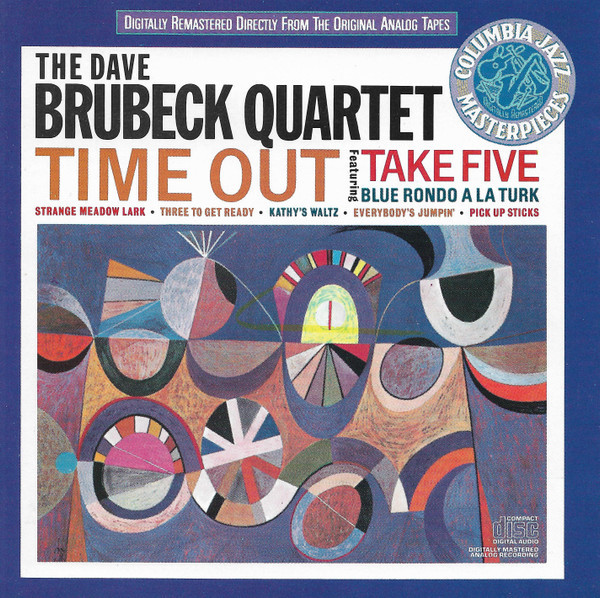
Jazz was evolving rapidly during the late 1950s. Bebop had already rewritten the rules of improvisation, hard bop was flourishing, and artists like Miles Davis and Charles Mingus were pushing the music in bold new directions. Against that backdrop, the Dave Brubeck Quartet released an album that seemed almost academic on paper. Built around unusual time signatures rarely heard in popular music, Time Out could easily have become an interesting experiment admired only by musicians. Instead, it became one of the best-selling and most beloved jazz albums ever recorded.
Released in 1959, Time Out challenged listeners without alienating them. Brubeck’s piano, Paul Desmond’s lyrical alto saxophone, Eugene Wright’s steady bass, and Joe Morello’s astonishing drumming combined technical sophistication with melodic accessibility. The quartet proved that complex rhythmic ideas could remain inviting, memorable, and even catchy.
Much of the album’s lasting appeal comes from its effortless confidence. Nothing sounds forced or overly intellectual. The music flows naturally despite constantly shifting rhythmic foundations, making listeners forget they are hearing anything unusual at all.
More than sixty years after its release, Time Out remains one of jazz’s most recognizable albums and one of the finest examples of innovation serving musicality rather than overshadowing it.
Album Overview
The central idea behind Time Out is deceptively simple: explore unconventional time signatures while maintaining the relaxed swing that defined the Dave Brubeck Quartet.
That concept could have resulted in an album more admired than enjoyed, but Brubeck and his quartet avoid that trap completely. Every piece feels like a fully realized composition rather than a technical exercise.
Paul Desmond’s elegant alto saxophone becomes the album’s emotional center. His melodic lines float effortlessly above Brubeck’s rhythmic experimentation, giving even the most unusual pieces a graceful sense of familiarity.
Joe Morello deserves enormous praise as well. His drumming provides the foundation that makes these unusual meters feel completely natural. Rather than emphasizing complexity, he creates grooves that listeners instinctively understand.
The album moves seamlessly between energetic performances and reflective ballads, creating enough contrast to sustain interest from beginning to end.
Even listeners with little knowledge of jazz theory can appreciate the album because its melodies remain every bit as memorable as its rhythmic innovations.
Songwriting
Much of Time Out was written by Dave Brubeck, with Paul Desmond contributing the album’s signature composition.
“Take Five” has become one of the most recognizable jazz recordings ever made. Written by Desmond and built around an unforgettable 5/4 rhythm, the piece balances simplicity with sophistication in a way few jazz compositions have ever matched.
“Blue Rondo à la Turk” opens the album brilliantly, inspired by Turkish street musicians and structured around a fascinating 9/8 rhythm that alternates between playful energy and swinging improvisation.
“Three to Get Ready” cleverly shifts between 3/4 and 4/4 time, demonstrating Brubeck’s ability to make rhythmic complexity feel completely effortless.
“Kathy’s Waltz” combines lyrical beauty with subtle rhythmic surprises, while “Everybody’s Jumpin'” injects lively momentum without sacrificing the album’s sophisticated character.
The compositions consistently reward repeated listening. Beneath their memorable melodies lie intricate rhythmic ideas that continue revealing new details over time.
Performance
The Dave Brubeck Quartet performs with extraordinary cohesion throughout the album.
Brubeck’s piano playing is instantly recognizable. His block chords, strong rhythmic sense, and willingness to embrace unexpected harmonies give the album its distinctive personality. Although his style occasionally divides critics, it perfectly suits the material.
Paul Desmond delivers one of the finest performances of his career. His warm, lyrical tone provides the perfect contrast to Brubeck’s more angular piano style. Every solo feels graceful, melodic, and completely unhurried.
Joe Morello is arguably the album’s secret weapon. His drumming on “Take Five” remains legendary, particularly during the extended solo that has become one of the defining drum performances in jazz history. Yet his greatest achievement may be making odd time signatures feel entirely natural.
Eugene Wright anchors the quartet with tasteful, understated bass playing that keeps every performance grounded.
The chemistry among the four musicians is exceptional. No individual dominates the album for long. Instead, each member contributes equally to a remarkably unified musical vision.
Production
Recorded by Columbia Records, Time Out remains one of the best-produced jazz albums of the era.
The recording captures the quartet with impressive clarity, allowing each instrument to occupy its own distinct space without sacrificing ensemble balance.
Brubeck’s piano sounds rich and resonant, Desmond’s saxophone possesses remarkable warmth, and Morello’s drums retain both punch and subtle detail.
Producer Teo Macero wisely avoided excessive studio manipulation, allowing the quartet’s natural interplay to remain the focus.
Modern remasters have enhanced the recording even further, revealing additional depth while preserving the warmth that made the original release so inviting.
For an album recorded in 1959, its sound quality continues to impress.
Standout Tracks
The album is remarkably consistent, but several pieces have become genuine jazz landmarks.
“Take Five” is the obvious highlight. Its unforgettable melody, hypnotic rhythm, and iconic drum solo have made it one of the most famous jazz recordings ever created.
“Blue Rondo à la Turk” remains one of Brubeck’s greatest compositions, combining rhythmic complexity with infectious energy.
“Three to Get Ready” showcases the quartet’s remarkable ability to move effortlessly between different rhythmic feels.
“Kathy’s Waltz” offers one of the album’s most beautiful melodies, highlighting Desmond’s lyrical brilliance.
Even lesser-known tracks like “Pick Up Sticks” maintain the album’s consistently high standard while further exploring unconventional rhythmic structures.
Weak Points
Although Time Out is deservedly regarded as a jazz classic, it is not entirely beyond criticism.
Some listeners find Brubeck’s piano style somewhat heavy-handed compared with the lighter touch of contemporaries like Bill Evans. His emphasis on block chords occasionally limits the harmonic fluidity of certain performances.
Additionally, because the album’s central concept revolves around unusual meters, a few compositions feel more intellectually interesting than emotionally profound.
Jazz listeners seeking the adventurous improvisation of John Coltrane or the emotional intensity of Charles Mingus may also find Time Out comparatively restrained.
These are relatively minor observations, however, and do little to diminish the album’s remarkable achievements.
Legacy
Time Out changed the way audiences thought about jazz.
It demonstrated that ambitious musical ideas could achieve mainstream popularity without compromise. “Take Five” became one of the first jazz singles to enjoy widespread commercial success, introducing countless listeners to modern jazz.
The album inspired generations of musicians to experiment with rhythm while remaining committed to melody and accessibility. Artists ranging from Chick Corea and Keith Jarrett to progressive rock groups such as Yes and Rush have drawn inspiration from its rhythmic innovations.
Perhaps more importantly, Time Out became a gateway album for countless new jazz fans. Its approachable melodies and elegant performances continue to introduce listeners to the genre decades after its release.
Very few jazz albums have managed to be simultaneously innovative, commercially successful, and artistically enduring. Time Out accomplished all three.
Final Score
9.5/10
Time Out is one of the defining jazz albums of the twentieth century and the Dave Brubeck Quartet’s crowning achievement. Its brilliant compositions, exceptional ensemble playing, and groundbreaking use of unconventional time signatures created a record that remains both intellectually stimulating and immensely enjoyable. While a handful of pieces lean more toward experimentation than emotional depth, the album’s consistency, influence, and timeless appeal firmly establish it as one of jazz’s greatest classics.
This post has already been read 102 times!