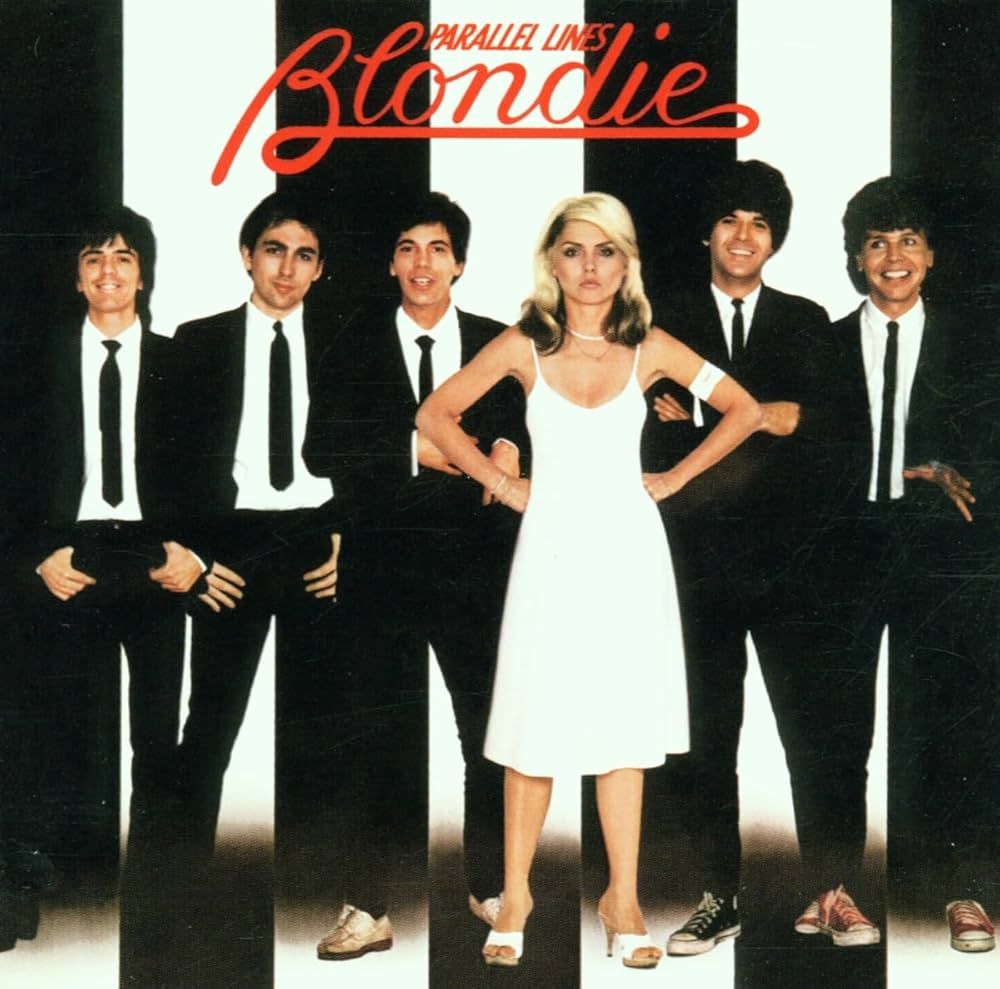
Punk rock was never meant to be polished, and disco certainly wasn’t supposed to coexist with it. Yet in 1978, Blondie managed to bridge seemingly incompatible musical worlds with Parallel Lines, an album that transformed a respected New York club band into one of the biggest acts on the planet.
Emerging from the legendary CBGB scene alongside bands like the Ramones and Talking Heads, Blondie always stood apart from their peers. Their music embraced punk’s energy but refused to be confined by it, drawing equally from 1960s pop, surf rock, girl groups, reggae, power pop, and dance music. That fearless willingness to experiment reached its peak on Parallel Lines.
Driven by Debbie Harry’s magnetic charisma, Chris Stein’s inventive guitar work, and producer Mike Chapman’s polished production, the album became a commercial breakthrough without sacrificing the band’s quirky personality. Nearly fifty years later, it remains one of the defining albums of the new wave era and one of the finest pop-rock records ever made.
Album Overview
Parallel Lines finds Blondie at exactly the right moment.
The band had spent years refining its sound before entering the studio, and every lesson learned on its first two albums pays off here. The songwriting is sharper, the arrangements are tighter, and the performances radiate confidence.
What makes the album remarkable is its stylistic range.
One song channels garage rock while the next dives into shimmering pop. Elsewhere, the band experiments with reggae rhythms, punk attitude, and danceable grooves without ever sounding disjointed. Rather than feeling like a collection of unrelated influences, everything is unified by Blondie’s unmistakable personality.
The album also benefits from excellent pacing. Fast, energetic tracks are balanced by thoughtful mid-tempo songs and memorable ballads, creating a listening experience that remains engaging from beginning to end.
Songwriting
One of Blondie’s greatest strengths was understanding that great pop music doesn’t have to be simplistic.
The songs on Parallel Lines are immediately memorable while revealing greater sophistication with repeated listening.
“Hanging on the Telephone” opens the album with relentless energy. Originally written by Jack Lee, Blondie’s version transforms the song into one of the greatest album openers of the decade through sheer urgency and infectious momentum.
“One Way or Another” remains one of the band’s signature songs. Built around a playful yet slightly unsettling lyric inspired by one of Debbie Harry’s real-life experiences with a stalker, the song balances humor, menace, and unforgettable hooks.
“Picture This” showcases Blondie’s gift for bright, melodic songwriting. Beneath its catchy exterior lies a bittersweet reflection on romance and longing.
Then comes “Heart of Glass.”
Initially controversial among punk fans for its disco influence, the song became one of the defining singles of the era. Its shimmering production, hypnotic rhythm, and unforgettable melody proved that artistic growth didn’t require abandoning authenticity.
Elsewhere, songs like “Sunday Girl,” “Fade Away and Radiate,” and “Will Anything Happen?” demonstrate the band’s remarkable consistency. Even the deeper cuts possess memorable choruses and inventive arrangements.
Performance
Debbie Harry delivers one of the defining vocal performances of the late 1970s.
She effortlessly shifts between punk attitude, playful flirtation, emotional vulnerability, and cool detachment, adapting her voice to each song without ever losing her distinctive identity.
Her charisma elevates every track.
Chris Stein’s guitar playing deserves equal recognition. Rather than overwhelming the songs with flashy solos, he crafts inventive riffs and textures that perfectly complement the band’s melodic instincts.
The rhythm section of Nigel Harrison on bass and Clem Burke on drums is exceptional.
Burke, in particular, delivers one of the great drumming performances of the new wave era. His energetic, precise playing injects constant momentum into the album while adapting seamlessly to its varied musical styles.
Jimmy Destri’s keyboards complete the sound, adding sparkle, atmosphere, and melodic flourishes that became an essential part of Blondie’s identity.
The chemistry between the five musicians is undeniable.
Production
Mike Chapman’s production is often credited as the final ingredient that elevated Blondie from cult favorites to international stars.
His polished approach gave the songs greater clarity and commercial appeal without sanding away the band’s edge.
Every instrument sits perfectly in the mix.
The guitars remain crisp, the bass grooves confidently, the drums sound powerful, and Harry’s vocals stay front and center without overpowering the arrangements.
The production of “Heart of Glass” deserves particular praise. Its seamless fusion of disco rhythms, electronic textures, and pop songwriting became enormously influential, helping pave the way for future artists who refused to recognize genre boundaries.
Despite its polished sound, the album has aged remarkably well.
Nothing feels overly slick or trapped in late-1970s production trends.
Standout Tracks
“Heart of Glass”
One of the defining singles of the decade. Combining disco rhythms with new wave attitude, it remains a masterclass in crossover pop without sacrificing artistic identity.
“One Way or Another”
Driven by one of rock’s most recognizable guitar riffs, this playful yet slightly unsettling anthem remains one of Blondie’s most enduring songs.
“Hanging on the Telephone”
A thrilling opener packed with urgency, energy, and irresistible hooks that immediately announces the album’s confidence.
“Picture This”
Bright, melodic, and emotionally nuanced, this pop gem highlights the band’s exceptional songwriting abilities.
“Fade Away and Radiate”
A dreamlike, atmospheric track featuring Robert Fripp’s distinctive guitar work, demonstrating Blondie’s willingness to push beyond straightforward pop structures.
“Sunday Girl”
Simple, elegant, and effortlessly catchy, it remains one of the album’s most charming moments.
Weak Points
Parallel Lines comes remarkably close to perfection, but it isn’t entirely flawless.
A couple of deeper cuts, while enjoyable, don’t quite reach the extraordinary standard set by the album’s biggest singles. Songs like “Pretty Baby” and “11:59” are solid additions but are naturally overshadowed by the record’s legendary hits.
Additionally, listeners expecting a pure punk album may be surprised by its polished production and pop sensibilities.
Of course, those very qualities are precisely what made Parallel Lines such a groundbreaking success.
Legacy
Few albums define the sound of late-1970s new wave as completely as Parallel Lines.
The record launched Blondie into international superstardom, producing multiple hit singles while proving that punk energy, pop songwriting, and dance rhythms could successfully coexist.
Its influence can be heard across decades of alternative rock, synth-pop, indie music, and modern pop. Artists ranging from No Doubt and Garbage to Paramore and countless others have drawn inspiration from Blondie’s fearless blending of styles.
Perhaps even more importantly, Debbie Harry became one of rock’s most influential frontwomen, helping redefine what a female artist could be in popular music. Confident, stylish, witty, and uncompromising, she inspired generations of musicians who followed.
Nearly fifty years after its release, Parallel Lines still sounds fresh because it never chased trends—it created them.
It remains one of the essential albums of the new wave movement and one of the greatest pop-rock records ever recorded.
Final Score
9.5/10
Parallel Lines is a near-perfect fusion of punk attitude, pop craftsmanship, and fearless experimentation. Blondie created an album filled with unforgettable singles while maintaining remarkable consistency across its entire running time. Debbie Harry’s iconic performance, outstanding musicianship, and Mike Chapman’s polished production combine to produce one of the defining albums of the late 1970s. It remains not only Blondie’s masterpiece but one of the greatest new wave albums ever made.
This post has already been read 75 times!