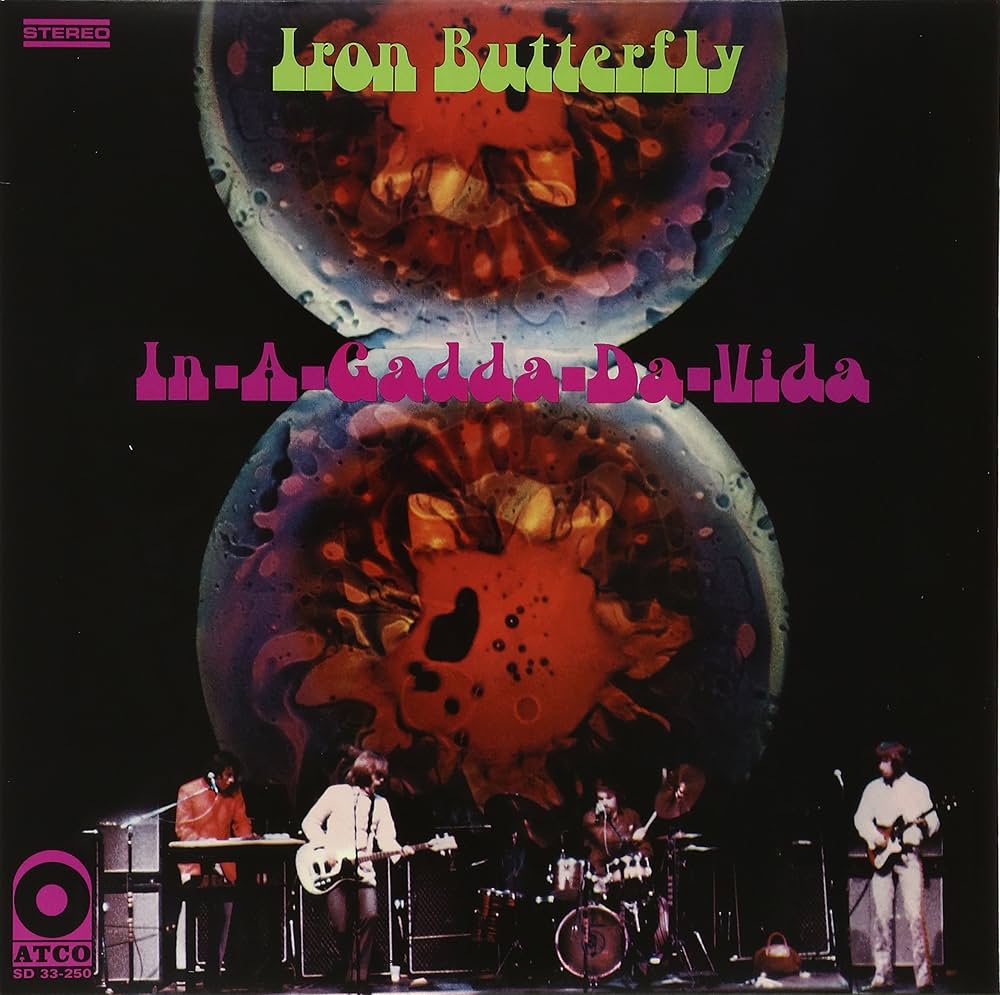
Psychedelic rock evolved at an astonishing pace during the late 1960s, with bands constantly searching for new ways to stretch the boundaries of popular music. While many groups experimented with exotic instrumentation, surreal lyrics, or elaborate studio production, Iron Butterfly chose a different path. They embraced volume, repetition, and hypnotic grooves, creating a sound that would help lay the foundation for hard rock and heavy metal. Their second album, In-A-Gadda-Da-Vida, became one of the defining records of that movement.
Released in 1968, the album was an unexpected commercial phenomenon. Powered by the now-legendary seventeen-minute title track, it became one of the best-selling albums of its era and proved that audiences were willing to embrace ambitious, album-oriented rock long before progressive rock reached its peak.
Although the record has occasionally been overshadowed by its famous centerpiece, In-A-Gadda-Da-Vida offers far more than one extended jam. It captures a band discovering its identity, blending psychedelic experimentation with crushing riffs, blues influences, and an almost hypnotic sense of atmosphere.
Its influence continues to echo through hard rock, heavy metal, stoner rock, and progressive music more than five decades after its release.
Album Overview
In-A-Gadda-Da-Vida balances concise psychedelic rock songs with one of the most ambitious recordings of the decade.
The first side presents relatively straightforward compositions built around memorable riffs, organ-driven melodies, and Doug Ingle’s unmistakable vocals. The songs maintain a dark, mysterious atmosphere while remaining surprisingly accessible.
Everything builds toward the album’s second side, occupied entirely by the title track. What could have easily become an exercise in self-indulgence instead unfolds as a carefully structured journey featuring extended instrumental passages, dynamic shifts, and impressive ensemble playing.
The album succeeds because the shorter songs prepare listeners for the larger statement that follows. Rather than feeling disconnected, the long composition serves as the natural climax of everything that precedes it.
While some psychedelic albums from the era now sound firmly rooted in the late 1960s, In-A-Gadda-Da-Vida retains an impressive sense of power that continues to resonate with modern audiences.
Songwriting
Iron Butterfly’s songwriting emphasizes atmosphere and repetition rather than lyrical complexity.
The title track remains the album’s defining achievement. Built around one of rock’s most recognizable organ riffs, “In-A-Gadda-Da-Vida” gradually evolves into an expansive instrumental showcase that never loses its momentum. The famous title—reportedly a slurred version of “In the Garden of Eden”—only adds to the song’s mystique.
Elsewhere, “Most Anything You Want” combines psychedelic textures with memorable melodies, while “Flowers and Beads” reveals a more melodic and restrained side of the band.
“Termination” explores darker lyrical territory through powerful blues-based riffs, and “My Mirage” demonstrates the group’s ability to balance melody with heaviness.
Although the songwriting occasionally favors mood over lyrical depth, the memorable riffs and distinctive arrangements give the album its lasting appeal.
Performance
Iron Butterfly performs with remarkable confidence throughout the album.
Doug Ingle’s organ work defines the band’s sound. His thick, church-like Hammond organ creates an atmosphere unlike almost anything else in rock music at the time, giving even the quieter moments tremendous weight.
His vocals may not possess the range or finesse of some contemporaries, but their gritty, commanding delivery perfectly suits the material.
Guitarist Erik Brann contributes expressive solos that complement rather than overpower the songs, while bassist Lee Dorman provides a steady, muscular foundation.
Drummer Ron Bushy’s performance on the title track deserves special recognition. His extended drum solo became one of the most famous in rock history and remains surprisingly musical, emphasizing groove and dynamics rather than sheer technical display.
The band’s chemistry is particularly evident during the extended improvisations, where every musician contributes meaningfully to the evolving structure.
Production
For a late-1960s psychedelic album, In-A-Gadda-Da-Vida boasts excellent production.
The recording captures the band’s massive sound without sacrificing clarity. Ingle’s organ dominates the mix as intended, while the guitars, bass, and drums remain well-balanced.
The production wisely avoids excessive studio effects, allowing the natural power of the performances to take center stage.
The extended title track benefits especially from the spacious recording, giving every instrumental section room to develop naturally.
Although modern recording technology offers greater precision, the warm analog sound contributes significantly to the album’s enduring character.
Standout Tracks
The obvious centerpiece is “In-A-Gadda-Da-Vida,” one of the most influential recordings in rock history. Its unforgettable riff, adventurous structure, and iconic drum solo helped redefine what could be accomplished within a single rock composition.
“Most Anything You Want” showcases the band’s melodic instincts while maintaining the album’s psychedelic atmosphere.
“Flowers and Beads” provides an effective contrast through its gentler approach, while “Termination” delivers some of the album’s heaviest moments.
Even the shorter tracks contribute to the album’s overall identity, reinforcing the hypnotic mood that defines the record.
Weak Points
Despite its legendary reputation, In-A-Gadda-Da-Vida is not without flaws.
The album’s shorter songs occasionally feel overshadowed by the monumental title track, making them less memorable than they deserve.
Doug Ingle’s vocals, while effective, lack the versatility of some of rock’s greatest frontmen.
Additionally, listeners who aren’t drawn to extended instrumental improvisation may find the seventeen-minute title track longer than necessary, particularly on repeated listens.
These criticisms are relatively minor, but they prevent the album from reaching the absolute highest tier of classic rock masterpieces.
Legacy
In-A-Gadda-Da-Vida became one of the first platinum-selling hard rock albums and helped establish the album as the primary artistic statement in rock music.
Its heavy riffs, extended instrumental passages, and dark atmosphere directly influenced artists including Deep Purple, Black Sabbath, Uriah Heep, Blue Öyster Cult, and countless later hard rock and metal acts.
The title track remains one of the defining recordings of psychedelic rock and continues to appear in films, television, and popular culture as a symbol of the era’s musical ambition.
Although Iron Butterfly never again matched the commercial success of this album, its influence has proven remarkably durable.
Final Score
9.0/10
In-A-Gadda-Da-Vida is far more than a famous seventeen-minute jam. It is a landmark recording that bridged psychedelic rock and the emerging world of hard rock, introducing heavier riffs, longer song structures, and a darker musical aesthetic that would shape the next generation of rock music. While the supporting material doesn’t quite equal the brilliance of the title track, the album’s historical importance, powerful performances, and enduring originality make it one of the essential rock records of the late 1960s.
This post has already been read 56 times!