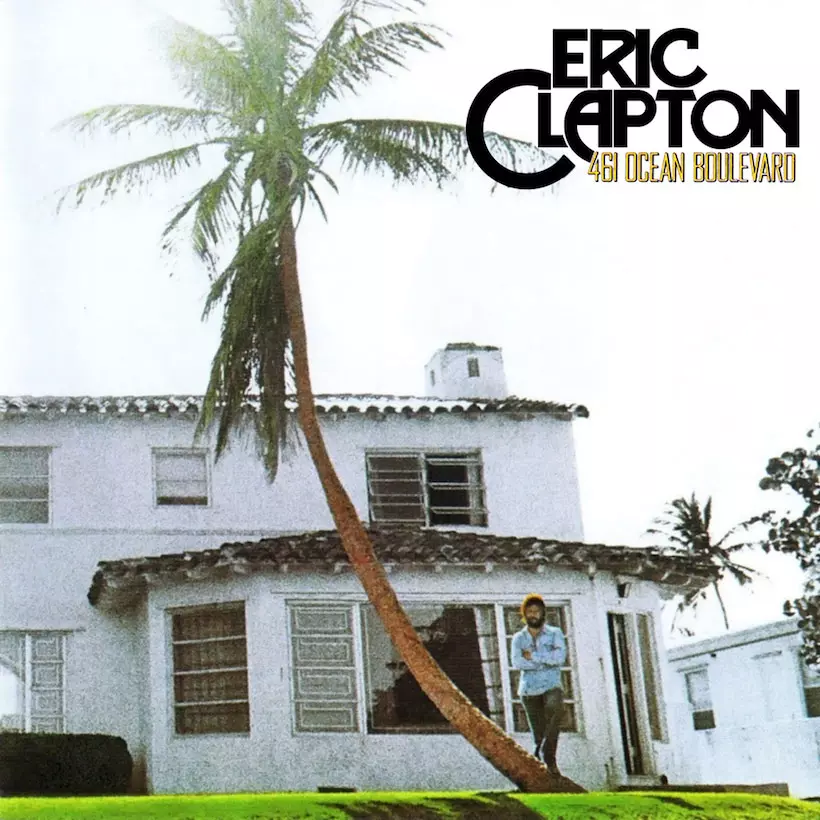
After years of personal turmoil, addiction, and a lengthy absence from the spotlight, Eric Clapton returned in 1974 with an album that surprised nearly everyone. Rather than delivering another blistering guitar showcase in the style of Cream or Derek and the Dominos, 461 Ocean Boulevard embraced subtlety, warmth, and restraint. It marked not only Clapton’s comeback but also a reinvention of his musical identity.
Named after the address of the Miami house where Clapton lived while recording the album, 461 Ocean Boulevard blends blues, reggae, country, gospel, and laid-back rock into one of the most relaxed records of the decade. It also introduced millions of listeners to Bob Marley’s “I Shot the Sheriff,” whose chart-topping cover helped launch reggae into mainstream American radio.
Instead of trying to prove he was still the world’s greatest guitarist, Clapton focused on serving the songs. That decision produced one of the strongest albums of his solo career.
Album Overview
Recorded at Criteria Studios in Miami, 461 Ocean Boulevard feels worlds apart from the intensity of Layla and Other Assorted Love Songs. The fiery solos and emotional anguish that defined Clapton’s earlier work are largely replaced by mellow grooves, tasteful arrangements, and understated performances.
The supporting musicians deserve enormous credit for shaping the album’s easygoing atmosphere. Carl Radle’s steady bass, Jamie Oldaker’s relaxed drumming, Dick Sims’ keyboards, George Terry’s guitar work, and Yvonne Elliman’s backing vocals all contribute to an ensemble performance that rarely feels like a vehicle for one star.
The album flows naturally from blues to reggae to country influences without sounding scattered. Everything is held together by Clapton’s relaxed vocal delivery and his increasingly mature approach to songwriting and arranging.
It’s the sound of an artist rediscovering the joy of simply making music.
Songwriting
Unlike some of Clapton’s earlier albums, 461 Ocean Boulevard relies heavily on outside material, but that’s hardly a weakness. Clapton has always excelled as an interpreter, and here he selects songs that fit both his voice and the album’s laid-back personality.
“I Shot the Sheriff” transforms Bob Marley’s reggae classic into a crossover hit without losing the tension or social commentary that made the original so compelling. While some reggae purists understandably prefer Marley’s version, Clapton’s interpretation introduced the song—and reggae itself—to a much broader audience.
“Motherless Children” turns a traditional spiritual into one of the album’s most energetic performances, driven by infectious slide guitar and an irresistible rhythm.
“Let It Grow,” one of Clapton’s original compositions, serves as the emotional centerpiece. Built around beautiful acoustic guitars and rich vocal harmonies, it reflects both his love of folk music and his growing confidence as a songwriter.
Songs like “Please Be with Me,” “Give Me Strength,” and “Mainline Florida” reinforce the album’s themes of healing, renewal, and emotional maturity.
Rather than chasing dramatic highs, the songwriting creates a remarkably consistent mood from beginning to end.
Performance
Eric Clapton’s guitar playing is noticeably more restrained than many fans expected.
That restraint proves to be one of the album’s greatest strengths.
Instead of filling every song with lengthy solos, Clapton focuses on tasteful fills, melodic phrasing, and subtle textures. His slide work on “Motherless Children” remains among the finest of his career, while his electric leads throughout the record demonstrate that technical brilliance doesn’t require constant speed or volume.
Vocally, Clapton sounds more comfortable than he had on previous releases. His singing isn’t flashy, but its relaxed sincerity perfectly complements the material.
The backing band is exceptional.
Carl Radle and Jamie Oldaker establish grooves that feel effortless, while Dick Sims’ keyboards provide warmth without becoming intrusive. George Terry’s rhythm guitar blends seamlessly with Clapton’s own playing, creating a rich but uncluttered sound.
Yvonne Elliman’s backing vocals deserve special praise for adding soul and depth throughout the album.
Production
Tom Dowd’s production is nearly flawless.
Rather than chasing the increasingly elaborate studio techniques of the mid-1970s, Dowd emphasizes clarity, warmth, and natural performances. Every instrument has room to breathe, allowing listeners to appreciate the subtle interactions between the musicians.
The album’s acoustic guitars sparkle without sounding overly bright. The rhythm section is deep and full, while the keyboards and backing vocals enrich the arrangements without overpowering them.
Perhaps most importantly, the production perfectly matches the album’s emotional tone.
Nothing feels forced.
The relaxed atmosphere sounds completely genuine, helping make the record one of the easiest listens in Clapton’s catalog.
Even decades later, it remains remarkably fresh.
Standout Tracks
“Motherless Children”
An electrifying reinterpretation of a traditional gospel song featuring some of Clapton’s finest slide guitar work. The infectious groove makes it one of the album’s undeniable highlights.
“I Shot the Sheriff”
The album’s biggest hit and one of the defining covers of the 1970s. Clapton respectfully adapts Bob Marley’s classic while making it accessible to rock audiences around the world.
“Let It Grow”
A beautiful original composition featuring rich harmonies, acoustic textures, and one of Clapton’s strongest vocal performances.
“Give Me Strength”
Quietly emotional and deeply personal, this underrated gem showcases Clapton’s understated songwriting at its best.
“Mainline Florida”
Closing the album with a darker, bluesier atmosphere, this track hints at the guitar hero Clapton still had within him while remaining consistent with the record’s overall mood.
Weak Points
The album’s greatest strength—its relaxed consistency—can occasionally work against it.
Listeners expecting dramatic shifts in tempo or explosive guitar workouts may find portions of the middle section a bit too mellow. Several songs prioritize atmosphere over memorable hooks, causing them to blend together during casual listening.
Additionally, because the record relies heavily on covers, it doesn’t always display Clapton’s own songwriting voice as prominently as some of his other albums.
These are relatively minor criticisms, especially considering how successfully the album achieves its artistic goals.
Legacy
461 Ocean Boulevard reintroduced Eric Clapton to the world at a critical moment in his career.
Commercially, it became one of his biggest successes, reaching No. 1 in the United States and producing the only U.S. No. 1 single of his career with “I Shot the Sheriff.”
Artistically, it proved that Clapton didn’t need to rely solely on dazzling guitar solos to make compelling music. The album established the more mature, song-oriented approach that would define much of his work throughout the remainder of the 1970s.
Its influence can also be seen in the growing acceptance of reggae within mainstream rock, as Clapton’s hit cover encouraged countless listeners to discover Bob Marley and Jamaican music more broadly.
More than fifty years later, 461 Ocean Boulevard remains one of Clapton’s most rewarding albums—quietly confident, beautifully crafted, and endlessly listenable.
Final Score
9.0/10
461 Ocean Boulevard is a beautifully understated comeback that finds Eric Clapton prioritizing songs, atmosphere, and emotional honesty over guitar heroics. Supported by exceptional musicianship and warm, timeless production, the album succeeds because of its restraint rather than its excess. While it doesn’t quite reach the transcendent heights of Clapton’s finest work with Derek and the Dominos or Cream, it remains one of the strongest and most consistently enjoyable releases of his solo career.
This post has already been read 58 times!