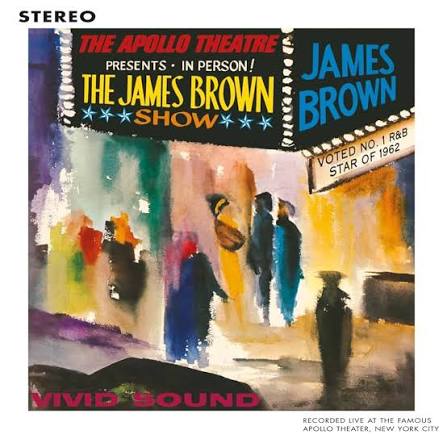
Some live albums capture a great performance. Others redefine what a live album can be. James Brown’s Live at the Apollo belongs firmly in the latter category. Released in 1963, it not only established Brown as one of the most electrifying performers in popular music but also proved that a live recording could become a major commercial success at a time when record labels viewed them as little more than contractual filler.
The album almost never happened. Brown’s label, King Records, had little faith in the project and refused to finance it, believing audiences wouldn’t buy an album made up primarily of songs they already knew. Convinced otherwise, Brown paid for the recording himself. It turned out to be one of the smartest decisions of his career. Live at the Apollo became a massive hit, spent more than a year on the Billboard album chart, and transformed Brown from a successful rhythm-and-blues singer into a national superstar.
Listening today, it’s easy to understand why.
This isn’t simply a document of a concert.
It’s an explosion of energy, precision, charisma, and showmanship unlike anything popular music had previously captured.
More than sixty years later, it remains one of the greatest live albums ever recorded.
Album Overview
From the moment the curtain rises, Live at the Apollo immerses listeners in an atmosphere unlike any studio recording.
The audience isn’t background noise.
They’re an essential part of the performance.
Their screams.
Their applause.
Their emotional reactions.
They become another instrument in James Brown’s musical arsenal.
Brown understood that live performance was theater.
Every pause.
Every scream.
Every dramatic buildup.
Every sudden stop.
Everything was carefully controlled while still feeling spontaneous.
The pacing of the concert is extraordinary.
Rather than racing from song to song, Brown constantly manipulates tension.
Slow ballads gradually build toward explosive dance numbers.
Tender vocal moments suddenly erupt into frenzied screams.
The audience follows every twist with absolute devotion.
Unlike many live albums that simply recreate studio recordings, Live at the Apollo transforms familiar material into something entirely new.
Every performance feels larger.
More urgent.
More emotionally charged.
This is entertainment elevated to an art form.
Songwriting
Although the album primarily draws from songs Brown had already released, the live arrangements completely reshape much of the material.
“Lost Someone” becomes the emotional centerpiece.
Expanded to more than ten minutes, the song evolves into a remarkable display of vocal improvisation, audience interaction, and dramatic pacing.
Brown transforms a relatively straightforward ballad into an unforgettable emotional experience.
“Night Train” closes the album with relentless energy, stretching into a joyous celebration that showcases the remarkable chemistry between Brown and his band.
“I’ll Go Crazy” gains new urgency through its explosive live performance.
“Think” becomes even more infectious thanks to the audience’s enthusiastic participation.
“I Don’t Mind” highlights Brown’s remarkable ability to balance raw emotional vulnerability with impeccable showmanship.
The songs themselves are excellent.
The live performances elevate them to another level entirely.
Performance
Few performers in music history have possessed James Brown’s command of a stage.
Every second of this album demonstrates why he earned the title “The Hardest Working Man in Show Business.”
Vocally, Brown is astonishing.
He moves effortlessly between smooth crooning, gritty shouts, gospel-inspired screams, whispered passages, and rhythmic spoken interjections.
His control remains remarkable even during the concert’s most physically demanding moments.
Equally impressive is his relationship with the Famous Flames and the band.
Every cue lands perfectly.
Every horn accent.
Every rhythmic stop.
Every dynamic shift.
The musicians respond instantly.
The performance often feels less like a concert than a perfectly choreographed conversation between Brown, his band, and the audience.
His ability to generate excitement borders on unbelievable.
Even listeners experiencing the album decades later can feel the electricity inside the Apollo Theater.
Very few live performers have ever matched this level of sustained intensity.
Production
Considering it was recorded in 1962, the sound quality remains remarkably impressive.
Producer Ralph Bass wisely avoids excessive studio manipulation.
Instead, the recording preserves the raw excitement of the evening.
The audience remains prominent without overwhelming the music.
Brown’s vocals cut clearly through the mix.
The horns sound punchy.
The rhythm section drives every groove with remarkable clarity.
Most importantly, the production captures the room itself.
Listeners don’t simply hear the concert.
They feel present inside the Apollo Theater.
That sense of immersion remains one of the album’s greatest technical achievements.
Unlike many live recordings from the era, Live at the Apollo rarely sounds dated.
Its immediacy remains intact.
Standout Tracks
Every performance contributes to the album’s extraordinary momentum, but several moments stand among the greatest live recordings ever captured.
“Lost Someone” is the undeniable masterpiece. Expanded into an emotional epic, Brown demonstrates complete command over pacing, improvisation, and audience interaction. It remains one of the finest live soul performances ever recorded.
“I’ll Go Crazy” transforms an already excellent studio recording into something even more explosive through Brown’s remarkable vocal intensity.
“Think” showcases the incredible precision of Brown’s band while highlighting his gift for turning rhythm and blues into communal celebration.
“Night Train” provides a thrilling finale, allowing the entire ensemble to unleash one final burst of unstoppable energy before bringing the concert to a triumphant conclusion.
“Try Me” demonstrates Brown’s extraordinary ability to command complete silence from an audience before rebuilding emotional intensity from almost nothing.
Weak Points
Finding significant weaknesses is nearly impossible.
Some listeners accustomed to modern live recordings may notice occasional limitations in early-1960s recording technology.
The setlist also naturally reflects Brown’s pre-funk period, meaning listeners expecting the tightly synchronized grooves of later classics like “Papa’s Got a Brand New Bag” or “Cold Sweat” won’t find them here.
Additionally, Brown’s relentless emotional intensity may feel overwhelming for listeners seeking a more relaxed concert experience.
These observations are less criticisms than reminders that the album captures a specific moment in Brown’s artistic evolution.
Legacy
Few live albums have exerted greater influence on popular music.
Live at the Apollo fundamentally changed how artists, audiences, and record labels viewed concert recordings.
Its commercial success proved that live albums could become major cultural events rather than afterthoughts.
The album also established James Brown as perhaps the greatest live performer of the rock and soul era.
Countless artists have borrowed from his stagecraft.
His audience interaction.
His dramatic pacing.
His vocal intensity.
His relentless professionalism.
From Mick Jagger and Prince to Michael Jackson and Bruno Mars, generations of performers have acknowledged Brown’s enormous influence.
More importantly, Live at the Apollo captures something increasingly rare.
A performer giving absolutely everything he possesses in pursuit of creating an unforgettable experience.
That commitment remains as inspiring today as it was in 1963.
Final Score: 10/10
Live at the Apollo is one of the greatest live albums ever recorded and one of the defining documents of American popular music. James Brown delivers a performance of astonishing energy, precision, and emotional power, supported by an exceptional band and an audience whose enthusiasm becomes an essential part of the experience.
Every aspect of the album succeeds. The performances surpass their studio counterparts, the production captures the atmosphere beautifully, and Brown’s unmatched charisma transforms an already outstanding concert into something timeless.
Only a handful of live albums have permanently changed music history while remaining this exhilarating decades later. Live at the Apollo is one of those rare achievements—a record that doesn’t merely document greatness but embodies it. It stands as the gold standard for live soul music and one of the finest concert recordings ever made.
This post has already been read 64 times!