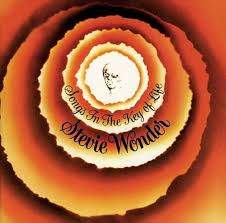
Every generation has a handful of albums that transcend the boundaries of genre and become cultural landmarks. Songs in the Key of Life is one of those rare records. Released in 1976 after nearly two years of work, Stevie Wonder’s ambitious double album—with an additional four-song EP included in its original release—represented the culmination of an extraordinary creative streak that had already produced classics like Talking Book, Innervisions, and Fulfillingness’ First Finale.
Expectations were impossibly high, yet Wonder somehow exceeded them. Rather than delivering a safe collection of radio singles, he created an expansive musical statement that explored love, spirituality, family, social justice, joy, heartbreak, and the everyday experiences that define the human condition.
Spanning more than 100 minutes, Songs in the Key of Life could have easily become an overindulgent exercise in excess. Instead, it stands as one of the most complete, adventurous, and emotionally satisfying albums ever recorded—a towering achievement not only in soul music but in the entire history of popular music.
Album Overview
By 1976, Stevie Wonder had earned virtually complete creative freedom at Motown, and he used it to its fullest potential. Playing many of the instruments himself while collaborating with an exceptional cast of musicians and vocalists, Wonder constructed an album that effortlessly blends soul, funk, jazz, pop, gospel, R&B, Latin influences, and classical textures.
Despite its considerable length, the record never feels aimless. Every song contributes a different emotional perspective, creating an album that feels less like a collection of tracks and more like a celebration of life itself.
One moment is filled with exuberant funk, the next with quiet introspection. Joyful love songs sit comfortably beside hard-hitting social commentary, while playful experiments coexist with deeply spiritual reflections.
The remarkable variety somehow forms a perfectly cohesive whole.
Songwriting
If Songs in the Key of Life has one defining strength above all others, it is Stevie Wonder’s songwriting.
His gift for melody is almost unmatched, but what truly elevates this album is his ability to pair unforgettable hooks with thoughtful, compassionate lyrics. Wonder writes about universal experiences without resorting to clichés, making deeply personal observations feel accessible to everyone.
“Love’s in Need of Love Today” opens the album with a heartfelt plea for kindness and understanding that feels just as relevant today as it did nearly fifty years ago.
“Village Ghetto Land” presents a sobering portrait of poverty and inequality, using elegant orchestral accompaniment to heighten the contrast between beautiful music and harsh realities.
“Sir Duke” serves as both an infectious celebration of jazz legend Duke Ellington and a joyful reminder of music’s power to unite people across generations.
“I Wish” transforms childhood memories into one of the greatest funk songs ever written, combining nostalgia with irresistible energy.
“Isn’t She Lovely,” inspired by the birth of Wonder’s daughter Aisha, captures pure happiness with remarkable sincerity, avoiding sentimentality through genuine emotion.
Even lesser-known tracks like “Knocks Me Off My Feet,” “Pastime Paradise,” “Ordinary Pain,” and “As” demonstrate astonishing craftsmanship. Very few songwriters have ever maintained this level of quality across such an expansive album.
Performance
Stevie Wonder delivers one of the finest performances of his career.
Vocally, he is astonishingly versatile. He moves effortlessly between joyful exuberance, soulful vulnerability, passionate conviction, and playful humor, often within the same song. His range and control remain extraordinary, but it’s the emotional authenticity that makes every performance unforgettable.
Instrumentally, Wonder is equally remarkable.
His keyboard work forms the backbone of the album, seamlessly blending acoustic piano, Fender Rhodes, clavinet, synthesizers, and organ. His harmonica solos remain instantly recognizable, adding warmth and personality whenever they appear.
The supporting musicians are exceptional.
Contributors including Herbie Hancock, George Benson, Nathan Watts, Greg Phillinganes, and a host of talented session musicians enrich the arrangements without overshadowing Wonder’s vision. Every guest performance feels purposeful rather than ornamental.
The result is an album that feels both meticulously arranged and effortlessly alive.
Production
The production is nothing short of extraordinary.
Stevie Wonder layers instruments with remarkable precision, creating dense arrangements that never become cluttered. Every vocal harmony, percussion accent, keyboard texture, and horn line occupies its own space within the mix.
The album constantly shifts between intimate moments and grand, cinematic arrangements, yet the transitions feel completely natural.
Considering the technological limitations of the mid-1970s, the sonic clarity is remarkable. Analog warmth enhances the performances without sacrificing detail, and the album continues to sound rich and vibrant decades after its release.
Its production has influenced generations of musicians across soul, R&B, hip-hop, jazz, pop, and electronic music.
Few albums from any era are this ambitious while remaining so consistently inviting.
Standout Tracks
“Sir Duke”
An explosion of joy from beginning to end. The unforgettable horn arrangement, infectious rhythm, and heartfelt tribute to musical pioneers make this one of the greatest pop songs ever recorded.
“I Wish”
Driven by one of the most iconic bass lines in music history, this funk masterpiece combines nostalgia, humor, and unstoppable energy into a flawless single.
“As”
A breathtaking declaration of enduring love featuring one of Wonder’s finest vocal performances and an uplifting arrangement that builds beautifully over its lengthy runtime.
“Isn’t She Lovely”
A heartfelt celebration of fatherhood that radiates genuine happiness. Its melody and emotional warmth have made it one of Wonder’s signature songs.
“Pastime Paradise”
Dark, complex, and musically adventurous, this track became even more famous decades later through its reinterpretation in Coolio’s “Gangsta’s Paradise,” but Wonder’s original remains the definitive version.
“Love’s in Need of Love Today”
A gentle yet powerful opening statement that immediately establishes the album’s compassionate worldview.
Weak Points
Finding meaningful weaknesses on Songs in the Key of Life is an extraordinarily difficult task.
Its greatest challenge is simply its length. At over 100 minutes, the album demands time and attention that casual listeners may not always be prepared to give. A few tracks could arguably have been shortened without diminishing their impact.
Additionally, the sheer variety of musical styles means that individual listeners may naturally gravitate toward certain sections more than others.
These observations are less criticisms than inevitable consequences of creating such an ambitious work.
Legacy
Few albums have left a deeper imprint on modern music.
Songs in the Key of Life has influenced artists across virtually every genre, from Prince and Michael Jackson to Beyoncé, Alicia Keys, John Legend, Kendrick Lamar, and countless others. Its songs have been sampled extensively, covered repeatedly, and studied by musicians seeking to understand masterful songwriting and arrangement.
Beyond its musical achievements, the album demonstrated that commercially successful records could also be intellectually ambitious, socially aware, and emotionally profound.
It remains a fixture on lists of the greatest albums ever recorded because it succeeds on every level. It entertains without sacrificing substance, challenges listeners without becoming inaccessible, and celebrates humanity while acknowledging its imperfections.
Nearly fifty years after its release, its messages of compassion, equality, hope, and love remain as necessary as ever.
Very few albums deserve to be called timeless.
This is unquestionably one of them.
Final Score
10/10
Songs in the Key of Life is one of the defining masterpieces of popular music. Stevie Wonder combined extraordinary songwriting, breathtaking performances, innovative production, and boundless emotional depth into an album that continues to inspire generations of musicians and listeners alike. Its remarkable consistency across an expansive running time, coupled with its lasting cultural impact, earns it the rare distinction of a perfect score. This isn’t just one of the greatest soul albums ever made—it’s one of the greatest albums in any genre.
This post has already been read 102 times!