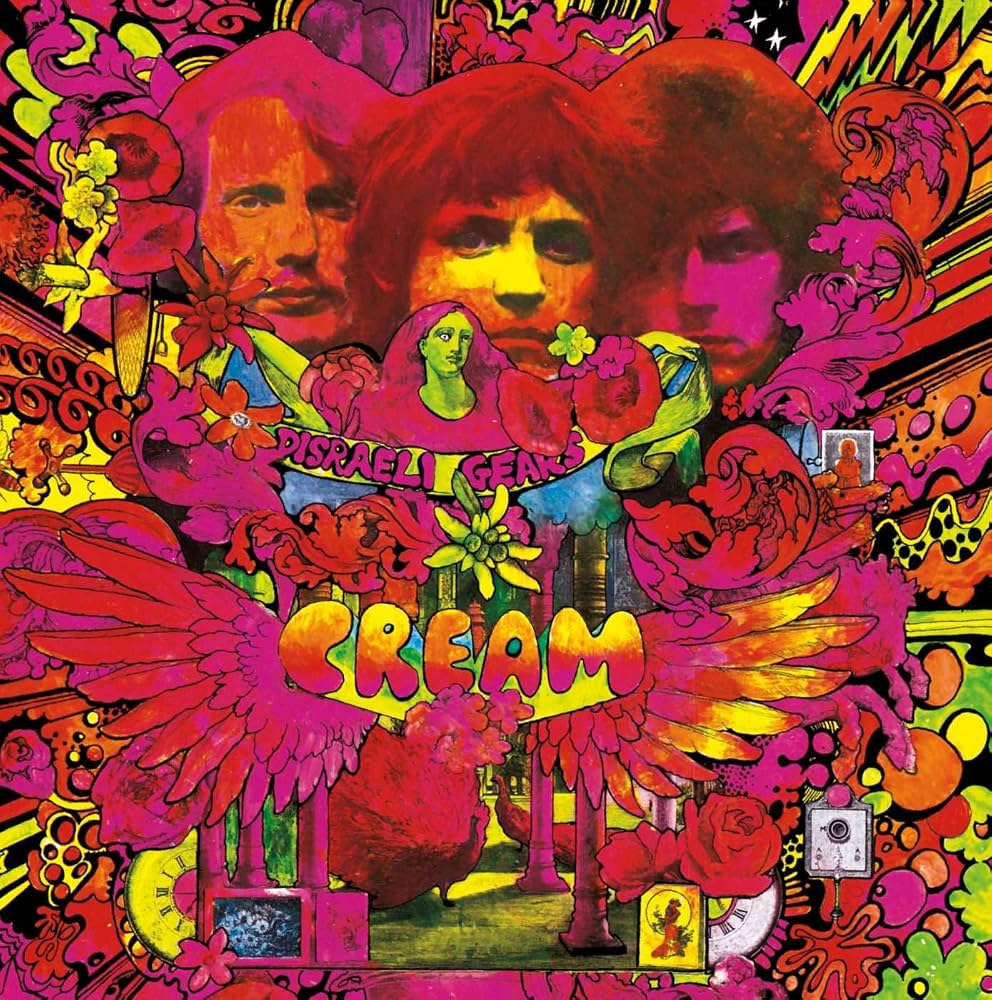
The year 1967 was a period of immense creative volatility, and amidst the psychedelic explosion, Cream—the original power trio consisting of Eric Clapton, Jack Bruce, and Ginger Baker—released their sophomore masterwork, Disraeli Gears. Recorded in New York City with producer Felix Pappalardi, the album stands as the definitive bridge between the rigid, purist blues-rock of the early mid-sixties and the expansive, improvisational heavy-rock movement that would soon dominate global arenas. It is a record characterized by its remarkable tonal density, aggressive volume, and a sophisticated, adventurous approach to studio experimentation. By abandoning the more traditional, live-take feel of their debut, Cream utilized the recording studio as an autonomous tool to construct a multi-layered, kaleidoscopic soundscape that felt both deeply grounded in the American blues tradition and entirely untethered from reality.
Musically, the album operates as a high-stakes, collaborative friction between three absolute virtuosos, each attempting to push the boundaries of their respective instrument into uncharted territory. Clapton’s guitar work on Disraeli Gears is a revelation of tonal color; he famously utilized his “woman tone”—a thick, saturated, and highly sustained sound achieved by rolling back the tone control on his Gibson SG and pushing his Marshall stacks to their absolute threshold. This heavy, violin-like sustain allowed him to treat the guitar not just as a rhythmic or lead voice, but as an orchestral force capable of filling the expansive sonic gaps created by the rhythm section. Paired with Jack Bruce’s melodic, heavily driven basslines and Ginger Baker’s polyrhythmic, jazz-informed drumming, the result is a massive, unified wall of sound that feels remarkably compact, urgent, and fiercely kinetic.
The Masterclass of Heavy Psych-Pop
Central to the album’s massive success is the interplay of its aggressive blues-rock roots and its adventurous, psychedelic-pop sensibilities. Unlike many of their contemporaries who struggled to reconcile these conflicting aesthetics, Cream navigated the tension between commercial songwriting and improvisational sprawl with a level of confidence that felt genuinely revolutionary.
The album’s iconic opener, “Strange Brew,” serves as a brilliant, if deceptive, entry point into the record’s wider ambitions. Built around a simmering, minor-key blues foundation, the track utilizes a restrained, rhythmic focus that showcases the band’s disciplined approach to pop-song structure. Clapton’s guitar work here is elegant and controlled, utilizing stinging, economical phrasing that pays direct homage to the blues legends who influenced him, while the vocal harmonies provide a light, almost pop-like polish. However, the track remains anchored by a dark, simmering intensity that hints at the heavier, more volatile experiments found elsewhere on the record. It is a perfectly crafted piece of pop-rock that manages to balance deep, rootsy authenticity with a polished, modern psychedelic sheen.
In contrast, “Sunshine of Your Love” stands as a towering, quintessential monument of heavy-rock history. Anchored by one of the most recognizable and structurally sound guitar riffs of the twentieth century, the song functions as a perfect example of the band’s collective chemistry. The interplay between Bruce’s pulsating, bluesy bassline and Baker’s unique, insistent drum-pattern—which eschews the traditional rock backbeat in favor of a rolling, jazz-inflected groove—creates an immense, driving tension. Clapton’s solo, which famously incorporates a melodic, vocalistic phrasing that breaks away from the blues-scale rigidity, perfectly mirrors the mounting excitement of the composition. It remains one of the most vital, aggressive, and perfectly crafted rock anthems of the decade, capturing the heavy, muscular energy of a band at the absolute zenith of their shared creative power.
The improvisational Blueprint of the Power Trio
While the hit tracks provided the record’s commercial and structural framework, the deeper cuts reveal the band’s true experimental ambition. The album’s mid-tempo and rock-oriented tracks demonstrate a band actively pushing against the boundaries of traditional song structure, incorporating complex, weaving instrumental passages and atmospheric textures that pointed toward the future of heavy-rock performance.
Tracks like “Tales of Brave Ulysses” and “SWLABR” highlight the band’s ability to move between quiet, delicate introspection and expansive, tonal exploration. “Tales of Brave Ulysses,” a sprawling, mythological tone-poem, features an lush, wah-wah-pedal-drenched guitar arrangement that emphasizes the song’s hallucinogenic, psychedelic atmosphere. It is a rare, haunting moment of lyrical density on an album otherwise defined by its heavy, driving energy. Conversely, the biting, sardonic “SWLABR” serves as a breathtaking, virtuosic pivot point. Its intricate, heavy, and rhythmically complex structure showcases a level of technical precision and tonal ferocity that provided a sharp, aggressive counterpoint to the album’s otherwise expansive, psych-tinged atmosphere.
This tension between the composed and the improvised is pushed to its absolute limit on tracks like “We’re Going Wrong.” Driven by a fast, syncopated rhythm and a biting, ironic lyric from Jack Bruce, the song features a wild, swirling, and deeply atmospheric instrumental passage that feels like a precursor to the extended, psychedelic jamming that would soon take over the band’s live sets. The layering of reverb and the slight, deliberate off-kilter timing of the rhythm section give the track an uneasy, almost unstable energy that perfectly reflects the psychedelic lyricism. It was a performance that showed Cream were not just a commercially successful rock band; they were an improvisational powerhouse that was already looking far beyond the confines of the three-minute song.
The Legacy of the Power-Trio Standard
The historical fallout of Disraeli Gears permanently altered the structural DNA of the late-1960s music industry. By achieving massive commercial success while simultaneously championing an avant-garde, psychedelic, and deeply heavy aesthetic, the record provided an essential, highly visible blueprint for the entire heavy-rock and proto-metal movement.
The album’s influence on the broader industry cannot be overstated; it provided the commercial legitimacy required for major labels to gamble on the wild, heavy, and deeply improvisational sounds coming out of the underground. The record established a permanent creative template for the heavy-rock era, directly shaping the sonic identities of bands like Led Zeppelin, Deep Purple, and Black Sabbath. By successfully synthesizing the literate, blues-based rock tradition with a hard, aggressive, and highly experimental electric energy, Cream permanently expanded the structural parameters of rock and roll, proving that popular music could be as intellectually demanding, aesthetically surreal, and atmospherically complex as the wildest dreams of the generation that listened to it.
Conclusion: A Masterpiece of Transitional Energy
Disraeli Gears remains an extraordinary, vital masterpiece because it captures the precise moment an underground trio collided with the massive, hungry machinery of the mainstream pop industry. It is an album that feels perfectly balanced between its accessible pop hooks and its dark, searching ambition, standing as a timeless monument to the spirit of the psychedelic era.
It demands to be experienced in its original, punchy, and highly dynamic monaural mix—the exact way the engineers balanced the voices and the biting electric guitars to ensure the band’s harmonies and improvisations functioned as a singular, unified force. In a historical landscape that often treats the late-1960s as a monolithic wave of psychedelic noise, this record stands as a fierce, necessary reminder of the power of the song—the ability to pack a massive, hallucinogenic punch into a perfectly constructed, three-minute pop package. It is a flawless, genre-defining classic that remains as intricate, haunting, and beautiful today as it was the moment the needle first dropped.
Final Score: 9.5 / 10
This post has already been read 54 times!