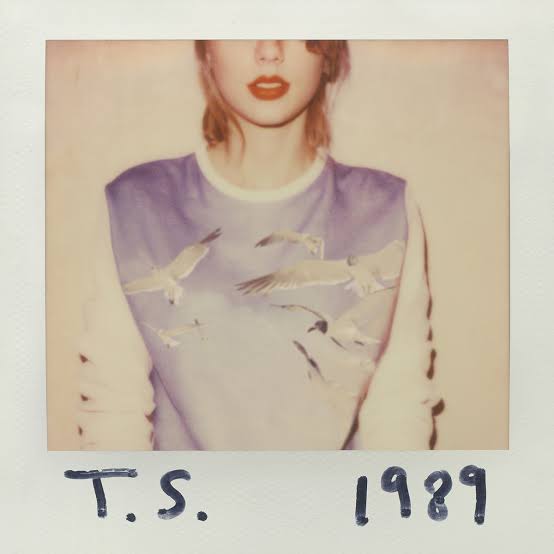
By 2014, Taylor Swift had already become one of the biggest stars in popular music. With four enormously successful country-pop albums behind her, she had little left to prove commercially. Artistically, however, she faced a pivotal decision. Rather than continue straddling the line between country and pop, Swift made a clean break from her roots and fully embraced mainstream synth-pop.
It was one of the smartest career moves of the decade.
Released on October 27, 2014, 1989 wasn’t simply Taylor Swift’s “pop album”—it was a complete reinvention. Inspired by the polished productions of 1980s pop while remaining unmistakably modern, the album paired Swift’s increasingly confident songwriting with immaculate production from Max Martin, Shellback, Jack Antonoff, Ryan Tedder, and others. The result was a record packed with massive hooks, sparkling synthesizers, and lyrics that balanced vulnerability, wit, and self-awareness.
The gamble paid off spectacularly.
1989 debuted at No. 1, sold over a million copies in its first week in the United States, produced five Top 10 singles, won the Grammy Award for Album of the Year, and firmly established Swift as the defining pop star of her generation.
More importantly, it remains one of the strongest mainstream pop albums of the 2010s.
Album Overview
Unlike many blockbuster pop albums that function primarily as collections of singles, 1989 feels remarkably cohesive.
The record embraces shimmering synth-pop, new wave, dance-pop, soft rock, and electronic influences without sounding like a nostalgic tribute to the 1980s. Instead, Swift and her collaborators borrow the era’s glossy textures while crafting songs that remain thoroughly contemporary.
The sequencing is particularly effective.
High-energy singles are balanced with more reflective moments, preventing the album from becoming one-dimensional. Whether delivering dance-floor anthems or intimate ballads, Swift maintains a consistent emotional perspective centered on identity, relationships, fame, independence, and growing into adulthood.
Clocking in at just under fifty minutes, the album rarely overstays its welcome.
Every production choice serves the songs rather than existing purely for spectacle.
Songwriting
Taylor Swift had always been a gifted storyteller, but 1989 reveals a new level of confidence.
“Welcome to New York” opens the album with bright optimism, introducing the fresh sonic direction immediately.
“Blank Space” is one of the finest pop songs of the century. Swift cleverly satirizes her public image, transforming tabloid caricatures into witty, self-aware songwriting over one of Max Martin’s most infectious productions.
“Style” may be the album’s musical masterpiece. Built around an irresistible guitar riff and shimmering synthesizers, it captures the effortless cool suggested by its title.
“Out of the Woods” transforms relationship anxiety into an exhilarating pop anthem through relentless momentum and memorable repetition.
“Shake It Off” became one of the defining hits of the decade. While intentionally lightweight, its infectious chorus and playful confidence helped cement Swift’s crossover into mainstream pop.
Later highlights include the emotional “Wildest Dreams,” the understated “Clean,” and the beautifully crafted “This Love.”
Not every song reaches the extraordinary level of the album’s biggest singles. Tracks like “All You Had to Do Was Stay” and “How You Get the Girl” are enjoyable but less distinctive than the surrounding material.
Still, the overall consistency is remarkable.
Performance
Taylor Swift delivers one of the strongest vocal performances of her career up to that point.
Rather than relying on technical power, she focuses on phrasing, personality, and emotional authenticity. Her voice suits the polished pop production far better than many skeptics predicted.
Perhaps more importantly, she demonstrates tremendous confidence.
Whether delivering biting sarcasm on “Blank Space,” dreamy romance on “Style,” or quiet vulnerability on “Clean,” Swift consistently sounds in complete control of her artistic vision.
The supporting musicians and producers also deserve enormous credit.
Max Martin and Shellback continue demonstrating why they are among pop’s greatest architects, while Jack Antonoff begins what would become one of modern pop’s most important creative partnerships.
Production
The production throughout 1989 is exceptional.
Every synthesizer, drum machine, guitar, and vocal harmony occupies exactly the right place within the mix. The arrangements are polished without becoming sterile, balancing commercial accessibility with surprising sophistication.
Unlike many pop albums released during the mid-2010s, 1989 has aged remarkably well.
Much of that durability comes from its emphasis on melody rather than production gimmicks. While the album unquestionably reflects its era, it rarely feels trapped by it.
The sonic consistency is among the album’s greatest strengths.
Standout Tracks
“Blank Space”
A brilliantly written pop masterpiece featuring some of Swift’s sharpest lyrics and one of Max Martin’s finest productions.
“Style”
Elegant, sophisticated, and endlessly replayable, it remains one of the greatest pop songs of the decade.
“Out of the Woods”
An exhilarating combination of emotional urgency and immaculate production.
“Wildest Dreams”
Dreamy, cinematic, and beautifully arranged, it showcases Swift’s increasingly mature songwriting.
“Clean”
A quietly stunning closing ballad that provides the album with genuine emotional resolution.
Weak Points
Although 1989 is remarkably consistent, a few songs in the middle section lean slightly too heavily on familiar pop formulas.
Additionally, some listeners may find the pristine production occasionally sacrifices spontaneity in favor of perfection. The album is meticulously crafted, but it rarely feels loose or unpredictable.
Finally, while “Shake It Off” remains undeniably catchy, its ubiquity has somewhat overshadowed stronger songs elsewhere on the album.
Legacy
1989 permanently changed Taylor Swift’s career.
It transformed her from an immensely successful country-pop artist into arguably the biggest global pop star of the 2010s. Its commercial success also encouraged other artists to embrace complete genre reinventions rather than gradual transitions.
The album’s influence extends across contemporary pop production, songwriting, and artist branding. Its blend of confessional lyricism with polished synth-pop became a blueprint for much of mainstream pop throughout the decade.
Perhaps most importantly, 1989 proved that commercial success and artistic growth need not be mutually exclusive.
More than a decade later, songs like “Blank Space,” “Style,” and “Wildest Dreams” remain staples of modern pop playlists, while the album itself continues to rank among the defining releases of its era.
Final Score: 9/10
1989 is one of the finest mainstream pop albums of the 2010s. Taylor Swift’s confident songwriting, exceptional vocal performances, and immaculate production combine to create a remarkably cohesive record filled with enduring singles and emotional depth. While a handful of tracks don’t quite reach the extraordinary heights of its biggest hits, the album’s consistency, craftsmanship, and cultural impact make it a modern pop classic and one of the strongest reinventions in contemporary music.
This post has already been read 124 times!