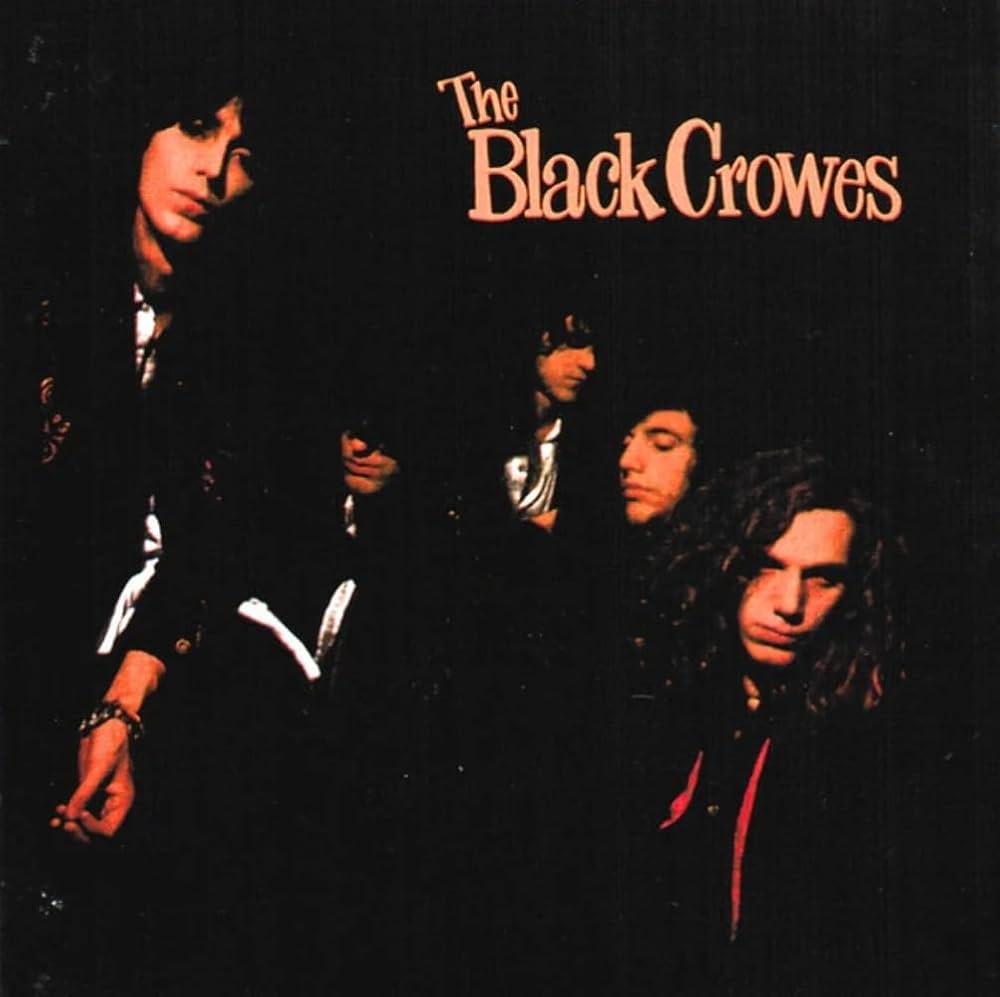
Released on February 13, 1990, Shake Your Money Maker arrived at exactly the right moment. Hair metal had spent most of the 1980s dominating MTV and rock radio, but the formula was beginning to wear thin. Bands chased bigger choruses, flashier guitar solos, and more elaborate stage shows while drifting further away from the gritty blues roots that had originally inspired rock and roll. Then five young musicians from Georgia walked onto the scene wearing ripped jeans, vintage T-shirts, and enough swagger to fill an arena.
The Black Crowes didn’t sound nostalgic. They sounded authentic.
Led by brothers Chris and Rich Robinson, the band fused classic Southern rock, blues, soul, and hard rock into something that felt timeless rather than retro. Their debut album became one of the biggest surprises of 1990, eventually selling more than five million copies in the United States and producing several hit singles. More importantly, it reminded audiences that loud guitars, greasy riffs, and soulful vocals still had plenty of life left in them.
While later Black Crowes albums would become more adventurous and musically ambitious, Shake Your Money Maker remains their defining statement. It’s raw, confident, and packed with songs that still sound fantastic decades later.
Album Overview
Produced by George Drakoulias, Shake Your Money Maker wastes no time establishing its identity. The production captures a live-band feel rather than polishing every rough edge away. The guitars crunch naturally, the drums hit with real weight, and Chris Robinson’s vocals stay front and center without feeling overly processed.
Instead of chasing the glossy perfection that dominated late-’80s rock records, The Black Crowes embraced imperfections. The grooves breathe. The rhythms swing. Every instrument feels like it’s being played by musicians listening to each other rather than simply following a click track.
Musically, the album draws from countless influences. The Rolling Stones are perhaps the most obvious comparison, particularly during the swaggering rockers, but elements of Faces, Humble Pie, Lynyrd Skynyrd, Otis Redding, Muddy Waters, and classic rhythm and blues appear throughout the record.
What makes the album successful isn’t originality in the traditional sense. None of these ingredients were new. The magic comes from how naturally the band combines them into something that feels completely their own.
Songwriting
One of the album’s biggest strengths is its consistency. Nearly every song has a memorable riff, an engaging vocal melody, or an infectious groove.
“Twice As Hard” opens the record with immediate authority. Rich Robinson’s guitar riff is simple but unforgettable, while Chris Robinson introduces himself as one of rock’s most charismatic new frontmen. It’s the perfect statement of purpose.
“Jealous Again” became one of the band’s signature songs thanks to its irresistible hook and bluesy confidence. Every element locks together effortlessly, from the guitar work to Robinson’s energetic vocal performance.
“Sister Luck” leans further into Southern rock influences without becoming cliché. It feels lived-in rather than manufactured.
The massive hit “Hard to Handle,” originally recorded by Otis Redding, became the band’s breakthrough single. While technically a cover, The Black Crowes completely reinvent the song with heavier guitars, explosive energy, and one of Robinson’s strongest vocal performances. Many listeners still associate the song more with The Black Crowes than its original recording.
“Seeing Things” slows everything down and proves the band isn’t simply about swagger. It’s emotional, restrained, and beautifully arranged.
“She Talks to Angels” became one of the defining rock ballads of the early 1990s. Built around acoustic guitars and Robinson’s heartfelt vocal, it demonstrates remarkable maturity for a debut album. The lyrics remain intentionally mysterious, allowing listeners to interpret them in countless ways.
Even deeper cuts like “Struttin’ Blues,” “Could I’ve Been So Blind,” and “Stare It Cold” maintain the album’s momentum without feeling like filler.
The only slight weakness is that several songs wear their influences so openly that they occasionally feel more like affectionate tributes than groundbreaking compositions. Still, the performances elevate the material well beyond imitation.
Performance
Chris Robinson immediately established himself as one of the most distinctive singers of his generation.
His voice carries equal parts Rod Stewart, Steve Marriott, and classic soul singers, yet possesses its own personality. He never sounds like he’s trying to impress listeners with technical perfection. Instead, every performance prioritizes emotion, attitude, and conviction.
Rich Robinson provides the perfect musical counterpart. His guitar playing favors memorable riffs and tasteful rhythm work over flashy solos. While he certainly possesses technical ability, he consistently serves the song rather than his ego.
Jeff Cease contributes strong lead guitar work throughout the album, adding bluesy textures and energetic solos that complement Rich Robinson’s rhythm playing.
Johnny Colt’s bass work often goes unnoticed, but his steady grooves provide much of the album’s swing. Steve Gorman’s drumming deserves equal praise. His feel is loose without becoming sloppy, allowing the songs to breathe naturally.
Perhaps most impressive is how cohesive the band already sounds. Many debut albums reveal musicians still learning how to play together. The Black Crowes sound like they’ve already spent years touring smoky clubs across the South.
Production
George Drakoulias deserves enormous credit for understanding exactly what this band needed.
Rather than chasing radio trends, he emphasized warmth, dynamics, and natural performances. The guitars retain their crunch without becoming overly compressed. The rhythm section feels powerful but never mechanical. Robinson’s vocals stay gritty and expressive.
The production also avoids many of the dated clichés common to rock albums from the era. There’s little reliance on gated drums, excessive digital reverb, or glossy studio effects.
Because of that restraint, Shake Your Money Maker has aged exceptionally well.
Even over thirty-five years later, it still sounds vibrant and energetic rather than trapped inside its release year.
Standout Tracks
“Twice As Hard”
An outstanding opener built around one of Rich Robinson’s best riffs. It immediately announces that The Black Crowes are bringing something different to mainstream rock.
“Jealous Again”
Swagger, hooks, blues, and Southern rock all come together perfectly. It’s impossible not to move along with this one.
“Hard to Handle”
One of the greatest cover songs ever recorded. The band injects fresh life into a soul classic while making it entirely their own.
“She Talks to Angels”
A beautiful acoustic ballad that balances vulnerability with mystery. Robinson delivers a career-defining vocal performance.
“Seeing Things”
A slower, more reflective song that showcases the band’s emotional range and demonstrates they were more than just a blues-rock party band.
Weak Points
As impressive as Shake Your Money Maker is, it occasionally leans a little too heavily on its influences.
Certain riffs and grooves recall The Rolling Stones so closely that comparisons become unavoidable. For listeners hoping for complete originality, this can slightly diminish the album’s impact.
Additionally, while the deeper cuts remain enjoyable, they don’t consistently reach the remarkable heights of the major singles. The second half loses just a touch of momentum compared to the nearly flawless opening stretch.
These are relatively minor criticisms on an otherwise exceptionally strong debut.
Legacy
Few debut albums have announced a band’s arrival with this much confidence.
Shake Your Money Maker revived mainstream interest in blues-based rock at a time when polished glam metal dominated radio. Its success helped pave the way for rootsier rock acts throughout the early 1990s while proving audiences still appreciated authentic musicianship.
The album also established The Black Crowes as one of the premier live bands of their generation. Many of these songs became concert staples, often expanding into lengthy jams that showcased the group’s chemistry on stage.
Although later albums like The Southern Harmony and Musical Companion would push their songwriting into even richer territory, many fans still view Shake Your Money Maker as the definitive Black Crowes album because of its accessibility, consistency, and sheer number of classic songs.
Modern rock bands continue to borrow from the album’s blend of blues, soul, and Southern swagger, and songs like “Hard to Handle,” “Jealous Again,” and “She Talks to Angels” remain staples of classic rock radio.
More than three decades later, the record still feels alive.
Final Score: 9/10
Shake Your Money Maker is one of the finest rock debuts of the 1990s. Packed with unforgettable riffs, soulful vocals, and timeless songwriting, it successfully revived classic blues-rock without simply becoming a nostalgia exercise. While its influences are easy to spot and a few album tracks don’t quite match the brilliance of the biggest hits, the overall package is remarkably strong. The Black Crowes arrived sounding fully formed, confident, and completely authentic, delivering a record that remains just as enjoyable today as it was upon its release.
This post has already been read 50 times!