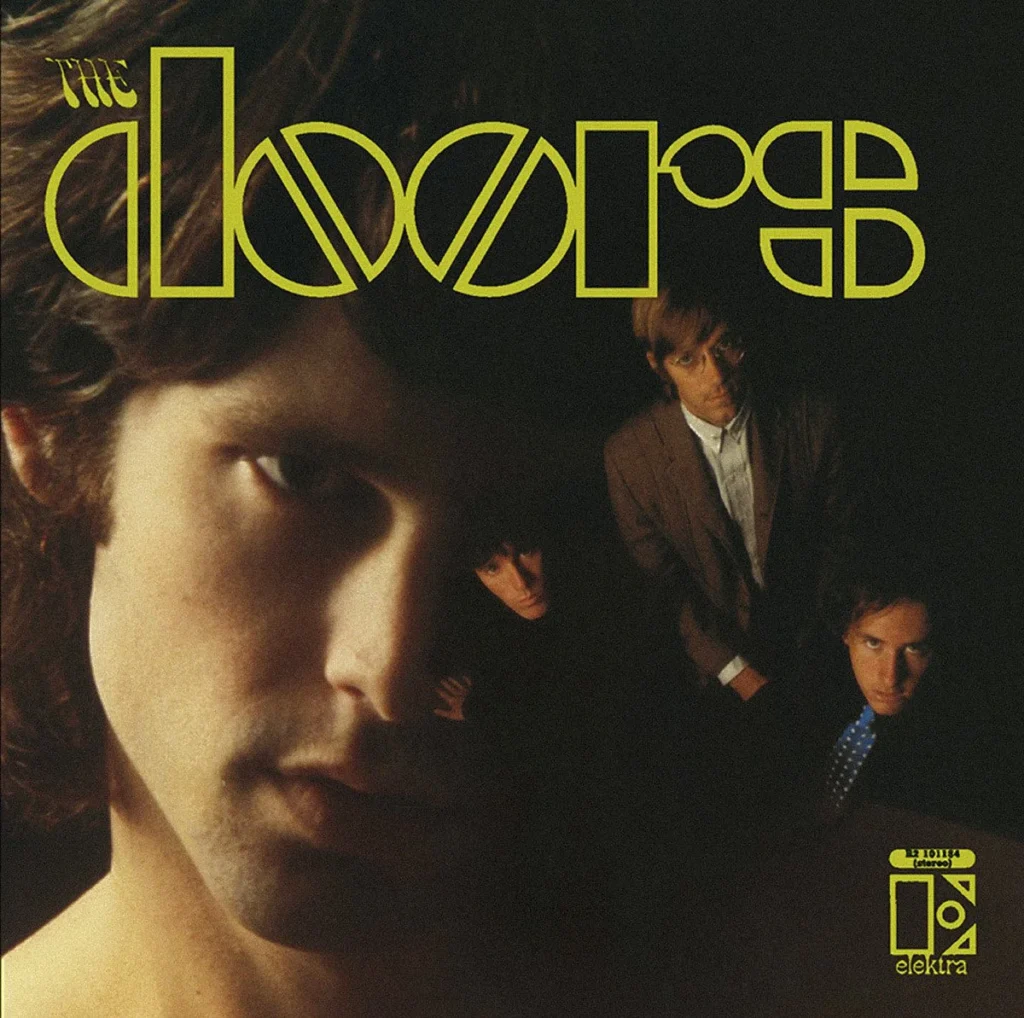
Shadows were cast long and thick over the Sunset Strip in January 1967, and within them, four musicians from Los Angeles were busy redefining the psychological limits of rock music. The Doors’ self-titled debut album did not simply arrive; it erupted, dragging the sunny, optimistic psychedelic pop of its era down into a subterranean world of Oedipal nightmares, beat poetry, and claustrophobic sonic menace. While their contemporaries were busy painting the world in technicolor, Jim Morrison, Ray Manzarek, Robby Krieger, and John Densmore were exploring the darker, unmapped corridors of the human experience. It was a document of pure, unadulterated tension, stripping away the cheerful artifice of mainstream pop to deliver a stark, uncompromising vision of a band operating with the intensity of a shamanic ritual.
The production, spearheaded by Paul A. Rothchild, is a masterclass in atmospheric focus. Eschewing the wall-of-sound orchestration that dominated much of the decade’s successful output, the record relies on an intentionally sparse, skeletal framework. Manzarek’s innovative use of the Fender Rhodes Piano Bass allowed him to act as both keyboardist and bassist simultaneously, leaving a vast, empty space in the sonic frequency that Krieger’s flamenco-influenced guitar and Densmore’s jazz-informed, highly reactive drumming could fill with sudden, violent outbursts. The result is a sound that feels simultaneously ancient and terrifyingly modern—a cold, precise, and highly volatile architecture that allows Morrison’s baritone delivery to operate as the centerpiece of a deeply unsettling theatrical performance.
The Masterclass of Existential Dread
Central to the album’s enduring power is the uncompromising literary ambition of Jim Morrison’s lyricism. Moving far beyond the transient romantic cliches of the mid-sixties, Morrison treated his lyrics as high-stakes, mythic poetry, heavily informed by Nietzsche, Artaud, and the darker currents of French symbolism. He was not looking to provide a comfortable escape; he was actively attempting to shock the listener into a state of heightened, confrontational awareness.
The undisputed centerpiece of this dark vision is the epic closer, “The End.” Spanning over eleven minutes, the track functions as a sprawling, improvisational odyssey that pushes the boundaries of popular song structure into the realm of radical performance art. Built upon Krieger’s hypnotic, raga-inspired guitar pattern and Densmore’s steady, pulse-like drumming, the song evolves from a melancholic, wandering ballad into an agonizing, psychoanalytic exorcism. Morrison’s vocal delivery shifts from a hushed, weary whisper to a primal, full-throated scream, reaching a peak of taboo-shattering intensity that remains one of the most daring, uncompromising moments in the history of rock. It is a bleak, monolithic piece of theater that refuses to resolve, leaving the listener stranded in a state of unresolved, haunting existential dread.
This same commitment to thematic weight defines the album’s most iconic track, “Light My Fire.” While it became an massive, inescapable radio hit, the song is far more than a simple pop anthem. Driven by Manzarek’s spiraling, baroque-influenced organ intro, the track utilizes a sophisticated, modal harmonic structure that provides the perfect canvas for Krieger’s fluid, snake-like guitar lines. Morrison’s vocal, delivered with a cool, detached, and remarkably restrained sensuality, anchors the song, transforming the act of desire into a high-stakes, combustible situation. The extended instrumental middle section, where the band seamlessly transitions into a high-octane, improvisational jazz-rock jam, remains a definitive example of how the group utilized technical virtuosity to create a sense of mounting, unbearable tension.
The Subversion of the Conventional
Beyond its grander, more operatic moments, the record is defined by its ability to take traditional musical forms—the blues, the torch song, the garage-rock rave-up—and subvert them, turning them into vehicles for psychological exploration. The band approached these established foundations not with reverence, but with a deliberate, cynical desire to strip them down and reassemble them into something altogether more sinister.
Their interpretation of the blues standard “Back Door Man,” originally popularized by Howlin’ Wolf, is a brilliant example of this process. The Doors strip the original’s heavy, swinging groove, replacing it with a nervous, staccato, and deeply aggressive pulse. Morrison’s vocal is less a song and more a menacing, theatrical growl, emphasizing the lyrics’ predatory, transgressive subtext with a cold, almost detached precision. It is not a respectful homage; it is a dark, revisionist portrait that highlights the sexual and psychological violence inherent in the material. The band forces the listener to hear the aggression in the rhythm, turning a familiar song into an exercise in pure, calculated menace.
This penchant for subverting established tropes is equally evident on “Alabama Song (Whisky Bar).” An interpretation of a Brecht-Weill composition from The Rise and Fall of the City of Mahagonny, the track is a surreal, carnivalesque march that highlights the band’s theatrical, cabaret-influenced sensibilities. Manzarek’s accordion-like organ work provides a jarring, mechanical backdrop for Morrison’s drunken, off-kilter vocal delivery. It is a brilliant, unsettling track that positions the band outside the standard rock-and-roll hierarchy, emphasizing their connection to a more European, avant-garde lineage of performance art. The song functions as a perfect, absurdist interlude, grounding the album’s deeper existential weight in a world of darkly comic, nihilistic play.
The Blueprint for the Underground Theatre
The historical fallout of The Doors permanently altered the trajectory of the late-1960s music industry, establishing a direct line of creative heredity that would fuel the entire rise of gothic rock, dark art-pop, and theatrical, nihilistic stage performance. By prioritizing the persona and the dark, psychological interiority of the frontman, The Doors provided a blueprint for the rock-star-as-shaman that would reach its ultimate peak with performers like Iggy Pop, David Bowie, and Marilyn Manson.
The record’s influence on the broader industry cannot be overstated; it successfully legitimized the use of radical, improvisational, and deeply dark themes within the commercial pop-music landscape. By proving that a band could be simultaneously experimental, literary, and radio-friendly, The Doors shattered the established rules for what a rock band could conceptually achieve. They opened a door to a new, permanent space where music could act as a vehicle for extreme, unfiltered human emotion—a space that remains the primary creative domain for any musician who wishes to explore the darker, more unsettling corridors of the human experience.
Conclusion: A Masterpiece of Primordial Tension
The Doors remains an extraordinary, vital masterpiece because its cold, precise, and deeply unnerving vision has lost absolutely none of its power. It is an album born from an intense, uncompromising need to confront the darkness of the psyche, standing as a timeless monument to the necessity of theatricality, intellectual bravery, and pure, concentrated sonic tension.
It demands to be experienced in its original, punchy monaural mix—the exact way the engineers balanced the instruments to ensure the band’s skeletal, jazz-influenced arrangement functioned as a singular, crushing wall of claustrophobic energy. In a historical landscape that often prioritizes the soft, colorful, and highly polished psychedelic pop of the mid-1960s, this record stands as a fierce, necessary reminder of rock-and-roll’s capacity for dark, high-concept, and truly unsettling artistic disruption. It is an flawless, genre-defining classic that remains the ultimate Rosetta Stone for any musician who dares to step up to a microphone and peer into the void.
Final Score: 10 / 10
This post has already been read 53 times!