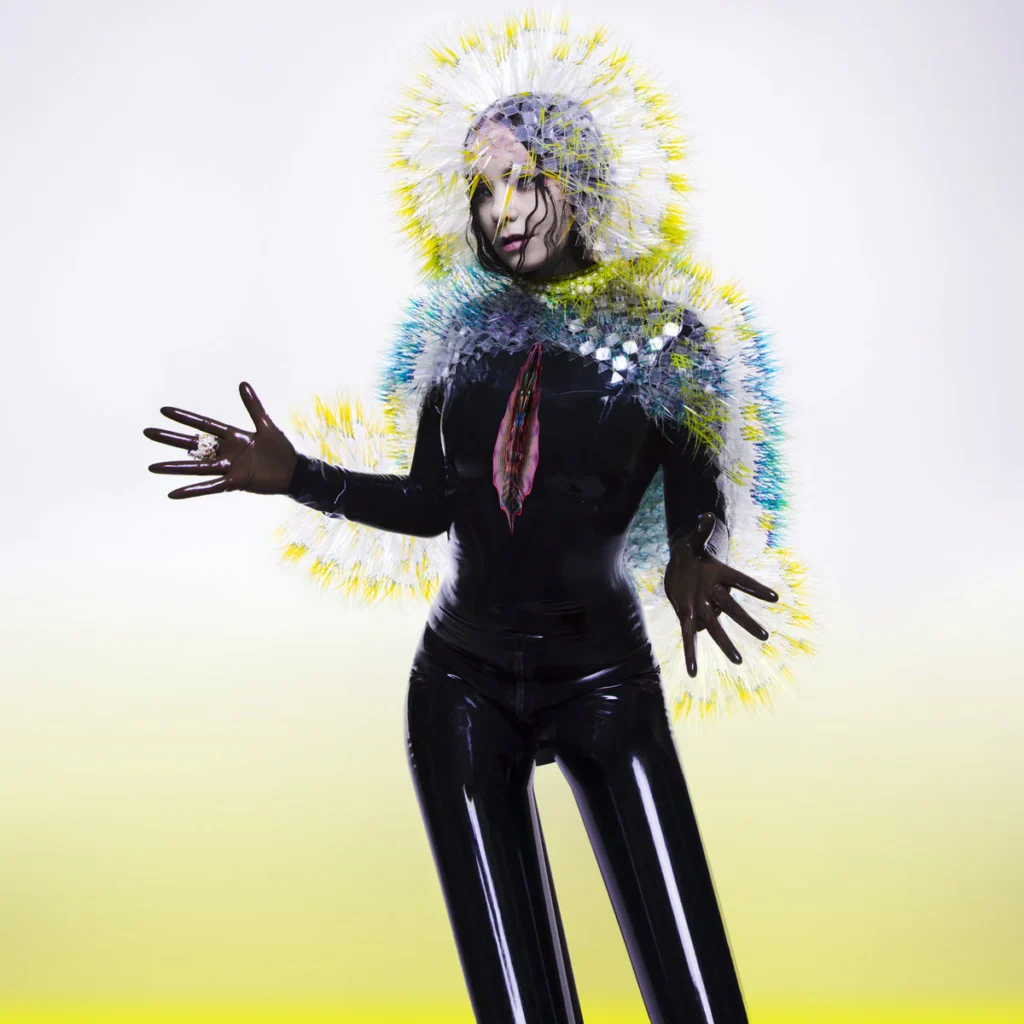
Few artists have built a career on constant reinvention quite like Björk. From the lush orchestral beauty of Homogenic to the intimate experimentation of Vespertine, the vocal acrobatics of Medúlla, and the multimedia ambitions of Biophilia, she has consistently challenged expectations while remaining one of contemporary music’s most distinctive voices.
With Vulnicura, however, the experimentation took on a different purpose.
Released on January 20, 2015—two months earlier than planned after the album leaked online—Vulnicura is Björk’s most emotionally direct work since Homogenic, and arguably the most personal album of her career. Written in the aftermath of the end of her long relationship with artist Matthew Barney, the record chronicles heartbreak in almost chronological order, documenting the collapse of love, the immediate shock of separation, and the slow, uncertain process of healing.
While many breakup albums use metaphor to soften emotional wounds, Björk largely abandons abstraction. The pain here feels immediate, unfiltered, and painfully human.
The remarkable achievement of Vulnicura is that it transforms deeply personal grief into something universally recognizable through breathtaking compositions and fearless emotional honesty.
Album Overview
Unlike some of Björk’s more conceptually driven records, Vulnicura places emotion firmly at the center.
The album revolves around the interaction between sweeping string arrangements and fractured electronic production. Working alongside Venezuelan producer Arca and longtime collaborator Haxan Cloak, Björk creates music that constantly shifts between warmth and disorientation. Lush orchestral passages frequently dissolve into glitching rhythms, distorted bass, and abstract electronic textures, reflecting the emotional instability at the heart of the album.
The sequencing is particularly effective.
Each song functions almost like a chapter, with Björk even assigning approximate timelines relative to the breakup. This structure gives the record a narrative clarity that is unusual within her catalog while preserving her signature musical adventurousness.
Despite its emotional heaviness, Vulnicura remains remarkably cohesive.
Every arrangement feels carefully constructed to reinforce the emotional journey.
Songwriting
Björk’s songwriting here is among the finest of her career.
“Stonemilker” opens with aching vulnerability. Built around sweeping strings and one of her most beautiful melodies, it immediately establishes the album’s emotional honesty.
“Lionsong” introduces greater uncertainty through fractured electronics while continuing the narrative of a relationship slipping away.
“History of Touches” compresses overwhelming emotion into just over two minutes, capturing the final moments of intimacy with extraordinary sensitivity.
“Black Lake” serves as the emotional centerpiece. Lasting over ten minutes, it patiently unfolds into one of the most devastating songs Björk has ever recorded. Its combination of orchestral grandeur and electronic tension perfectly mirrors emotional collapse.
“Family” explores the struggle to rebuild life after loss through increasingly complex arrangements, while “Notget” introduces the album’s first genuine glimpse of resilience.
The closing “Quicksand” provides cautious optimism without pretending emotional wounds disappear overnight.
Every song contributes meaningfully to the album’s larger narrative.
Performance
Björk delivers one of the greatest vocal performances of her career.
Her remarkable range remains intact, but what truly stands out is her emotional precision. She shifts effortlessly between whispers, soaring cries, conversational phrasing, and moments of raw anguish without ever sounding theatrical.
Unlike many vocalists confronting heartbreak, Björk resists melodrama.
Her performances feel lived rather than performed, making the emotional impact all the more profound.
The string players deserve equal praise. Their performances bring warmth and humanity to the album’s frequently fractured electronic landscapes.
Arca’s programming also functions almost as an additional emotional voice, constantly responding to Björk rather than simply accompanying her.
The collaboration is extraordinary.
Production
The production is stunning.
The contrast between organic strings and abstract electronics creates one of the richest sonic environments of Björk’s career. Every sound feels deliberately placed, from delicate string harmonics to deep electronic pulses and subtle ambient textures.
Arca’s influence is particularly important.
Rather than overwhelming the songs with experimental production, the electronic elements constantly serve the emotional narrative. Distorted rhythms frequently represent emotional instability, while the orchestral passages offer fleeting moments of comfort.
The mix itself possesses remarkable depth.
Repeated listening reveals countless subtle details hidden beneath the surface.
It is an album that rewards careful attention.
Standout Tracks
“Black Lake”
One of Björk’s greatest achievements. Emotionally devastating and musically breathtaking.
“Stonemilker”
A gorgeous opening that immediately establishes the album’s heartbreaking emotional landscape.
“Lionsong”
Beautifully balances orchestral elegance with modern electronic experimentation.
“Family”
An ambitious and emotionally complex composition that showcases Björk’s remarkable artistic vision.
“Notget”
A triumphant glimpse of healing after nearly an hour of emotional devastation.
Weak Points
Vulnicura is an emotionally demanding album.
Its relentless focus on heartbreak makes it difficult to approach casually, and several compositions require patience before revealing their full emotional and musical depth.
Additionally, listeners unfamiliar with Björk’s more experimental work may find portions of the electronic production challenging during initial listens.
These qualities are entirely consistent with the album’s artistic goals but naturally limit its accessibility.
Legacy
Vulnicura is widely regarded as one of Björk’s finest late-career achievements.
It reaffirmed her position as one of contemporary music’s most adventurous artists while introducing a new generation to her extraordinary ability to combine experimental composition with emotional vulnerability.
The album also strengthened Arca’s growing reputation as one of the most innovative producers in modern music, leading to further collaborations and influencing countless experimental pop artists.
Unlike many breakup albums, Vulnicura avoids sentimentality or easy resolution.
Instead, it offers an honest portrait of emotional survival, making it one of the most compelling artistic explorations of heartbreak in modern music.
Its reputation continues to grow with each passing year.
Final Score: 9/10
Vulnicura is one of Björk’s most emotionally powerful and musically accomplished albums. Its breathtaking combination of orchestral beauty, innovative electronic production, and fearless songwriting transforms personal heartbreak into universally affecting art. While its intensity and experimental nature demand patience, the rewards are immense. It may not eclipse Homogenic or Vespertine in Björk’s remarkable catalog, but it stands comfortably alongside them as one of her essential works.
This post has already been read 67 times!